
Beyond Pageantry: How Stylist Director Maxy Harnsongkram is Turning the Crown Circuit into Thailand’s Most Potent Fashion Runway
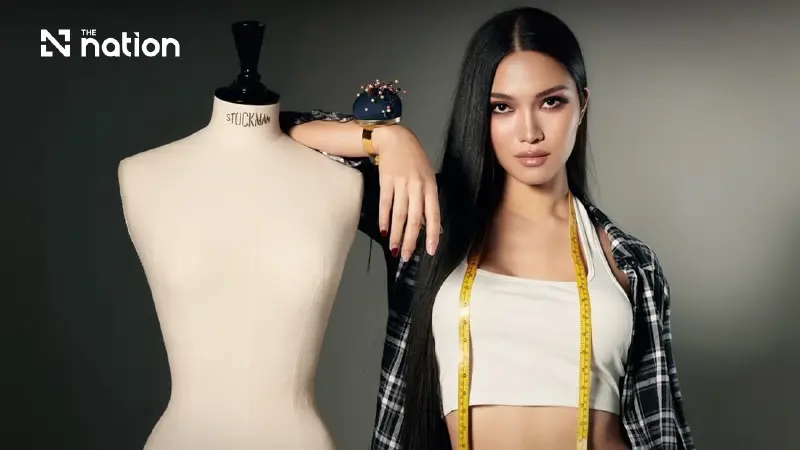


The Living Runway: How Pageantry Became Thailand’s Fashion Heartland Through the Eyes of Maxy Harnsongkram
In the perennial quest to position Bangkok as a global fashion capital, discussions often drift toward international fashion weeks, luxury mega-malls, or overseas market expansions. Yet woven deep into the fabric of Thailand’s contemporary culture lies a parallel universe—one commanding tens of millions of viewers, generating continuous economic ripple effects, and sustaining thousands of artisans across the country year-round: the national beauty pageant circuit.
From district and provincial halls to the dazzling spectacles of national and international championships, pageantry has quietly evolved into a cornerstone of the country's creative economy. It provides a recurring, high-stakes platform for ateliers, master embroiderers, hair and makeup artists, and creative entrepreneurs far beyond the confines of the capital’s elite fashion circles.
For casual spectators, these stages remain a showcase of grace and wit. But for creative visionary Maxy Harnsongkram—founder of MAXY LALA, co-founder of Unix Wear, and the creative force behind wardrobe directions for Miss Universe Thailand, Miss Thailand, Miss International Queen, and Miss Tiffany’s Universe—pageants are far from mere pageantry. To her, they represent the most vibrant, high-impact runway in Thailand’s fashion ecosystem.
From Parisian Ateliers to the Heart of Thai Craft
Harnsongkram’s design sensibilities were honed in Paris, where she studied fashion and immersed herself in the architectural rigor and cultural sanctity of European garment construction. Throughout her time abroad, one fundamental question lingered: how could Thailand cultivate a fashion industry that is both sustainable and true to its roots?
The answer came not in trying to replicate Western fashion-week models, but upon returning home and witnessing where Thai craftsmanship truly thrives.
“In Europe, the industry is dictated by rigorous seasonal calendars and heritage houses,” Harnsongkram observes. “In Thailand, however, our atelier culture and custom-made traditions have always revolved around pivotal life events—society galas, weddings, and notably, pageants. The stage acts as a massive public showcase. Audiences do not simply judge whether a gown looks flattering; they dissect the backstory, the textile choice, the complexity of the beadwork, and the dialogue between the designer and the wearer.”
Her trajectory from bespoke designer to Stylist Director for Miss Universe Thailand 2024 brought this entire ecosystem into sharp focus. The position transcended garment curation; it required orchestrating a delicate balance between pageant ownership, delegate identity, commercial partners, and the craftsmanship of independent fashion houses nationwide—synthesizing them into an indelible image capable of captivating the global stage.
Behind Three Defining Fashion Moments: Artistry Under Scrutiny
To grasp Harnsongkram’s [Maxy’s] creative philosophy is to examine the high-stakes commissions that captured national headlines—where creative intuition meets high-pressure execution.

1. From New York Runways to National virality: The Red Neorama Dress
Before dominating social media feeds during Miss Grand Thailand 2023, the crimson gown worn by Aoom Thaweeporn originated in an entirely different world. Designed by Harnsongkram under her label Unix Wear, the piece was part of the Neorama Collection—a contemporary reinterpretation of Ramayana motifs created for the runways of New York Fashion Week.
When the dress transitioned onto the pageant stage, it triggered an immediate digital sensation.
“At the time, I was an emerging designer with a straightforward ambition: I was thrilled that our work had a national platform,” Harnsongkram recalls. “I never anticipated that a single silhouette would ignite such widespread debate. It showed me that a garment takes on entirely new life and cultural resonance depending on the space it enters and the audience it speaks to.”
The experience widened her understanding of what constitutes a modern runway. “Designing for a contender requires decoding her persona before cutting the fabric,” she explains. “Aoom possessed a fierce, sharp, and magnetic presence. We built an architectural silhouette with bold, uncompromising lines and a saturated red palette. That synergy between the woman and the garment is what etched it into the public consciousness.”
2. Elevating Sampheng Wholesale to Haute Couture: Anntonia Porsild’s Gala Gown
When Anntonia Porsild represented Thailand at Miss Universe 2023 in El Salvador, Harnsongkram was tasked with designing a defining look for the Welcome Gala.
The gown created an unexpected groundswell not merely for its structural glamour, but for where its materials came from: the bustling, traditional wholesale alleys of Bangkok’s Sampheng and Phahurat textile markets. Through intricate structural cutting and painstaking hand-embroidery, the utilitarian fabric was elevated into high couture, sparking countless DIY recreations and market pilgrimages among fashion enthusiasts online.
“For local designers and ateliers, Sampheng and Phahurat are not novelties—they are where we work, innovate, and source every day,” says Harnsongkram. “The value of a design is never determined by the starting price of the raw fabric, but by what you are capable of transforming it into.”
For Harnsongkram, this moment illustrated that when a national representative shines on the international stage, she holds the power to redirect global attention directly back to home-grown materials, neighborhood markets, and local artisans. Soft power, in her eyes, does not require grandiose declarations; it manifests organically when a design compels people to ask questions, trace origins, and build upon it.
3. The Anatomy of Pressure: Opal Suchata’s Preliminary Evening Gown
Having directed the visual presentation for the entire Miss Universe Thailand 2024 season—the year Opal Suchata clinched the national title—Harnsongkram was entrusted with one of the most critical assignments of the international run: Opal’s Preliminary Competition evening gown at Miss Universe 2024 in Mexico.
Preliminary night is a high-stakes turning point where judges' scorecards carry decisive weight. Unlike previous triumphs, this moment laid bare the immense weight of national scrutiny. When structural changes to the telecast format condensed the individual walking sequences, the gown was experienced in an entirely different rhythm than conceived on the drawing board.
“Operating at this tier of the industry is an exercise in absolute precision and confidentiality,” Harnsongkram notes. “Every stitch, every seam, and every fluid movement of the fabric must align with the delegate’s inner confidence. But on a global stage, a designer can master the garment; we cannot dictate the camera angles, the lighting cues, or the staging flow.”
The experience crystallized a vital reality: garments worn on the international stage are rarely judged purely on aesthetics. They serve as repositories of national pride, collective hopes, and immense public sentiment.
Redefining Craft: Building a Thriving Creative Collective
Harnsongkram’s efforts to push boundaries extend beyond evening gowns. Through Unix Wear, she systematically challenged conventional pageant aesthetics, introducing hand-embroidered artisanal swimwear at MUT 2023 and daring two-piece silhouettes at Miss Thailand 2024—bringing couture-level craft to categories historically treated as afterthoughts.
“Every square inch of the stage is an exhibition space,” she asserts. “Swimwear does not need to be sterile or generic. Incorporating hand-beading, textured embroidery, and architectural tailoring proves that Thai craftsmanship has a place across every tier of contemporary design.”
Her efforts to liberate traditional crafts from static museum cases earned institutional recognition in 2026, when she was named among The New Artisans of Thailand by the Sustainable Arts and Crafts Institute of Thailand (SACIT). The honor sharpened her broader mission: that preserving cultural heritage does not mean keeping techniques frozen in amber, but embedding them within living, commercial, and contemporary platforms where the next generation can actively participate.
“The pageant circuit has proved beyond doubt that Thai audiences have an immense appetite for fashion, an eye for technique, and an eagerness to champion local talent,” Harnsongkram says.
Her recognition as a SACIT New Artisan in 2026 led her to re-evaluate the broader cultural dialogue around identity:
“Perhaps we spend too much time agonizing over how to repackage ‘Thainess’ for modern markets, when in truth, it has always been alive around us,” she reflects. “It exists in the bolts of fabric carried through Sampheng’s alleys. It lives in the fingers of atelier seamstresses working through the night. It thrives in the cultural phenomena where millions of people collectively discuss, critique, remember, and reinvent what they see on screen.”
To Maxy Harnsongkram, pageantry has grown far beyond a contest of beauty. It is the crucible where fashion, traditional craft, LGBTQ+ culture, and mainstream media have organically coexisted for decades.
“Our job is not to invent a new stage from scratch,” she concludes. “It is to recognize the one that is already commanding the world’s attention, support the hands that build it, and give Thai creativity room to flourish without limits.”
