
Developers forecast 5-10% growth in property market in 2016
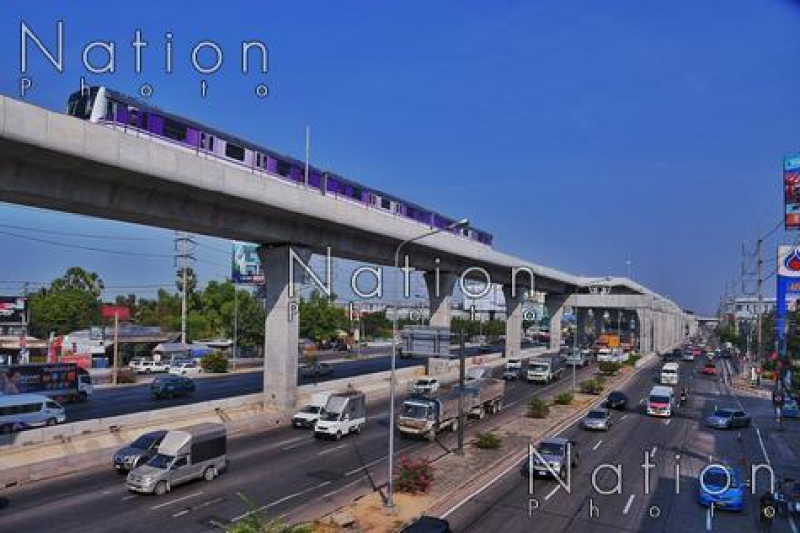


THE Property market will growth by 5-10 per cent nationwide next year, especially in Greater Bangkok, thanks to the government’s investment in infrastructure projects, said the president and chief executive officer of Pruksa Real Estate, Thongma Vijitpong
"When the government starts to invest in infrastructure projects, that will open up new land for property firms to develop residential projects. This will challenge property firms to invest in the new locations following the new mass-transit route from Bangkok to the suburbs and [nearby provinces]," he said.
Meanwhile, investment in infrastructure such as railway double-tracking, motorways, and 10 new mass-transit routes will make Thailand a regional transport hub after the Asean Economic Community goes into effect at the end of this month. This will boost demand to buy homes in Thailand, both in Bangkok and in the provinces, as foreign companies invest in Thailand as a gateway to other Asean countries, he said.
"We believe that Thailand’s property market will show average growth of 5-10 per cent a year from 2016-2020," he said.
Foreseeing strong long-term demand for homes, Thongma said Pruksa had a strategy to maintain average business growth of 15-20 per cent a year. This would bring its annual presale value to Bt100 billion in five years.
"We will launch more new residential projects nationwide to serve strong demand in the market, especially in locations close to the mass-transit system," he said.
Supalai deputy managing director Tritecha Thanmatithum also is confident that the property market next year will grow by 5-10 per cent. This is thanks to such government measures as cutting transfer and mortgage fees, and also the investment in infrastructure projects that will kick off in the new year.
In keeping with this market environment, Supalai plans to launch 28 or 29 residential projects worth up to Bt35 billion next year. Twenty projects worth Bt20 billion will be low-rise developments such as detached houses and townhouses, and eight or nine will be condominiums worth a total of Bt15 billion, he said.
Ananda Development president and CEO Chanond Reunkitiya agreed with the growth prediction of 5-10 per cent. The company plans to launch 10 residential projects worth up to Bt22 billion next year. Eight projects will be condominiums, four of them developed by a joint venture with its Japanese partner Mitsui Fudosan, and the other four it will develop itself. Two projects will comprise detached houses.
Meanwhile, property agencies said the demand for homes close to the mass-transit system was still growing strongly.
Plus Property, the agency arm of Sansiri, revealed the results of a survey on condominium demand in areas along the Dark Green and Light Green transit lines. The study showed that 75 per cent of consumers still do not own any residential property, with most showing interest in condominium projects in the vicinity of BTS Skytrain stations because of the extra convenience in commuting. The On Nut zone still tops the table in terms of consumer interest, with a target price in the Bt2.5-million-per-unit range.
Plus Property managing director Poomipak Julmanichoti said the respondents largely comprised first-jobbers and relatively experienced members of the workforce aged between 25 and 35 years, most of whom would prefer to live close to a BTS station.
While more consumers are expressing interest in developments towards the city’s fringes, they still prioritise locations in the vicinity of BTS stations for the commuting convenience and relatively predictable commute times.
Most consumers would choose to live around 9 to 10 kilometres or 30 minutes from their office, while the ideal distance from the BTS station would be less than 500 metres. The target price point falls into the Bt2.5-million range but could rise as high as Bt3 million or Bt4 million, while the most popular unit size is between 35 and 40 square metres.
Notably, 75 per cent of the sample group do not own any residential property, and roughly half of the group live in dormitories or apartments. Part of the reason is the fact that most condominium units are priced beyond their budgets, which in turn is an indicator that the majority of condominium owners along these two BTS lines do not rely on the Skytrain system for commuting, and that there remains plenty of unfulfilled demand in this market.
The behaviour and preferences of commuters on the Dark Green and Light Green BTS lines show that demand for condominiums is on the rise. This type of property has plenty of potential to grow outward towards Bangkok’s suburban zones along various Skytrain routes, and consumers no longer put distance from their office at the top of their priorities when choosing a place to live, as easy commuting can make them interested in developments in these outer-city zones, Poomipak said.
According to a survey by the Real Estate Information Centre (REIC) of Government Housing Bank, demand to buy land for development of commercial and residential buildings in 10 special economic zones is growing strongly. These SEZs are in Tak (Mae Sot district), Songkhla (Sadao district), Mukdahan, Sa Kaew (Aranyaprathet district), Trat, Nakhon Phanom, Kanchanaburi, Chiang Rai, Nong Khai and Narathiwat.
The survey found that Tak province was popular with both local and foreign investors in residential and commercial buildings, especially for retail business.
"Robinson plans to open a branch in Mae Sot district, Tak, in 2017. MBK and MM Mega Market of TCC Land, owned by beverage tycoon Charoen Sirivadanabhakdi, also plan to invest more than Bt10 billion to develop shopping centres and community malls in this province," REIC director-general Samma Kitsin said.
Nong Khai is another province that has seen more investment in retail business to cash in on demand from both local and Laotian shoppers.
The REIC reported that Nong Khai had two Tesco Lotus branches and one Makro, while TCC Land Group planned to open an MM Mega Market shopping centre and Vviang Lifestyle Mall in the province next year. Aranyaprathet district of Sa Kaew province is also a popular location for retail business.
This is thanks to the government’s policy to build SEZs and invest in infrastructure projects worth more than Bt1 trillion between next year and 2019, Samma said.
