
Bangkok hosts Gastech 2026 as LNG deals reshape global energy
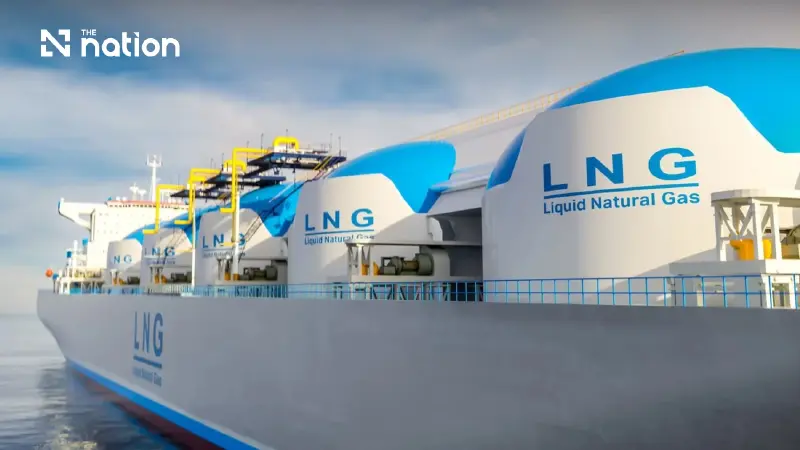


Gastech 2026 brings global energy players to Bangkok as Asia’s LNG demand, long-term contracts and geopolitical risks reshape gas markets.
- Bangkok will host the Gastech 2026 conference, reflecting Asia's growing importance as the world's primary growth market for liquefied natural gas (LNG).
- The Gastech event has become a key venue for finalizing major energy deals, with the 2025 conference alone resulting in over $60 billion worth of long-term LNG agreements and investments.
- A global shift towards long-term LNG contracts is reshaping the energy market, driven by nations seeking to enhance energy security, diversify supplies, and fuel economic expansion.
- The conference highlights how LNG has become central to geopolitics, with the U.S. emerging as the world's largest exporter and Asian nations becoming the key destination market for these supplies.
Bangkok is set to become a meeting point for global energy decision-makers as Gastech 2026 brings gas and liquefied natural gas (LNG) producers, major energy companies, buyers, traders, investors, infrastructure developers and specialists in artificial intelligence and low-carbon energy to BITEC from September 14-17.
To view Gastech simply as an exhibition and conference would miss a significant part of its role. Over the past three years, the event has become a venue where commercial agreements have been signed, investment commitments made and major energy players have repositioned themselves amid a rapidly changing global market.
At Gastech 2025 in Milan, Italy, the event attracted 48,678 participants from 150 countries, with more than 20 agreements and memoranda of understanding signed, representing more than US$60 billion in trade value.
Organisers say Gastech 2026 will build on that momentum, with discussions spanning natural gas and LNG, geopolitics, electrification, AI, hydrogen, carbon-reduction solutions, finance and investment.
Energy security reshapes the gas market
At Gastech 2023 in Singapore, global energy markets were still dealing with the fallout from the energy crisis following the Russia-Ukraine war, while governments sought to reduce their dependence on fossil fuels without compromising energy security.
Data presented by Singapore’s Ministry of Trade and Industry at the event showed that global LNG trade almost doubled between 2015 and 2022, as countries increasingly turned to gas-fired power generation to reduce dependence on coal.
Asia has emerged as a central source of gas-demand growth. Singapore estimated that gas consumption in the Asia-Pacific could reach 1.6 trillion cubic metres a year by 2050, almost twice the 2020 level.
Southeast Asia is also moving towards becoming a net gas-importing region. As gas shifts from being primarily a domestically produced fuel to a commodity traded across borders, LNG has become increasingly important for both energy security and economic activity.
The trend was visible at Gastech 2023, when Equinor and ENN Singapore each signed long-term LNG supply agreements with Cheniere for 1.8 million tonnes per year.
Meanwhile, the Global Centre for Maritime Decarbonisation and the Society for Gas as a Marine Fuel agreed to cooperate on developing approaches for the use of ammonia in shipping.
Together, the agreements showed how the energy industry was restructuring supply chains while pursuing the energy transition, from securing LNG and gas infrastructure to developing lower-carbon fuels for related industries.
LNG moves deeper into geopolitics
Gastech 2024 in Houston further highlighted LNG’s changing role as the United States became the world’s largest LNG exporter, overtaking Qatar, while Asia remained one of its key destination markets.
LNG is therefore no longer simply an energy-market issue. It is increasingly connected with geopolitics and national energy security.
Europe has accelerated efforts to diversify gas supplies and reduce reliance on Russia. Asian economies need LNG to support economic expansion and growing electricity demand, while US exporters need long-term buyers to underpin investment in major LNG projects.
One example at Gastech 2024 was a 10-year LNG agreement between Türkiye’s BOTAŞ and TotalEnergies for 1.1 million tonnes per year, with deliveries beginning in 2027. The deal was intended to diversify Türkiye’s gas sources while supporting its ambition to strengthen its role as a regional gas-trading hub.
The energy transition was also extending beyond power plants and LNG terminals into maritime transport.
Hanwha Power Systems and GasLog signed an MoU to study the installation of ammonia gas-turbine systems on LNG carriers, while Samsung Heavy Industries and MAN Energy Solutions moved forward with cooperation on ammonia-compatible engine technology.
Global buyers return to long-term LNG contracts
If Gastech 2023 was largely shaped by the energy transition and Gastech 2024 by energy security, the 2025 gathering in Milan reinforced another message: the world expects to need more gas than previously anticipated.
More than 20 deals and MoUs worth approximately US$60 billion were announced during Gastech 2025, with several signalling a renewed appetite for long-term LNG contracts.
Italian energy major Eni struck a long-term LNG agreement with Venture Global to expand and diversify supplies of US LNG into its European portfolio.
Türkiye also concluded several LNG import agreements with major suppliers, while Italy and Hungary moved to secure longer-term gas supplies.
Argentina, meanwhile, continued developing its LNG industry, with YPF working alongside Shell and Eni on a project positioned as one of the country’s major gas-infrastructure investments.
Asia becomes the main LNG growth arena
The decision to bring Gastech 2026 to Bangkok reflects Asia’s increasing importance in global energy markets, particularly for gas and LNG.
According to figures cited by Reuters, Asia has around 950,000 megawatts of gas-fired generating capacity, the largest base in the world, with another 140,000MW under construction.
The region also accounts for more than 66% of global LNG import infrastructure and almost 70% of LNG import capacity currently under development.
China, India, Japan, South Korea and Southeast Asia are therefore becoming increasingly important battlegrounds for suppliers seeking long-term LNG demand.
Thailand reshapes LNG portfolio as domestic gas declines
For Thailand, changes in the LNG market directly affect the country’s energy system.
Natural gas remains an important part of Thailand’s energy mix, while domestic gas production is trending lower, increasing the role of imported LNG.
At Gastech 2025, Thailand indicated that it wanted to increase the proportion of LNG secured through medium- and long-term contracts to reduce exposure to the spot market.
S&P Global reported that Thailand imports about 6 million tonnes of LNG annually and was seeking to shift around 5 million tonnes from spot purchases towards medium- or long-term contracts.
Spot LNG gives Thailand flexibility to adjust volumes according to changing conditions, but also exposes buyers to volatile market prices.
Long-term contracts can provide greater certainty over supply and costs, although they also create commitments extending into a period when Thailand’s power system is expected to incorporate more renewable energy.
Bangkok becomes a stage for the next energy deals
Gastech 2026 therefore arrives in Bangkok at a moment when LNG is being shaped by more than supply and demand.
Energy security, geopolitical competition, electricity growth, AI-driven power demand, decarbonisation and the financing of new infrastructure are increasingly interconnected.
The deals signed at previous Gastech events show that the discussions taking place around conference tables can move quickly into long-term contracts and multibillion-dollar investment.
For Thailand, hosting the event places Bangkok at the centre of those conversations at a time when the country is itself reviewing how best to secure future gas supplies while managing the transition towards a more diversified and lower-carbon energy system.
Source: Krungthep Turakij
