
Expanding Himalayan glacial lakes raise flood concerns for northern India
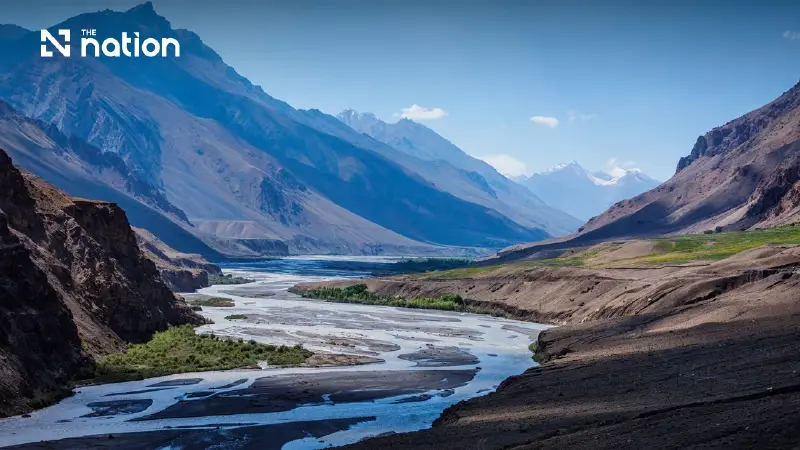


A satellite study finds rapid growth in Himalayan glacial lakes in northern India, highlighting flood risks and the need for closer monitoring.
Glacial lakes in northern India are rapidly increasing in number and size, raising concerns about potentially devastating floods in downstream communities.
New research published in Open Geosciences, based on satellite imagery, has documented the expansion as climate change accelerates glacier melting across the region.
Aayushi Pandey, a researcher at Charles University in Prague, Czech Republic, analysed nearly three decades of observations from the Landsat and Sentinel-2 satellites to track changes in 74 glacial lakes in India’s Alaknanda Basin, in the western Himalayas, between 1994 and 2023.

Existing lakes expand as new ones form
Among the lakes examined, 24 were larger than 0.01 square kilometres, the threshold used to exclude small, seasonal pools. Their combined surface area increased from 0.97 square kilometres in 1994 to 1.62 square kilometres in 2023, representing growth of approximately 67% over three decades.
The study also identified 57 newly formed glacial lakes during the same period, bringing the total recorded in the basin to 131. Eighteen of the new lakes had already exceeded the 0.01-square-kilometre threshold.
Some individual lakes expanded particularly rapidly. Vasundhara Lake grew by 261% between 1994 and 2023, while Balbala Lake expanded by 119%.

Twenty-seven lakes warrant closer monitoring
The research identified 27 glacial lakes requiring close monitoring, including one upstream of Badrinath, an important Indian pilgrimage town. Vasundhara Lake’s rapid expansion also warrants particular attention.
A major concern is the potential for a glacial lake outburst flood (GLOF). This occurs when a barrier of ice, rock or sediment holding back lake water fails, suddenly releasing large volumes downstream and carrying mud and debris with the floodwater.
Pandey highlighted the importance of continuously monitoring high-mountain environments, where heavy rainfall, expanding glacial lakes, unstable slopes and geological activity can interact and amplify the effects on areas downstream.
The findings have taken on added significance following the severe flooding in Nepal last month, which underscored the destructive potential of disasters in high-mountain regions.
Although that event may not have resulted directly from a GLOF, it caused extensive damage to homes, roads, bridges and energy infrastructure.

What satellites can and cannot reveal
Pandey said satellite observations were particularly valuable for surveying large, inaccessible mountain regions.
They allow researchers to identify newly formed lakes, measure changes in surface area and pinpoint rapidly expanding lakes for more detailed investigation.
However, satellite imagery alone cannot provide a complete assessment of the hazards.
Field surveys are needed to measure lake depth and water volume, assess slope stability, examine drainage routes and understand interactions between glaciers and lakes. These observations are essential to developing more accurate flood models.

Cross-border scientific cooperation is essential
Pandey also called for stronger international scientific cooperation and data sharing, stressing that glacial-lake hazards and floods do not stop at national borders.
The Himalayas extend across several countries. A lake forming or expanding in the mountains of one country can threaten communities and infrastructure far beyond its borders. Understanding and managing those risks therefore requires a coordinated regional approach.
Nepal’s recent floods illustrate how quickly a high-mountain disaster can develop into a humanitarian crisis. The satellite findings suggest that similar risks are also emerging in the mountains of northern India, reinforcing the need for sustained monitoring and further investigation.
