
Bangkok declares 3 districts flood disaster areas on Sept 25
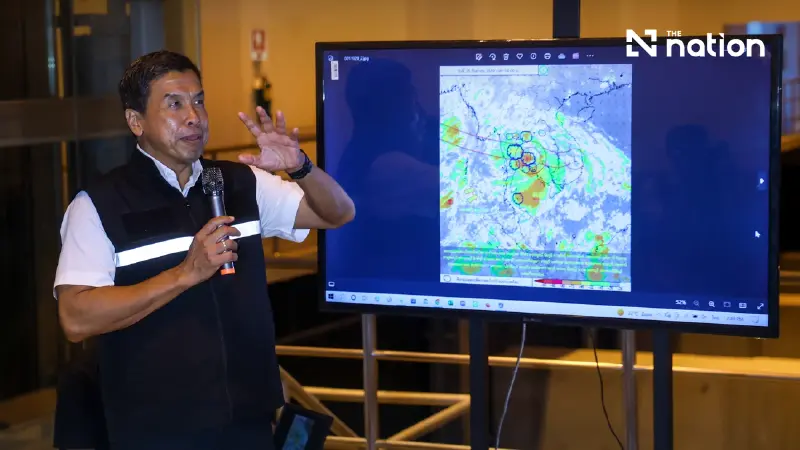


The Bangkok declaration covers 13 subdistricts, while crews divert water into Bueng Nong Bon as heavy rain leaves eastern canals at capacity
- On September 25, Bangkok's governor declared the districts of Nong Chok, Suan Luang, and Khan Na Yao as flood disaster areas.
- The declaration was prompted by heavy rainfall exceeding 150mm, which caused canals to overflow and disrupt travel in 13 subdistricts.
- This designation enables government agencies and relevant organizations to provide assistance and manage the response under disaster prevention laws.
- The primary cause of the flooding was identified as canals reaching full capacity, preventing further drainage from streets and drains.
Bangkok Governor Chadchart Sittipunt declared Nong Chok, Suan Luang and Khan Na Yao flood disaster areas on Friday (September 25), covering 13 subdistricts where flooding had disrupted travel and made access difficult. The declaration enables government agencies, local authorities and relevant private organisations to provide assistance within their powers and responsibilities.
Chadchart signed the disaster-area notice in his capacity as Bangkok’s disaster prevention and mitigation director. The notice, issued by the city’s disaster prevention and mitigation command, identifies flooding on September 25 as the reason for the designation.

Bangkok disaster declaration covers 13 subdistricts
The declaration covers eight subdistricts in Nong Chok, three in Suan Luang and two in Khan Na Yao:
- Nong Chok district: Krathum Rai, Nong Chok, Khlong Sip, Khlong Sip Song, Khok Faet, Khu Fang Nuea, Lam Phak Chi and Lam Toiting.
- Suan Luang district: On Nut, Phatthanakan and Suan Luang.
- Khan Na Yao district: Ram Inthra and Khan Na Yao.
Disaster response operations in the designated areas will follow the Disaster Prevention and Mitigation Act 2007, the National Disaster Prevention and Mitigation Plan 2021–2027 and Bangkok’s Disaster Prevention and Mitigation Plan 2021–2027. Other applicable laws, regulations, orders, announcements and Cabinet resolutions will also govern the response.
The Bangkok Metropolitan Administration (BMA) said it would closely monitor conditions and follow the required procedures if other areas met the criteria for disaster-area declarations.

Eastern Bangkok canals fill after more than 150mm of rain
Rainfall exceeded 150 millimetres in some areas over the 24 hours preceding Chadchart’s September 25 inspections, the governor said. Persistent rain had filled several canals to capacity, causing water to spill into surrounding canal-side areas.
Chadchart inspected drainage at Prawet Burirom canal in Suan Luang district and at Bueng Nong Bon, directing the BMA’s Department of Drainage and Sewerage and other agencies to maximise drainage and water management efforts.
BMA crews were operating pumps continuously, but rainfall had exceeded the canals’ drainage capacity, Chadchart said. Removing the accumulated water would therefore take time.
“We’re doing everything we can. There are limits to what we can do against nature, but we’re trying everything within our power,” Chadchart said, instructing staff to work through the night and monitor conditions closely.
“The main problem now is not blocked pipes. The canals are full. Water can flow from the drains into the canals, but once the canals are full, it has nowhere else to go. We therefore need to speed up drainage from the canals,” Chadchart said.
An estimated 14 million cubic metres of rainwater had accumulated in eastern Bangkok overnight on September 24–25, requiring drainage through canals, pumping systems and other infrastructure.

Bueng Nong Bon receives water from overloaded canals
The BMA was diverting water into Bueng Nong Bon, a large retention basin with a capacity of about five million cubic metres. Officials had lowered the basin’s water level in advance to create space for rainfall.
Water from canals connected to Prawet Burirom canal was being drawn into Bueng Nong Bon before being discharged directly into the Chao Phraya River through the drainage tunnel, according to the account of Chadchart’s inspection.
At Bueng Nong Bon, Chadchart ordered more staff to remove rubbish and other obstructions from waterways and improve the intake channels so that more water could enter the basin. The governor also instructed officials to prepare additional mobile pumps for locations needing extra drainage capacity.
A separate tunnel project intended to increase the flow of water into Bueng Nong Bon remained at the contractor procurement stage. The BMA said the inspection had identified connections and intake points requiring improvement so that existing infrastructure could operate closer to its full capacity.
Chadchart described the heavy rainfall as a test of Bangkok’s drainage system and an opportunity to identify further improvements. The governor said the additional infrastructure, including Bueng Nong Bon and the drainage tunnel, could ease some of the pressure on eastern Bangkok, although prolonged rain would still take time to drain within the capacity of the canals and wider network.
“We’ll probably have to keep working through the night again because it looks likely to rain all night. We’ll try to pump out and drain as much water as possible. If the rain eases, we’ll step up operations straight away,” Chadchart said on September 25.
Bangkok urges canal-side residents to raise belongings
The BMA urged residents in Bangkok’s canal-side communities to monitor water levels and move belongings to higher ground. The advice formed part of the city’s response to continued heavy rain and pressure on drainage canals.
In its September 25 advice, the BMA also asked residents to follow rainfall and traffic conditions closely, plan their journeys and, where possible, return home before heavy rain expected that evening.
Municipal enforcement officers and other relevant agencies deployed personnel to assist residents and help with travel where needed, according to the BMA.

Residents can report flooding through the following channels:
- Traffy Fondue: the city’s problem-reporting platform
- BMA hotline: 1555
- LINE: @Traffyfondue
- Facebook: the BMA flood prevention centre page, “ศูนย์ป้องกันน้ำท่วม กทม.”
- Flood prevention system control centre: 02-248-5115
