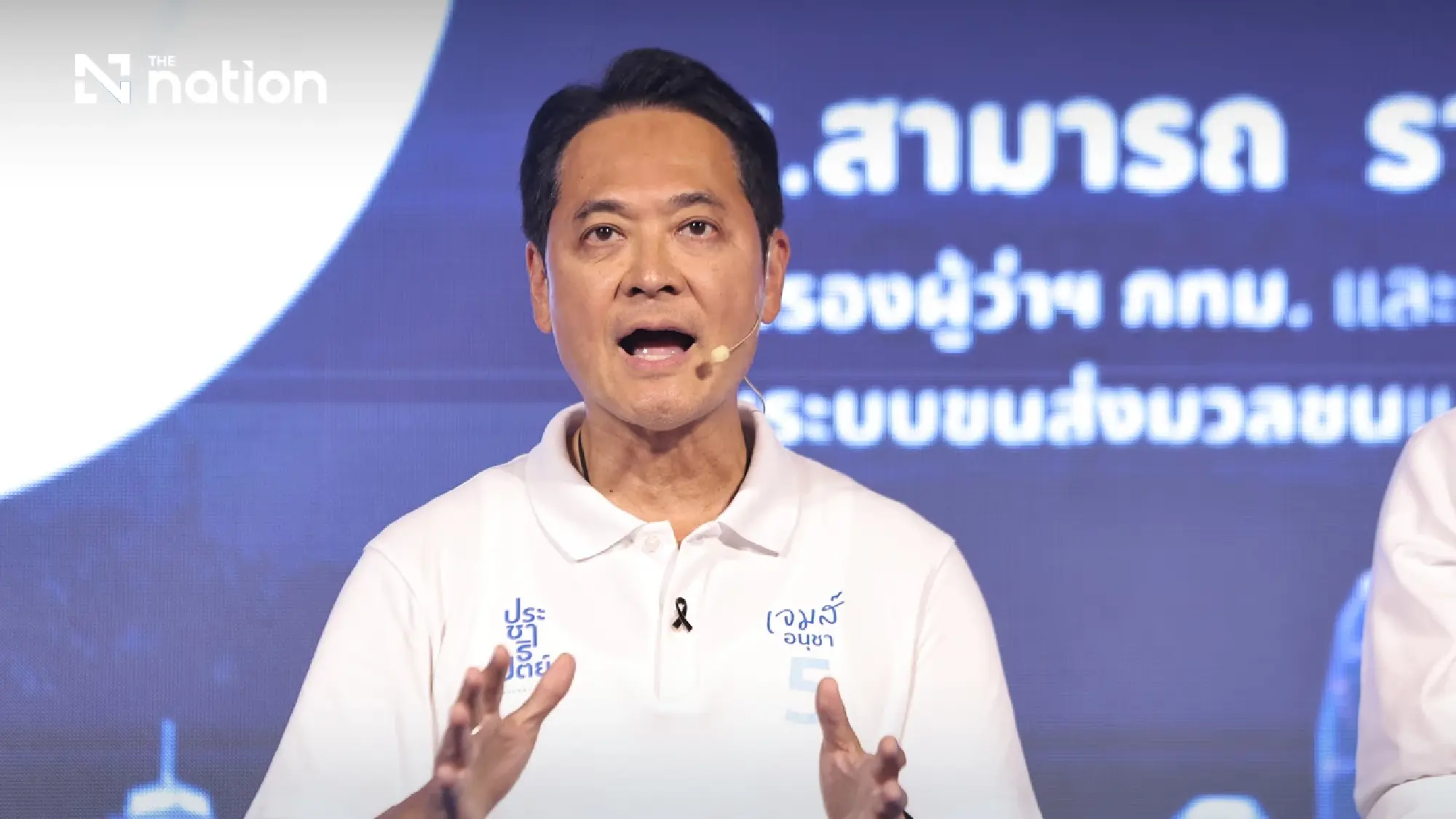
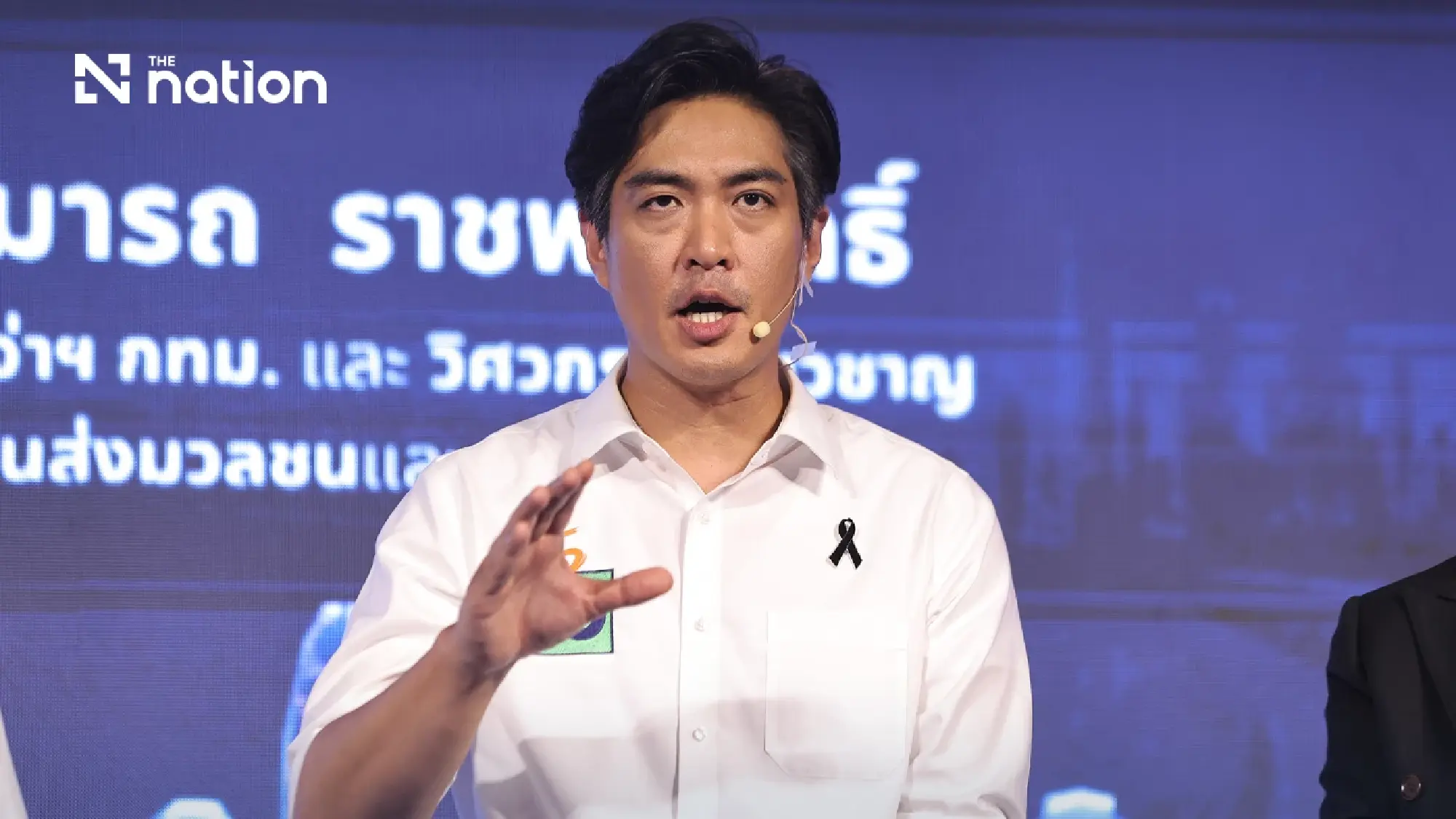
Four Bangkok governor candidates outline plans on transport, floods, AI, health, corruption, street food and city services before the June 28 vote
Four Bangkok governor candidates presented visions to tackle chronic urban issues like traffic, flooding, and waste management while creating new economic and social opportunities for residents.
Candidate Chadchart Sittipunt's platform focuses on creating a "city of hope and opportunity" through improved education, expanded healthcare access, and work opportunities for the elderly.
Other candidates proposed improving daily life and economic fairness by reorganizing public transport, tackling corruption, and establishing transparent systems to support street vendors.
Proposals also included leveraging technology, such as using AI for traffic and flood management and developing an e-commerce hub, to enhance public safety and create new revenue streams.
Four Bangkok governor candidates have set out their competing visions for the capital in the final stretch of the election campaign, presenting policies on transport, flooding, waste management, public health, corruption, technology and economic opportunity.
The debate, held under the theme “Bangkok Governor: Opportunities for city residents”, was organised by Nation TV Channel 22 in partnership with King Prajadhipok’s Institute and network partners at Interlink Tower in Bang Na, Bangkok, on June 22, 2026.
The four candidates on stage were Chadchart Sittipunt, an independent candidate running under No 9; Anucha Burapachaisri, candidate No 5 from the Democrat Party; Chaiwat Sathawornwichit, candidate No 10 from the People’s Party; and Dr Mallika Boonmeetrakul Mahasook, an independent candidate running under No 14.
The debate came ahead of the Bangkok governor election on June 28, with each candidate seeking to show how they would tackle long-standing urban problems while creating new opportunities for residents.
Chadchart promises a city of hope and opportunity
Chadchart said the next four years would be a crucial period for Bangkok, as the city faces major changes driven by technology and climate change.
He said his team had analysed the challenges facing the capital and was proposing a vision of Bangkok as a “city that creates opportunity and hope” for everyone.
His policy platform focuses on four dimensions: people, the city, systems and the economy. These would be implemented through more than 250 plans, each with clear indicators to measure progress.
Among the key proposals, Chadchart said he would improve the quality of all 437 schools under the Bangkok Metropolitan Administration (BMA) and establish bilingual schools in every district.
He also pledged to expand elderly schools to every district, increase the number of elderly clubs to 1,000, create work opportunities for older people and support better health for the ageing population.
On healthcare, Chadchart said he would expand access to the gold card healthcare scheme to 1.3 million people and set a target for patients with advance appointments to wait no longer than one hour to see a doctor.
He also promised to tackle 200 flood-risk spots and expand Bangkok’s CCTV network to a total of 300,000 cameras.
Anucha said Bangkok continued to face major problems including traffic congestion, flooding, waste, economic weakness and air pollution.
He presented five main policy areas, saying that if elected governor he would make travel more convenient, keep the city cleaner, improve quality of life, strengthen the economy and ensure there would be no corruption in Bangkok.
On transport, Anucha proposed reorganising bus services currently overseen by the Bangkok Mass Transit Authority (BMTA) and bringing them under the supervision of the Bangkok Metropolitan Administration.
He said he would develop feeder transport systems linking road and water transport, use artificial intelligence to manage traffic and push forward an integrated ticketing system.
On waste, Anucha said Bangkok must manage rubbish properly, eliminate odour problems around waste-disposal facilities and turn solid waste into energy. He said the city should reduce landfill use to cut pollution.
For quality of life, he proposed elderly care homes under BMA supervision and the use of vacant private or state-owned land as public spaces where communities can carry out shared activities.
He also said public health centres with resident doctors should be linked with nearby clinics so people can receive more accessible and comprehensive care.
Chaiwat vows to end Bangkok’s recurring problems
Chaiwat said his campaign was focused on solving Bangkok’s chronic problems and making daily life easier for residents.
He questioned whether life in Bangkok was truly convenient, pointing to the difficulties many people face while commuting, changing between transport modes, walking in the rain, losing time and energy on the way to work, waiting for buses that do not stop at bus stops, and walking through traffic at the risk of accidents.
Chaiwat also raised the problems faced by street vendors, saying many already struggled to make a profit but still had to pay bribes. He said Bangkok would be better served by a transparent system with a straightforward licensing process.
He described these as repeated problems that had been neglected for too long.
Chaiwat said he was offering himself as a candidate because these issues should be solved once and for all. He said he wanted to be a governor who would complete the task of fixing such problems and lead Bangkok into the future.
He said June 28 would be an opportunity for every Bangkok resident to choose change and move away from the same old problems towards a city that takes better care of everyone.
Mallika campaigns on ‘Human Innovation’
Mallika said the June 28 election would be important for Bangkok and asked voters to consider why they should choose her.
She said her campaign theme was “Human Innovation”, arguing that Bangkok must not fall behind the times and must become a city where people of all genders and ages can live together.
Mallika proposed using AI Traffic to make CCTV cameras more active and effective in improving public safety.
She also proposed using AI radar to manage weather risks from the cloud level, helping prevent and solve flooding without allowing political interference to obstruct the system.
On PM2.5 air pollution, she said Bangkok should approach the problem as both an Asean and national agenda, adding that the city could sign memorandums of understanding with relevant parties. She said there should no longer be excuses that the BMA lacks authority.
Mallika said she would restore what had been lost over the past four years: jobs, livelihoods and security for the public.
She promised to revive street food so people could return to earning a living, saying that wherever there are pedestrians, there should be street food.
Mallika also proposed upgrading 69 district public health centres to better care for elderly people and improve healthcare for residents.
She said Bangkok could generate income through an e-commerce hub application similar to TikTok, creating a new source of revenue for the city.
Election framed as a choice over Bangkok’s future
The debate showed that the Bangkok governor race is being fought over both long-standing urban problems and competing ideas about the city’s future.
Traffic, flooding, public health, waste management and corruption remain central issues. At the same time, candidates are also presenting new approaches involving artificial intelligence, decentralised services, elderly care, street food, economic recovery and technology-driven city management.
With voters due to cast their ballots on June 28, the candidates are trying to persuade Bangkok residents that they can turn the capital into a more liveable city and one that creates real opportunities for people across all districts.