
Bangkok’s secret shophouse oasis revives urban art culture
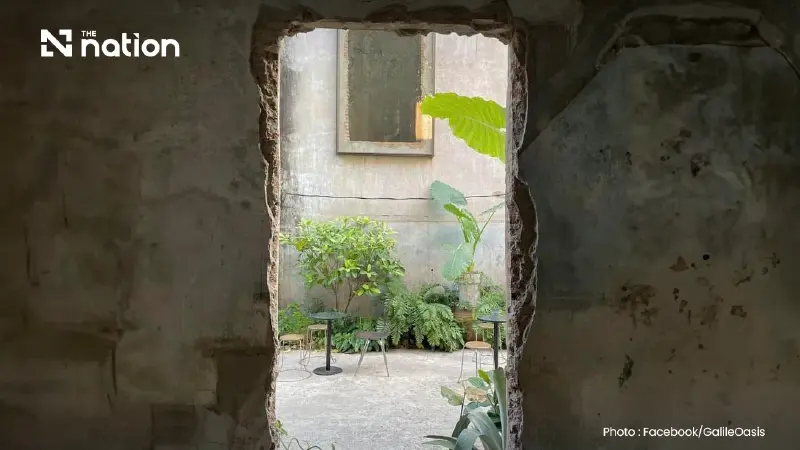


GalileOasis in Ratchathewi shows how Thailand is turning old shophouses and hidden alleys into a new model for creative urban culture.
- GalileOasis is a hidden cultural hub in Bangkok, created by transforming a complex of 20 old shophouses into a gallery, theatre, café, and hotel.
- It revives local art by providing an affordable and accessible theatre space, which serves as an open platform for young and experimental performance groups.
- The project champions adaptive reuse, preserving the original architecture of the 40-year-old buildings to create an intimate, artistic retreat in contrast to modern developments.
In Bangkok, the most interesting cultural address is not always the one with the brightest sign. Sometimes, it waits at the end of a narrow lane, behind the rhythm of traffic and the familiar density of Ratchathewi.
GalileOasis is one of those discoveries. Hidden off Banthat Thong, the compound brings together a gallery, theatre, café, restaurant and boutique hotel in a leafy pocket of the city, offering a softer alternative to Bangkok’s polished shopping complexes.
Its charm begins with what it chose not to erase. The project transformed 20 shophouses, each more than 40 years old, into a calm urban retreat while keeping traces of the original structures, including raw architectural details and old wooden floors.

That act of reuse gives GalileOasis its quiet power. It does not shout for attention. It invites visitors to slow down, walk in, look up and notice how much Bangkok still has tucked between its main roads. The courtyard, softened by greenery, feels less like a development project than a secret chapter in the city’s cultural diary.
By day, Piccolo Vicolo Café gives the space its social pulse, drawing creatives, coffee drinkers and casual wanderers into a courtyard framed by exposed walls and plants.
The theatre is especially important. GalileOasis Theatre has been described as an open platform for younger theatre groups to rent and stage performances, helping keep experimental work visible in a city where creative space can be expensive and hard to find.

For Thailand, GalileOasis reflects something larger than one photogenic destination. Bangkok was selected by UNESCO in 2019 as a Creative City of Design, recognising the capital’s use of design as a tool for urban development.
GalileOasis brings that idea down to human scale. It shows that Thai creativity is not confined to galleries, festivals or luxury districts. It can live in reused shophouses, shared courtyards, small cafés and alleyways that reward curiosity.
In a city often defined by speed, GalileOasis offers a more intimate Bangkok: adaptive, artistic and deeply local. Its success suggests that the next chapter of Thai urban culture may not be built by replacing the old, but by listening carefully to what it can become.
