
Bangkok city plan reshapes 24 key areas around rail and future urban trends
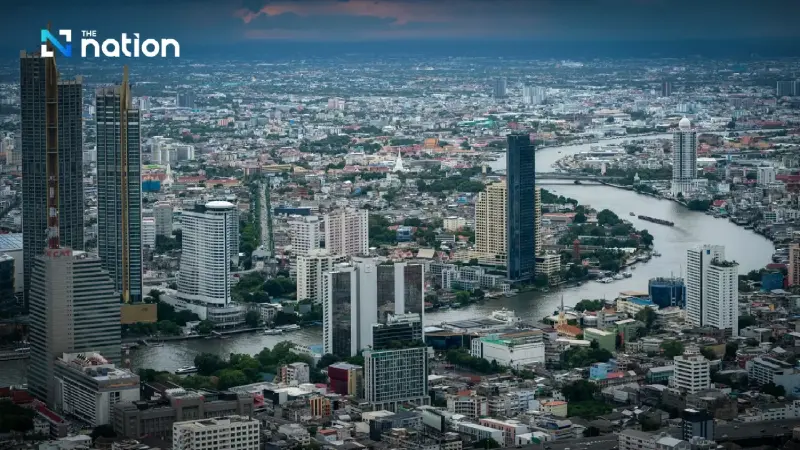


Bangkok’s revised city plan would increase development potential in 24 areas, support rail-linked growth and offer incentives for public spaces and lower car use.
- The fourth revision of the Bangkok Comprehensive Plan focuses on increasing the development potential of 24 key areas, driven by the city's expanding rail network.
- The plan is guided by five major urban trends: Transit-Oriented Development (TOD), the 15-Minute City, Healthy City design, climate resilience, and hybrid work patterns.
- Changes include rezoning land to allow for higher-density residential and commercial development, particularly around new rail stations in suburban areas like Don Mueang and Lak Si.
- The plan introduces incentives for developers, such as increased floor space in exchange for public benefits, and reduces parking requirements near major transit hubs to encourage rail usage.
Bangkok is approaching a major turning point in urban development as its expanding rail network pushes growth beyond the city centre and into suburban areas.
Location is therefore becoming less about distance from central Bangkok and more about connectivity, access to services and the quality of life an area can offer.
The shift is forcing property developers to rethink their approach from simply “selling space” towards creating greater value for everyday living. At the same time, urban planning rules are being adjusted so land use can better reflect Bangkok’s changing structure.
Five megatrends reshaping urban development
Sitthiphon Kusumoranya, deputy director of the Bangkok Metropolitan Administration’s City Planning and Urban Development Department, said the next phase of urban development would be driven by five major trends:
Transit-Oriented Development (TOD), which concentrates development around mass-transit stations; the 15-Minute City, where essential services can be reached within a short journey; the Healthy City, with urban environments designed to support wellbeing; climate resilience and ESG, focusing on sustainability and the ability to cope with climate change and natural disasters; and hybrid work, reflecting more flexible working patterns.
These trends are not simply changing the physical form of cities. They are increasingly shaping property-investment decisions, from site selection and project design to the provision of public spaces that meet changing urban needs. Bangkok has also been working with professional groups on TOD planning around mass-transit stations.
Revised plan targets 24 high-potential areas
The fourth revision of the Bangkok Comprehensive Plan is currently in the 90-day public-notice stage, during which affected parties can submit objections or requests for amendments.
The revision reviews land-use designations in 24 key areas, with the aim of increasing their development potential in line with transport infrastructure and the city’s future growth.
The draft is expected to take effect around mid-2027. The BMA officially opened the 90-day public-notice process for the fourth revision in August 2026.
Overall, more land would be designated orange, indicating medium-density residential use, and red, for commercial development.
At the same time, some green-striped areas designated for rural and agricultural conservation would be reduced, providing greater flexibility for land development. Under Bangkok’s zoning system, green-striped land is designated for rural and agricultural conservation.
Don Mueang and Lak Si gain from rail expansion
Don Mueang and the Lak Si roundabout area illustrate how the revised plan seeks to respond to expanded rail connectivity.
Some land would be rezoned from yellow, or low-density residential use, to orange, allowing medium-density development, while commercial red zones would also be expanded.
As rail becomes increasingly central to travel, land around stations gains greater potential for housing, commercial activity and other urban uses.
Srinakarin-Rom Klao development capacity doubles
Another significant change concerns Srinakarin-Rom Klao Road, where land would be rezoned from yellow to orange.
The change would raise the permitted floor-area ratio from 1.5 to 3.0, effectively allowing substantially more building floor space on the same plot.
Parts of Bangkok’s eastern floodway would also be changed from green-striped rural and agricultural conservation land to green rural and agricultural zones, allowing detached and semi-detached housing under conditions set by the new plan.
Asok Montri and Khlong Toei set for new development roles
Changes are also proposed for central Bangkok.
Asok Montri would be upgraded to a very high-density residential area, supporting more high-rise development in a district already served by major mass-transit connections.
Khlong Toei would also see zoning adjustments intended to accommodate the future redevelopment of the Khlong Toei port area.
The changes reflect an effort to ensure the city plan is ready for the transformation of major economic districts.
Planned roads cut by 420 to reduce expropriation pressure
The draft does not focus solely on expanding development rights.
It also revises Bangkok’s planned transport network by removing proposed roads that faced public opposition.
The number of planned road routes would fall from 1,316 to 896, a reduction of 420.
The aim is to reduce the potential impact of land expropriation while making future road development more consistent with local needs.
Developers offered more floor space in return for public benefits
Another significant feature is the use of incentives rather than restrictions alone.
Developers could receive permission to increase building floor space by up to 20-25% under 10 qualifying conditions if projects provide specified public benefits.
These could include riverside parks, water-retention areas, elderly-care centres and direct connections to mass-transit systems.
The approach represents a shift in the role of urban planning — from simply determining what can or cannot be built to encouraging private developers to contribute to infrastructure and urban quality of life.
Land readjustment offers greater flexibility
The draft also introduces large-scale land-readjustment measures designed to give developers greater flexibility in planning major projects.
By reorganising land plots, infrastructure and project layouts, larger developments could be planned more efficiently.
Combined with incentives governing floor area and public spaces, land readjustment could become another tool for reshaping large-scale development across Bangkok.
Parking requirements cut near major stations
A further change would reduce minimum parking requirements by 25% within a 500-metre radius of 20 major stations.
The measure is intended to encourage greater use of rail transport and reduce dependence on private cars.
It also supports both Transit-Oriented Development and the 15-Minute City concept by encouraging denser, walkable communities around public-transport hubs.
From zoning rules to a platform for building the city
The new Bangkok Comprehensive Plan is therefore about more than changing colours on a zoning map.
It reflects a broader shift from using planning mainly to restrict land use towards creating a framework that allows individual locations to respond to rail expansion, changing lifestyles, climate pressures, an ageing population and more flexible working patterns.
For the property industry, the question is increasingly moving beyond simply what can be built on a particular site.
The more important question may be what value that development can create for the city and the people around it — a shift that could redefine how Bangkok unlocks the potential of its land as both the city and urban lifestyles continue to evolve.
Source: Krungthep Turakij
