
Cancellation of MOU 43-44 fails due to binding impact on new government


The attempt to cancel MOU 43-44 has been thwarted, as legal concerns about its impact on the incoming government prevent further action.
- A proposal was made to cancel MOU 43-44 by holding a public referendum.
- The referendum was ultimately blocked due to a legal opinion from the Office of the Council of State.
- The primary legal reason for the cancellation was that it would unconstitutionally bind and impact the next government, violating Section 169 of the Constitution.
- The plan also lacked formal support from Parliament, which contributed to the decision not to proceed.
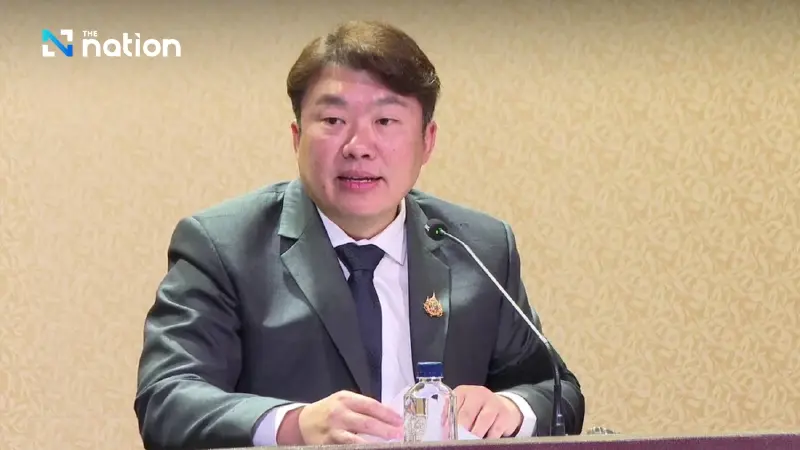
At Government House, Prime Minister’s Office spokesperson Siripong Angkasakulkiat announced on Tuesday (December 16) the Cabinet's approval of a referendum question regarding whether the public wants a new constitution.
This follows the Constitutional Court’s ruling to prevent any potential errors.
The government is considering two approaches: the first suggests that the matter should align with the previous policy statements of the National Assembly, which would require legal adjustments, especially to address timing.
The second approach, proposed under Section 9(4), involves submitting the matter to the Election Commission (EC) with parliamentary approval.
The government prefers that the referendum coincide with the general election to save costs, but this still depends on the EC's stance.
If the EC has no objections, the timeline should allow for an official announcement by the end of the year.
Minister attached to the Prime Minister’s Office, Paradorn Prissananantakul, addressed concerns that the referendum could not take place on the same day as the election due to the 60-day requirement.
Citing Section 11(3) of the Referendum Act, he clarified that under Section 9(2), (3), (4), and (5), the Cabinet could shorten the timeline as deemed necessary.
He confirmed that the Cabinet's proposal to the EC is in line with legal procedures, ensuring the cost-saving measure is possible.
Meanwhile, Deputy Prime Minister Borwornsak Uwanno proposed cancelling MOU 43-44 through a referendum.
The working group and committee concluded that while MOU 43 remains enforceable and could be amended, MOU 44 is practically ineffective and should be cancelled.
However, due to a legal opinion from the Office of the Council of State, the referendum on MOU 43-44 cannot proceed as it would affect the next government and lack formal support from Parliament.
Regarding the cancellation of MOU 43-44, Pharadorn explained that legal concerns over its impact on the next government under Section 169 of the Constitution prevented the referendum from going ahead.
However, he reassured that the government's commitment to holding a referendum was genuine, but the legal advice ultimately prevented any action contrary to the Constitution.
MOU 43-44 refers to two key Memorandums of Understanding (MOU) between Thailand and Cambodia: MOU 2000 (MOU 43) for land border demarcation and freezing environmental changes, and MOU 2001 (MOU 44) for cooperation in overlapping continental shelf areas (OCA) for resource exploration, aiming to prevent conflict and share benefits peacefully, though they remain contentious and subjects of ongoing political discussion in Thailand.
