
The voltage of Thai heritage: how electric tuk-tuks are powering Bangkok’s quiet mobility revolution
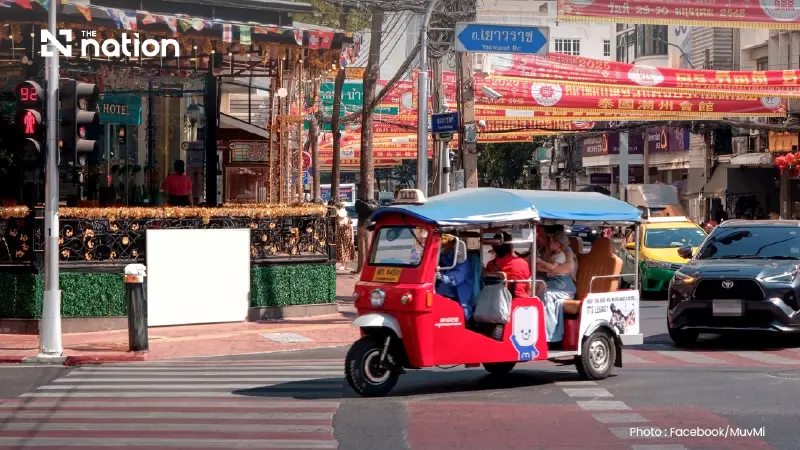


Bangkok’s electric tuk-tuk ecosystem, led by MuvMi and supported by Thailand’s 30@30 EV policy, is transforming last-mile transport into a clean, data-driven urban mobility model.
In Bangkok, progress rarely arrives in silence. Yet one of the city’s most striking transport revolutions is doing exactly that.
The electric tuk-tuk — once a novelty for visitors — is now becoming a serious piece of urban infrastructure. Through app-based platforms such as MuvMi, the humble three-wheeler has been reimagined as a shared, electrified mobility network, filling the crucial “last-mile” gap between mass transit systems and the city’s narrow sois.
What was once an informal, unpredictable form of transport has been reshaped into a data-driven ecosystem. Riders book journeys through digital platforms, routes are optimised in real time, and fleets of electric tuk-tuks now operate across key Bangkok districts, connecting commuters to BTS, MRT and canal boat services. The result is a smoother, quieter and significantly cleaner urban flow.
This evolution sits at the heart of Thailand’s broader electric vehicle ambition under the national “30@30” policy, which aims to ensure that 30% of domestic vehicle production becomes zero-emission by 2030. The Electric Vehicle Association of Thailand (EVAT) has described this transition as a structural shift in mobility, positioning the country as a regional EV production and adoption hub.

Unlike traditional top-down infrastructure projects, Bangkok’s electric tuk-tuk ecosystem has grown through a blend of private innovation, urban necessity and cultural familiarity. The tuk-tuk remains deeply Thai — part heritage, part identity — but its function has been modernised into a modular, tech-enabled transport asset.
Companies like MuvMi have played a key role in scaling this model, creating shared electric fleets that operate in defined zones and integrate with public transport nodes. The system reduces reliance on private cars for short trips, helping ease congestion while cutting local emissions in densely populated areas.
It is also attracting growing interest from development institutions and investors focused on sustainable urban mobility. The Asian Development Bank has previously supported electric mobility pilots in Thailand as part of wider efforts to decarbonise transport systems in Southeast Asia, reinforcing Bangkok’s role as a testing ground for scalable green solutions.
What makes Thailand’s approach distinctive is its balance between innovation and familiarity. Rather than replacing the tuk-tuk, the system upgrades it — preserving cultural identity while embedding it within a smarter, cleaner mobility network.
In doing so, Bangkok is quietly demonstrating a model of “elastic mobility”: adaptable, inclusive and responsive to the real texture of the city. It is transport that fits the streets rather than reshaping them.
As the electric tuk-tuk hums through Bangkok’s evening traffic, it represents more than convenience. It signals a shift in how cities in the region might evolve — not through disruption alone, but through the careful electrification of what already works.
In the future city Thailand is building, even its most iconic vehicle is being recharged for the next century.
