
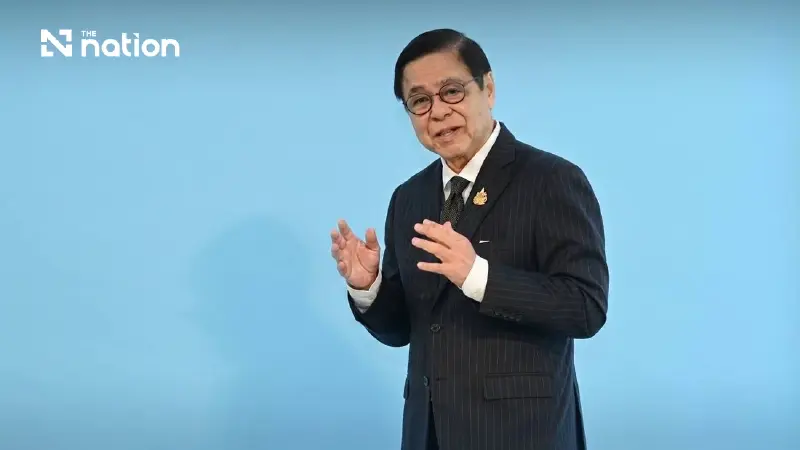
OpEd by H.E. Mr. Sihasak Phuangketkeow, Deputy Prime Minister and Minister of Foreign Affairs of Thailand


With UNCLOS conciliation proceedings between Thailand and Cambodia now formally under way, Thailand is preparing to engage constructively.
We would have preferred to resolve the matter directly with Cambodia. Direct diplomacy is usually faster, less cumbersome and, when there is sufficient political will, more effective. But Thailand is a State Party to UNCLOS. We accepted the process and will take part in good faith, with the interests of the Thai people and our sovereign rights firmly in view.
That willingness to engage through international law should not be mistaken for a willingness to treat every dispute along the Thailand-Cambodia border as if it existed in a vacuum. It does not.
A boundary is not drawn on a blank sheet of paper. It is surveyed on actual ground, by actual people, in communities that need to be safe enough for technical work to take place.
This is the point that risks being lost in the rush to convene the Joint Boundary Commission, because no technical or legal process can be separated from conditions on the ground. Before survey teams can do their work, the border must be sufficiently safe, stable and properly managed.
That means implementing the commitments already agreed by both sides on ceasefire and de-escalation, joint demining and cooperation against transnational crime. They are not optional confidence-building exercises to be pursued when convenient. They are what make credible border discussions possible in the first place.
Consider demining. Thai soldiers have repeatedly been injured by landmines along the border, including incidents involving mines that have been identified as newly laid. Just last week, yet another Thai deminer lost a limb. Whatever political narrative one prefers, a mine does not become less dangerous because a meeting has been scheduled. Nor can a Joint Boundary Commission survey team be expected to work in an area where every step may carry a lethal risk.
Joint demining is not a procedural footnote. It is a practical prerequisite. It is also an obligation rooted in the commitments both countries have undertaken bilaterally and internationally, including under the Ottawa Convention. If both sides are genuinely committed to resolving border problems peacefully, making the ground safe for the people expected to do that work should hardly be controversial.
The same logic applies to transnational crime. A border is not secure if criminal syndicates can exploit weak enforcement, traffic people across it and operate industrial-scale scam networks with impunity.
The scale of the problem is well known. The global online scam industry generates more than US$1 trillion a year, while the International Organization for Migration estimates that more than 300,000 people from over 80 countries have been trafficked into illicit call-centre networks in Southeast Asia. Reports have identified operational bases in our neighbouring countries, but Thailand is not exempt from responsibility. We have a duty to act on our side of the border as well, and we have been doing exactly that.
Thailand has helped tens of thousands of Thai and foreign victims return home. We have expanded intelligence and information sharing, strengthened cooperation on prosecution and pushed for wider international partnerships. These efforts intensified after last year’s clashes with Cambodia, when Thai authorities uncovered large scam operations along the border, including in areas previously used by Cambodian forces as military positions. The discoveries helped expose the scale of the networks, their methods and the extraordinary degree of impunity in which they had been operating.
This matters to the border question because lawlessness does not politely stay in its own policy silo. Areas affected by mines, military tensions or organised criminal activity are also areas where communities cannot return to normal life, while cross-border commerce suffers and any serious effort to resolve contested claims becomes harder.
The sequence therefore matters. First, create the security conditions: uphold the ceasefire, reduce military risks, clear mines, strengthen law enforcement and cooperate against criminal networks. Then technical border work can proceed on firmer ground, literally and politically.
These security issues are already reflected in the Joint Statement painstakingly negotiated by both sides. What is needed now is not another declaration of good intentions, but implementation.
Thailand will continue to do what it can and what it must. We will engage international mechanisms seriously and uphold our legal obligations. We will continue to advocate for a rules-based international order in which law is not an à la carte menu. States cannot insist on rules they find useful while treating inconvenient obligations as optional.
That principle applies to Thailand as much as to Cambodia. A durable settlement will not come from public posturing, legal theatre or technical talks detached from realities on the ground. It will come from concrete steps that reduce risk, protect communities and create the conditions in which both countries can address difficult boundary questions peacefully and credibly.
Thailand is ready to turn that page. We hope Cambodia is ready to do the same. But turning the page requires more than declaring that a new chapter has begun. First, we must make sure the ground beneath it is secure.
