
Integrated people management for better execution


Human capital offers the greatest tool for improving corporate performance.
Think about it: Employee-related costs account for about 70 per cent of a company’s operating expenses and employees are responsible for achieving strategy execution and value creation, so therein lies the greatest potential for increased execution, productivity and ultimately, financial performance. This is the new imperative. Without people performance, a great strategy is just an idea – it’s your people who turn it into reality.
The critical driver of performance lies within an organisation’s ability to put the right talent in the right positions, and then align the workforce behind the company’s strategy.
Superior execution is about sharpening the focus and performance of your people to do more of the right things, faster and with better quality than the competition. The closer you come to fully coordinating employee performance with your strategy, the greater the chance that your objectives will be achieved. For this reason, talent management has become critically important to all businesses, demanding the attention of the C Suite and the Board of Directors.
--Doing the right things matters now more than ever
With the fast pace of change in today’s economy, the ability to quickly manoeuvre your execution engine in the right direction is more critical than ever. With strategy evolving at a lightning-fast pace and resources becoming more limited – less budget, less time and fewer people – there’s no margin for error. Do more with less. Can you afford to let a month pass from the time you change your product strategy to the time you decide who will sell the new products (and to which customers)?
It is absolutely critical to get all of your people focused on responding to the shifts in your strategy. As part of this process, managers and executives must make sure they’ve got the right people with the right skills in the appropriate roles to support strategic changes. They must also have the awareness to determine who is getting the job done in order to reward and retain top performers. By aligning and arming your workforce and giving them incentives to drive strategy execution, you will see results.
--Integrated people-management systems are essential
Many companies have extensive tools and instruments to analyse and track their business results, but very few have systems and business processes that provide detailed insights into understanding and influencing how employees drive these results. Few leaders can truly say, “I have the tools that tell me what everyone is working on and how well they are performing.” This lack of insight into people’s performance is amazing, considering that people are a company’s largest cost and have the greatest influence on its performance.
How do you know if people are aligned, on task, being productive – but not over-burdened – and generating results? Who are the top performers and why? Do you have the right resources and enough of them to execute? Are people burned out from carrying too big a load? Often, it isn’t even clear what people are working on or how well they are doing. These are pretty basic questions, but tremendously important and often hard to answer.
HR can help if they can get these types of answers. This requires a holistic view of people processes across the organisation. These views are made possible only if people systems are integrated – systems like HR and Talent Management, recruiting, learning and development systems, succession planning and compensation and other people-related systems. The integration of these systems enables – indeed empowers – the organisation to obtain the right metrics that not just track execution, but begin to predict its success.
The value of talent management isn’t just about automating business processes, it’s about improving them.
Many businesses already have systems in place for one or more human-resources processes, including performance, compensation, talent acquisition, succession and skills and competency management. Automating these HR systems can make the individual processes more efficient and collecting data from these HR domains is a good first step.
If the systems are confined, however, the value of the data stored within them is limited. Recognising these limitations, forward-looking businesses have started to implement integrated talent-management systems that span across all of these domains. Such systems provide numerous advantages, including reduced duplication of effort and a common workflow with a uniform interface across all systems.
Integrated talent management breaks down the walls of confinement for information and seamlessly connects the intelligence dots across all HR processes.
Beyond productivity, the real purpose of integration is competitive advantage. In any competitive market, the performance of each business is linked tightly to the strategic decisions made by executives and managers. To make better decisions, these executives and managers must have a clear view of the talent within the organisation and its ability to carry out business strategies and achieve the organisation’s goals.
While the efficiencies made possible by automated systems are not to be discounted, the real value lies in using the data to gain a competitive advantage. Beyond automation and efficiency, the people-management system that provides quick, accurate answers to strategic talent-management questions is the one that yields the highest overall benefit for the business.
The goal of integrated people-management systems is not merely to make HR more efficient, but to provide the organisation with predictive information on execution that leads to the decisions of talented employees making the business more competitive. This can only be achieved when your people-management systems are fully integrated across the organisation.
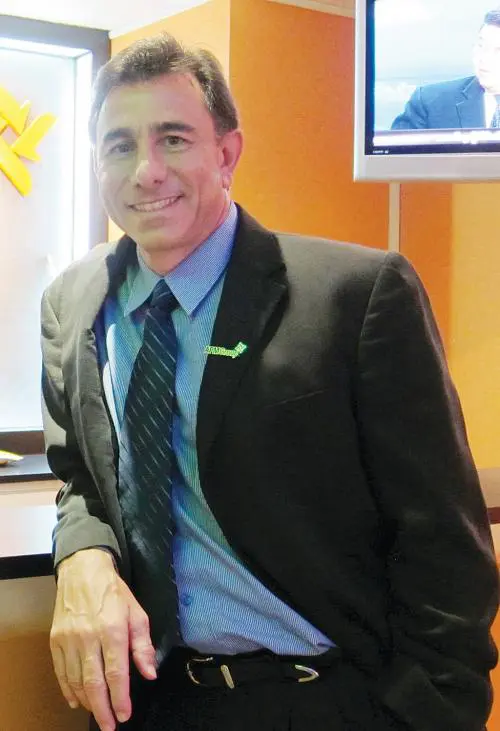
John DiDominic is an executive director of client solutions at APMGroup. He may be contacted at [email protected]. APMGroup has been helping build high performance organisations in Thailand since 1992.
