
Bt10 bn loan for Oil Fund


Panel wants octane 91 sales halted to boost alternative energy promotion
The Energy Policy Administration Committee has approved borrowing of Bt10 billion for the Oil Fund, which is operating at a loss as a result of the government’s scrapping of levies to support the fund, and will today propose that the National Energy Policy Council consider scrapping octane 91 petrol sales.
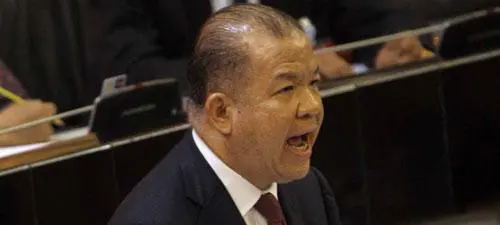
“If the Prime Minister [Yingluck Shinawatra] agrees, the plan should proceed immediately. The termination of octane-91 sales would be a clear indication that the alternative-energy promotion policy is working, as more motorists are switching to gasohol,” Energy Minister Pichai Naripthaphan said yesterday.
Loans would be sought from local financial institutions, Pichai said, adding that Bt10 billion should be sufficient for the fund, whose losses currently stand at Bt1 billion. The borrowing plan will be submitted today to the National Energy Policy Council, which is chaired by Yingluck.
The Energy Ministry is considering the resumption of Oil Fund levies on octane-91 and octane-95 petrol, as well as on diesel, thanks to recent declines in oil prices, Pichai said.
Contributions of levies on octane-91, octane-95 and diesel to the Oil Fund were suspended to partially fulfil one of many promises made by the ruling Pheu Thai Party in its campaign ahead of the July 3 election.
Before the scheme was implemented, levies on octane-91, octane-95 and diesel were Bt6.7, Bt7.5 and Bt1.27, respectively.
Yingluck vowed before the election that the party would cancel the Oil Fund levies imposed on retail fuel oil.
However, the Pheu Thai-led government announced the suspension of Oil Fund contributions from only three fuel types: octane-91, octane-95 and diesel. The measure was criticised as benefiting the wealthy, who tend to drive cars using the fuels, while sending the wrong signals in terms of fossil-fuel consumption, as it has brought the retail price of octane-91 close to that of gasohol, a more eco-friendly fuel.

The levies’ suspension has prompted complaints from oil retailers and ethanol producers, as cheaper premium petrol prices have led to lower consumption of ethanol-mixed gasohol products.
Pichai said the loan would be used to subsidise prices of fuels including LPG, NGV and gasohol.
“The meeting of the council today will also discuss how to handle the termination of price controls for LPG and NGV at the end of September,” he said.
A source from the Energy Ministry said the committee will propose ending sales of octane-91 within a year because it will take a while to draw down remaining inventory.
Global oil prices are expected to fall, due to concerns over the economic situations in both the US and Europe.
If world oil prices decrease, the Energy Ministry will consider collecting levies for the Oil Fund as was done in the past, before the levies were cancelled on octane-95, -91 and diesel on August 27.
Pichai also said the committee agreed to shelve its campaign to promote palm oil plantations. In January 2008, the Energy Ministry signed an order with the Agriculture Ministry providing funds to continually promote the growing of palm oil. So far, Bt1 billion has been spent on the scheme.
However, with the Oil Fund’s finances in an unpredictable state, the ministries will no longer be able to support the measure. Furthermore, planting palm oil has received significant interest from the private sector and does not need to rely on continued government support, Pichai said.
