
Two cargo ships sink near Strait of Hormuz in 24 hours
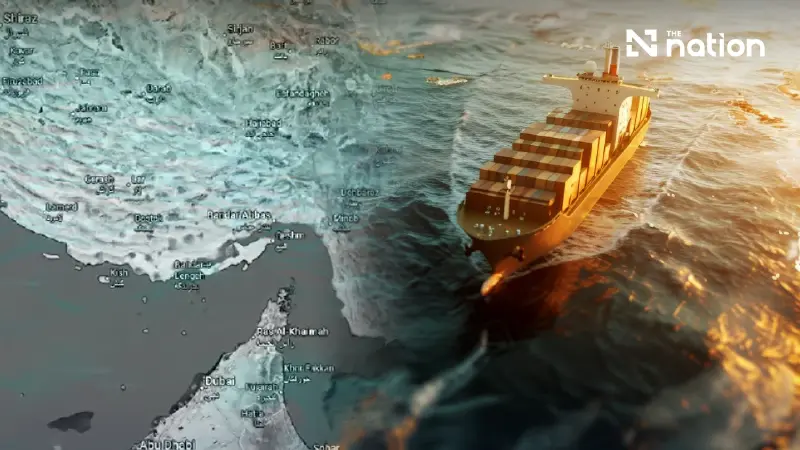


All 21 GFS Pride crew were evacuated safely, while Cape Dao sank near Hormuz weeks after a September 23 attack killed one crew member
- Two cargo ships, the GFS Pride and the Cape Dao, sank near the Strait of Hormuz within a 24-hour period.
- Both vessels sank as a result of damage sustained from separate projectile attacks.
- The attacks are part of a stated Iranian strategy to disrupt shipping in the strait to keep oil prices high and pressure the United States.
- These sinkings bring the total number of vessels lost since the start of the US-Iran war to three.
GFS Pride and Cape Dao, two cargo ships damaged in separate projectile attacks, sank near the Strait of Hormuz within 24 hours of each other, maritime security officials said on October 14, 2026.
The Singapore-flagged GFS Pride, a container ship with a capacity of 2,824 twenty-foot equivalent units, was struck while passing through the strait on October 13. The Maritime and Port Authority of Singapore (MPA) said the vessel sustained damage and caught fire before sinking. All 21 crew members were evacuated safely, with no injuries reported.
The Antigua and Barbuda-flagged Cape Dao, a dry bulk carrier, sank weeks after a September 23 attack that killed one crew member. The remaining crew were evacuated immediately after that attack.
GFS Pride and Cape Dao were the second and third vessels to sink since the US-Iran war began on February 28, according to International Maritime Organization (IMO) casualty data.
The earlier loss was the Malta-flagged container ship Safeen Prestige, which sank north of the Strait of Hormuz after being struck by a projectile in March. Iran’s Islamic Revolutionary Guard Corps also attacked and seized the container ship MSC Francesca in April.

Iranian officials describe tactics to keep oil prices high
Two senior Iranian officials told Reuters that Iran was employing new tactics against ships passing through the Strait of Hormuz, aiming to keep oil prices elevated and increase pressure on the United States before its midterm elections.
Risks to shipping around Hormuz had increased over the preceding 10 days after Iran said it would intensify attacks in retaliation for the US blockade of Iranian ports and sanctions tightened in September.
Before the war, roughly a fifth of global trade in oil and liquefied natural gas passed through the Strait of Hormuz. Restrictions on passage have heightened concerns over energy security and international oil prices, while continued attacks and shipping restrictions could disrupt wider maritime trade and global supply chains.

Singapore condemns attacks on commercial shipping
The MPA expressed deep concern over the continuing attacks on commercial vessels, describing them as unjustifiable and a breach of international law.
Maritime risk management firm MARISKS warned that the danger extended beyond oil tankers. Container ships and dry bulk carriers also faced attacks capable of causing severe damage or sinking vessels, the company said.
