
Ma Jun urges shared green standards to cut financing costs
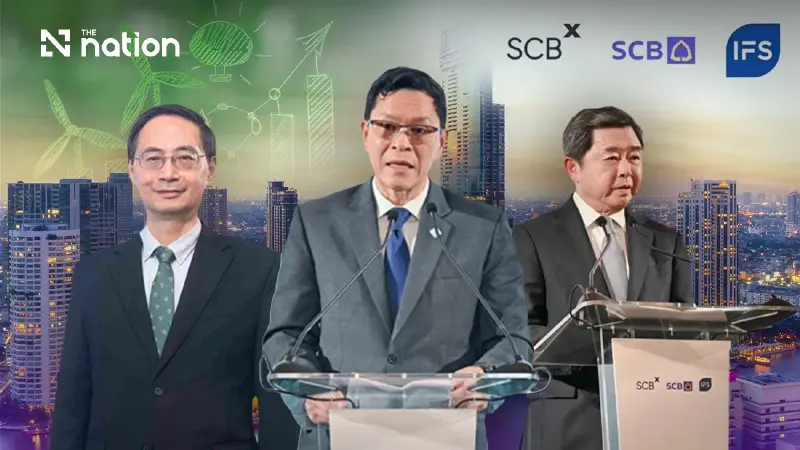


At an SCBX and SCB dialogue in Bangkok, Ma Jun outlined how compatible green rules, staff training and technology could expand sustainable finance.
- Ma Jun advocates for shared and compatible green finance standards, known as taxonomies, to lower financing costs and attract cross-border investment.
- These common standards would curb greenwashing, reduce verification costs, and build investor confidence by creating a shared language for banks, investors, and businesses.
- Greater compatibility between national taxonomies, such as the model between China and the EU, facilitates international capital flow by reducing duplicate labeling for investors.
- Ma stressed that successful implementation also requires coordinated action between policymakers, regulators, and industry, along with financial incentives and transparent disclosure.
Ma Jun, founder and president of the Institute of Finance and Sustainability (IFS), has called for clearer and more compatible green finance standards to lower financing costs and attract cross-border investment in Asia. Ma outlined the proposal at a Bangkok dialogue hosted by SCBX and Siam Commercial Bank (SCB), according to an October 15 statement from the organisers.
The “Innovation and Trends in Sustainable Finance in Asia” dialogue brought together financial, business and policy leaders at SCB’s historic Talad Noi branch. The event was held alongside the 2026 Annual Meetings of the International Monetary Fund (IMF) and World Bank Group.
Shared green standards could lower financing costs

Ma argued that credible taxonomies, which classify activities that qualify as green, could curb greenwashing and give banks, investors and businesses a common language. Clear, rules-based classifications could reduce verification costs, strengthen confidence and support the expansion of green lending and green bonds.
Greater compatibility between national taxonomies could also facilitate cross-border capital flows, Ma explained. He cited common taxonomy work between China and the European Union, later expanded to include Singapore, as an example of how shared standards could reduce duplicate labelling, attract international investors and lower financing costs.
For the Association of Southeast Asian Nations (ASEAN), Ma identified compatibility between taxonomies as a critical next step in developing deeper regional sustainable finance markets.

Ma, a former chief economist at the Research Bureau of the People’s Bank of China, drew on his experience drafting China’s green finance policy guidelines and building international consensus through the Group of 20 (G20). Moving from policy ambition to implementation required coordinated action, transparent disclosure, innovative financial products and incentives that made green investment commercially attractive, he argued.
Green finance could not be advanced by a central bank, regulator or financial institution acting alone, Ma cautioned. Policymakers, environmental agencies, market regulators and industry bodies needed to align finance, technology, environmental measurement and industrial policy.
Ma pointed to China’s high-level coordination as a means of turning green finance policy into market activity. Targeted electric vehicle incentives and investment in charging infrastructure had helped stimulate demand and overcome early market barriers, he added.
Skills and technology can unlock viable green projects
Ma identified a lack of practical expertise as a major constraint on sustainable finance, arguing that progress could not be driven solely from the boardroom. Relationship managers, credit officers, product developers, risk teams and clients all needed to understand how green finance worked and created economic value.
China’s Industrial Bank had expanded green finance training from a specialist team to approximately 10,000 employees, Ma noted, presenting the example as a model for institutional transformation.
Ma also highlighted the Capacity-building Alliance of Sustainable Investment (CASI), which he said had developed more than 100 training modules and trained over 10,000 professionals globally. The alliance could support capability development in Thailand and the wider region, he suggested.
Technology offered another route to expanding investment, Ma explained, citing solar-to-hydrogen solutions that could become commercially scalable with the right capital, technology and project structuring.
To address the shortage of green projects ready for financing in developing markets, Ma described the Green Accelerator, a non-profit platform he launched. The platform brings together philanthropic capital, affordable green technologies and financing partners to turn early-stage opportunities into commercially viable projects.
For Thailand and Southeast Asia, Ma’s proposals highlighted opportunities to combine finance and technology in projects that strengthen resilience, productivity and sustainable growth.
Ma Jun calls for green finance to reach smaller businesses
Small and medium-sized enterprises (SMEs) often remained outside green finance despite their importance to supply chains and the real economy, Ma said. Large projects and major companies had benefited from green lending, but extending access to smaller businesses remained an important unfinished task.
Ma recommended green supply chain finance, knowledge transfer, guarantees and concessional financing to help SMEs adopt rooftop solar, energy-efficiency measures and waste-to-energy technologies. Bringing smaller firms into the transition would be essential to building a more inclusive, competitive and resilient green economy in Thailand.
SCB targets at least 500 billion baht in sustainable finance
SCB aims to mobilise at least 500 billion baht in sustainable finance by 2030, after mobilising nearly 300 billion baht from 2023 to June 2026, according to the organisers’ statement. SCBX and SCB described the bank as Thailand’s largest sustainable finance provider.

Veerathai Santiprabhob, chairman of SCBX’s sustainability committee, framed the dialogue around stewardship, resilience and partnership. Climate change was already reshaping economic risk, investment and competitiveness, he argued, making sustainability a core business strategy rather than a distant environmental concern.
“Sustainability must be embedded in the way finance supports the real economy,” Veerathai said. “As climate risks become economic risks, financial institutions have a responsibility to help customers transform, adapt and build long-term resilience.”
For SCBX and SCB, green finance meant enabling businesses, communities and the broader economy to make the transition to a more sustainable future, rather than only funding environmentally beneficial projects, Veerathai explained. The approach aimed to deliver benefits for customers, the climate and society.

Prasan Chuaphanich, vice-chairman of SCBX’s board and chairman of its executive committee, linked stewardship to credible standards and clear market rules. Resilience depended on turning transition ambitions into projects that could attract financing, while partnership required technology, capital and expertise to work together, he said.
Prasan reaffirmed SCBX’s readiness to collaborate with Ma, IFS, clients, regulators, investors and other institutions to put the discussion’s proposals into practice.
“By combining clear standards, stronger capabilities, innovation and partnership, we can move from ideas to implementation and turn green finance into real impact for businesses, society and future generations,” Prasan said.
