
People issues lead Islamic Bank's principles
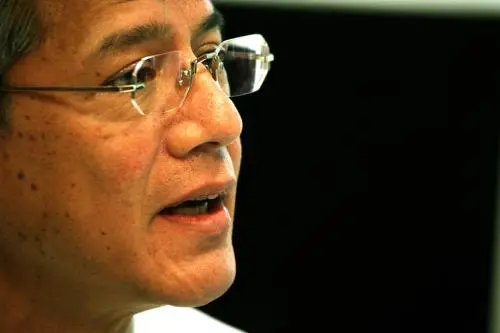


Recently profitable bank works at 'Go Home by 6 O'Clock' campaign
Having successfully rescued Islamic Bank of Thailand from a huge loss, the bank's president, Dheerasak Suwannayos, believes in “optimising” rather than “maximising” profits.
“Farang-styled bosses are only work- and goal-oriented, and staff who cannot perform have to go. This way cannot sustain an organisation.
“We are only vying for optimisation, not maximisation, because nobody can be ‘maximising’ all the time,” Dheerasak told a seminar held by the Hay Group, a leading management consultancy.
The Islamic Bank of Thailand, or Ibank, uniquely operates in accordance with the rules of Sharia, or Islamic rules on transactions. These prohibit interest charges and lending to some industries, such as those related to alcoholic beverages and weapons, monopolies and other businesses that involve stock hoarding or risk causing family problems, such as massage parlours.
Dheerasak said Ibank adhered to Sharia principles to balance the satisfaction this brought to shareholders, customers and employees, whilst other banks focused on maximising their financial returns, bringing stresses to their staff and damaging the happiness of their families. Ibank's “three pillars of success” comprise work-life balance, individual responsibility and employability.
Dheerasak admitted that several years ago, when Ibank was struggling to getting rid of huge losses, some staff were working late – until 10pm or 11pm – and also working during the weekends. However, over the years, the bank has reviewed and improved related systems to speed its work processes. An upgrading of its core banking system, which was completed four months ago, has helped branch staff to go home by 7pm, he said.
“But I'm still not satisfied. That's still too late. Today, our goal is 'Go Home at 6 O'Clock',” he said.
Ibank's “Go Home at 6 O'Clock” programme will focus on reviewing systems and procedures. Increasing its staff will be a last resort.
“We staff adequately, we do not overstaff. For example, if there is a request for five positions, we will fill the first three and then review the results. However, for some necessary units such as the auditing function, we allow full hiring – not for detecting falsity, but for measuring systems, flows and efficiencies,” he said.
Dheerasak said remuneration strategy had paid a substantial role in Ibank's rehabilitation programme. Staff were promised salary raises in phases, along with the bank’s improved financial performance. From accumulated losses of more than Bt200 million, Ibank made a profit of Bt2 million in 2008 – its seventh year of operations – booked a profit of more than Bt300 million in the following year, and lifted the profit figure to Bt1.25 billion last year. It expects at least the same profit this year.
Currently on a retail-expansion spree, Ibank plans to increase its number of branches from 79 to 101 by the end of this year. It aims to become one of the top three Islamic banks in Asia.
During the seminar’s question-and-answer session, Thai Oil's chief executive Surong Bulakul said he admired the Ibank president’s accomplishment in building up faith within the organisation, and asked how much time he spent talking with staff.
“The most,” Dheerasak responded, “more than talking about products.
“[In meetings] we will talk about people issues before anything else. Our principle is every human is a hero. Everyone has his pride and dignity. Even a driver – at his home, he is the hero of his family.
“The last thing I would like to pass on is this: Don't love yourself more than the organisation, and don't love the organisation more than yourself. Love them equally and then you can live together,” Dheerasak said.
