
BOT/MOF explore solutions to handle FIDF debts
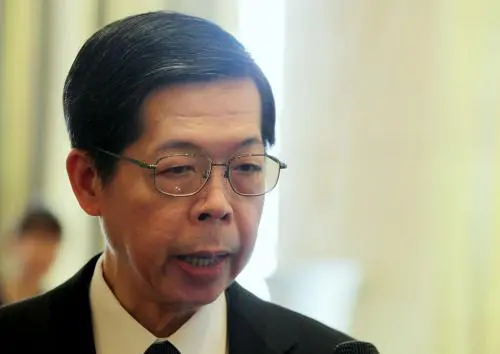


Bank of Thailand Governor Prasarn Trairatvorakul expressed concerns that the transfer of Financial Institutions Development Fund (FIDF)'s debts from the Finance Ministry may produce a misleading signal that the central bank would print money to repay all
During their meeting yesterday, Finance Minister Thirachai Phuvanatnaranubala urged Prasarn to study the possibility of the transfer of Bt1.1 trillion debts to the central bank, following the heavy interest burden amounting to Bt65 billion annually.
The proposal worried Prasarn, for it could convince investors that the central bank would monetise the debts.
"Investors should understand that we just explore the possibility. There is no conclusion yet," he said.
The US's debt monetisation has led to dollar weakening.
Thirachai also said that the central bank may slap fees from financial institutions to manage the debts. To this, Prasarn said at present, the institutions are required to pay 0.4 per cent of deposits to the Deposit Protection Agency. Yet, he promised that the central bank's accounting practices would be reviewed, to see how to turn the balance sheets into a positive territory and hence allow the central bank to repay debts.
After the meeting, Thirachai also said that the government no longer plans to retrieve foreign reserves for the planned sovereign wealth fund and the Finance Ministry will explore other funding options.
Both Prasarn and Thirachai also assured investors that the central bank would keep the global financial crisis at bay, following heavy sell-offs in Thai shares.
“We have opened a swap line for commercial banks and we have adequate dollar reserves to satisfy demand," Prasarn said.
The Bank of Thailand and the Finance Ministry yesterday also agreed to change the formula for inflation targeting, by using headline inflation instead of core inflation.
The central bank will set a headline-inflation target at 3 per cent and plus or minus 1.5 percentage points annually, Prasarn said.
“It would be easier for people to understand, as the Commerce Ministry also reports headline inflation monthly,” said Prasarn. Headline inflation includes food and fuel prices while core inflation excludes them.
The target is also consistent with performance of the Thai economy, he said. Currently the central bank uses core inflation in a range between 0.5 and 3 per cent as its target.
The headline inflation rate is currently about 4 per cent and core inflation is 2.8 per cent.
