
Can iPhone4S save phone maker's failing CSR?


New leader may already have fumbled
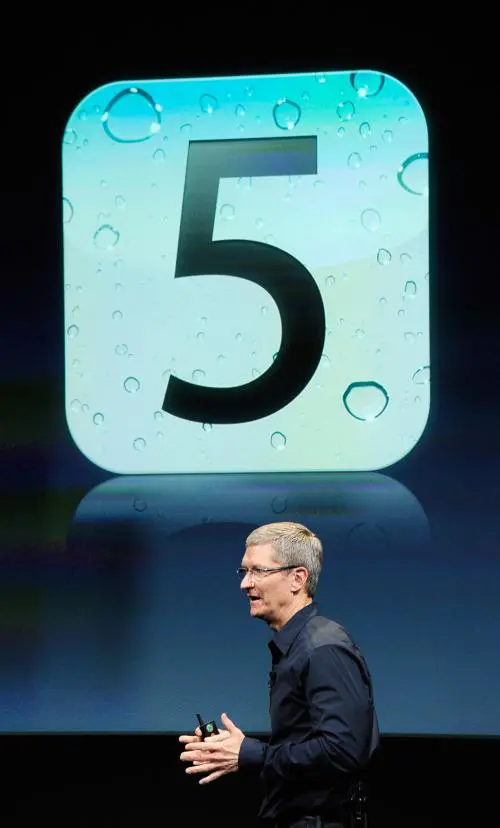
Apple’s much anticipated release of its new iPhone4S at Cupertino, in California, this week was, in a sense, a double launch.
The iPhone, facing growing competition from Android smart phones, could use the boost. But for Apple’s new chief executive, Tim Cook, the event carried even more importance.
It was Cook’s first major sales event debut, now that Apple’s founder is no longer around to impose what Silicon Valley insiders refer to as Steve Jobs' "reality distortion field."
Even though Apple’s fanatically loyal customers were disappointed that it was not the long-anticipated iPhone5, the iPhone4S will doubtless continue to dominate the market, at least for the time being. But the industry and those fanatical customers are considerably less certain about what to expect from Cook. That is partly because Apple's culture of secrecy and Jobs’ visibility have combined to make Cook relatively unknown to the public at large.
The uncertainty is compounded by the fact that earlier attempts to replace Jobs proved disastrous. Until now, Jobs seems to be the only one to have had that special chemistry required for running Apple.
What makes leading Apple difficult to maintain is the fact that the company is not selling a product as much as it is a vision – the founder's vision. Apple’s products are undeniably cutting edge, well built and beautiful to look at, but ultimately they are commodities that now face tough competition. Samsung is gnawing into iPhone sales by offering technically superior products for comparable prices.
According to recent media coverage, it would seem that Apple is interested in developing a new vision, one that includes corporate social responsibility (CSR).
Jobs never showed much interest in public ‘do-gooding’. He always maintained that equipping the public with the best technology was worth more than cash grants to charities. But earlier this month, Cook announced that Apple would embrace a new corporate charity-matching programme, using a model much like those of other major companies – a dollar for dollar match for employee donations of up to US$10,000 a year.
Evolution at apple
Cook clearly wants to send the message that Apple is evolving in the way it perceives CSR – a major differentiating factor between himself and the charismatic Jobs. However, the decision curiously followed media allegations regarding Apple’s lack of CSR activities, including a New York Times article mentioning matching as a solution employed by a considerable portion of the Fortune 500 companies.
Apple still needs to embrace the core values that make it a “cool” company: in short, that owning an Apple product secures membership in a select group. While Apple is perhaps overdue for a CSR strategy, the decision to enact donation matching is decidedly not the "Apple Way."
The sequence of events surrounding Apple’s CSR announcement, as well as the fundamentally uncreative quality of the programme presented, imply that Cook is only responding to media pressure rather than bringing to CSR the same kind of innovative and inspiring vision for which Apple is so highly regarded. And in that regard, the corporate-matching programme is a fail.
Developing a CSR strategy around neither a sense of obligation nor calculation, but rather around certain well-defined character virtues, is highly effective. In particular, integrity, empathy and zeal, among others, are critical during times of uncertainty. But they need to be well coordinated and implemented from the inside out – not the other way around.
Integrity: Any major organisational change is accompanied by insecurity. The transition from Jobs’ obsessive control over hiring and firing is bound to create uncertainty among employees, and in corporate environments uncertainty inevitably creates pernicious manoeuvring and second guessing at middle-management levels.
How it all works
The new CSR initiatives should present both the company and its new chief executive with a unique opportunity to promote an image of integrity, and to differentiate the new leadership from that of the Jobs era. However, philanthropy is not a good place to start. It should start from inside, promoting trust and openness; the internal integrity.
Empathy: This creates emotional bonding between the company and stakeholders and enables companies to endure a difficult time.
Apple is currently embroiled in lawsuits that are likely to restrict consumer choices in the future if they carry on. Publishers are frustrated by Apple’s hammerlock over apps and magazine subscriptions on the iPad.
There have been indications that Samsung, Apple's most threatening competitor, angered by patent lawsuits, will finally fight back by counter-suing Apple. While from Apple’s viewpoint taking legal action against competitors may seem necessary as a means of protecting innovation, public opinion works differently. For a multinational company a legal victory can often end with a kind of zero-sum game, leaving it with a reputation for arrogance and insecurity. Apple will have to worry about its reputation all the more if it wins its battles against competitors.
Even more telling, the suicides at China's manufacturing behemoth, Foxconn [where many Apple products are made], have created the uncomfortable impression that “cool” products like the iPad are being produced by what amounts to economic slave labour. This is decidedly “uncool” and not the image that Apple wants to portray.
Zeal: This is perhaps the virtue most embedded at Apple’s core, the consequence of which is the company’s continuous innovation and excitement in terms of products and customer experience. By emphasizing CSR, Tim Cook will need to bring that famous Apple zeal to social issues, offering an innovative approach such as competitor Google did when it famously began encouraging its employees to spend 20 per cent of their time on their own projects.
It goes without saying that Cook and Apple are standing at a precipice. Product innovations such as the iPhone4S can be short-lived. A serious CSR strategy could quietly shift Apple’s sales pitch from personal charisma to the greater public good, doing Apple good in the long term.
The leaders of innovative organisations that undergo the uncertainty that comes with change would be wise to promote both integrity and empathy internally, thus ensuring that zeal continues to inspire consumers throughout their tenure and for years to come.
Rosa Chun is a professor of corporate reputation, ethics and marketing at IMD, the leading global business school based in Lausanne, Switzerland.
