
Air Cover: Innovation's secret ingredient
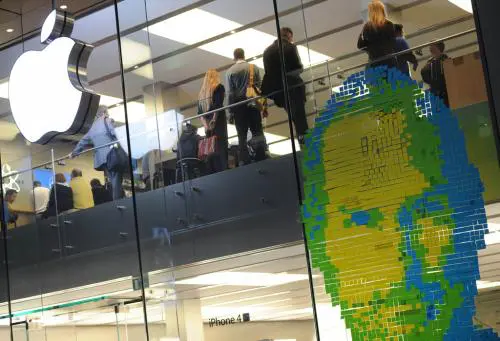


How some of the biggest developments came to be; Jobs energised project teams
What made Steve Jobs so effective as an innovator? Among his leadership traits, his ability to create an inspiring vision for talented people to work towards was crucial. Yet equally important, if not more, was his strength in getting out of the way so that his team could make full use of their talents.
While Jobs has always been associated with strong “top-down” leadership, much of it has been applied in the service of releasing innovative energies found towards the “bottom” of the organisation. He was able to use his position of power within Apple to energise innovation project teams, set them loose, and then, if necessary, protect them.
The result often was the most magical when the assembled talent believed that they had absolute freedom to apply their energies and skills, while senior management believed that it was in complete control.
Jobs did this, with varying degrees of self-restraint in his involvement, with the Lisa, Macintosh and iPod projects. In each case, he not only changed the technical worlds of which these products were a part, but also launched the careers of the next generation of innovation leaders in the industry.
This partnering between a visionary senior executive, and a sort of renegade band of innovators, is not a new phenomenon, and history shows frequently this “secret ingredient”, in the realisation of successful innovation.
Henry Hudson, the twice-failed 17th-century explorer, en route to discovering what is today’s Manhattan, had such a partner in 72-year-old Emanuel van Meteren.
The young and gifted, but unknown, Sid Caesar, who formed modern television entertainment in the mid-20th century, had the much-seasoned Max Liebman, as well as Sigourny Weaver’s father, Pat, as his partners. Robert Oppenheimer, the free-spirited and controversial physicist who ran the scientific-side of the Manhattan Project, had the straight-laced and utterly conventional Brig-General Leslie R Groves as his partner. Edward R Murrow, who pioneered broadcast journalism during World War II by breaking many traditional norms, had CBS rule-maker William S Paley as his partner.
Nestlé’s Nespresso-pod team had senior marketing executive Camillo Pagano as their partner. And, of course, Apple’s iPod team had Steve Jobs.
With each and every one of these well-known innovation projects – from Hudson to Jobs – the partnering relationship was often invisible and frequently spontaneous. The case can be made that it was the older and more “senior” associate/colleague/mentor who ultimately made the innovation success possible.
What these lesser-known partners – van Meteren, Liebman and Weaver, Groves, Paley, Pagano, and (the considerably better known) Jobs – provided, most importantly, was “air cover”.
By throwing up “air cover” within large, complex, and typically highly political organisations, the partners were able to encourage, authorise, licence and support risky undertakings.
Air cover is a crucial ingredient for those daring, sometimes “crazy” initiatives that more “rational” approval processes would undoubtedly deny, but which, if they work, have the potential to change the world.
Without such “invisible” players in the innovation game, some of our most surprising advances would never have taken place; or, more likely, would never have even begun!
In the early 17th century, trans-Atlantic exploration was still very much a risky proposition, and for the Dutch West India Company to bet on a two-time loser such as Henry Hudson required someone with sufficient influence within the organisation to support this project – this was van Meteren.
Max Liebman was respected enough within the entertainment world of the mid-20th century to be able to nurture and support Sid Caesar’s unorthodox ideas about comedy entertainment, but it was Pat Weaver who was high enough in the hierarchy of the National Broadcasting Company (NBC) to run Caesar’s show in a primetime television slot without the financial support of a commercial sponsor.
General Groves’ confidence in Oppenheimer allowed him to “run interference” when it came to protecting the latter from questions about his security practices within the scientific community, and about his own security clearances, even though Groves’ military background was diametrically different from the free-flowing, questioning traditions of science.
Bill Paley, the quintessential corporate executive supported Murrow, the abrasive and distant iconoclast, at least for much of his career, allowing him to innovate broadcast journalism in the face of everything from Nazi bombers to vindictive US Senators, without having to worry about his budget or his job.
Nespresso, which ultimately took nearly 20 years to breakeven and evolve into a major innovation for Nestlé, was supported during much of this period by the son of a Roman coffee-house barista, who had a love for the product and a great respect for what it took to do it well, and was senior-enough within in Nestlé to protect such a novel search for a new way of achieving coffee-excellence.
And, it was Jobs, himself, who realised that the iPod was essential if Apple was to recover from a nearly disastrous decision to remove music-sharing capabilities (CD reading/burning drives) from the iMac, at the very moment that peer-to-peer sharing of music, largely via swapped CDs, was peaking.
Each of these innovation projects was more than a reach … they were really bold; and for that reason alone had the odds stacked against them. But, in every case, there was a senior partner who took responsibility for authorising, nurturing and protecting both the dream and the team, so that the innovation effort had an honest chance of making the breakthrough they were convinced was possible. Such is the power of “air cover”.
Innovation is never just about good ideas. Especially within large, complex organisations, successful innovation requires political support and this is where “air cover” is essential. Yet, “air cover” is not a natural phenomenon. It requires senior executives who are visionary enough to support bold bets; who are informed enough (technically) to be able to verify the soundness of a project proposal; who are self-confident enough to allow others to get on with the work and who are energetic enough to interfere in the protection of a project team under attack, when necessary. In the cases mentioned above (except for Steve Jobs, who was in the unique position of also being a founder of the company and thus very much involved in a number of project origins), the appearance of the “air-cover” provider was unanticipated, largely spontaneous and usually invisible. All of which highlights the need for aspiring innovators, Jobs’ successors included, to recognise that leadership plays many roles and that “air cover” is too important to be left to chance.
Bill Fischer is professor of Technology Management at IMD and the programme director for Driving Strategic Innovation. He has a regular column on Forbes.com called the “Ideas of Business”, inspired by his latest book, “The Idea Hunter”. Read his blog and follow him on Twitter @bill_fischer.
