
Thailand's creditworthiness unaffected by floods: Moody's
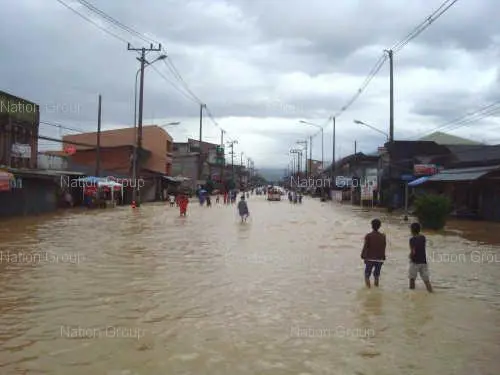


The floods will affect government finances, increasing expenditure and depressing revenue, but are not expected to affectt the Kingdom's creditworthiness, said Moody's Investors Service.
In its weekly credit outlook report prepared by Christian de Guzman, assistant vice president - analyst, Sovereign Risk Group, Moody's Investors Service Singapore, it said "The robust economic recovery over the past three years and post-crisis stabilisation of government finances support Thailand’s creditworthiness.
"A steady repayment of external debt and accumulation of official foreign exchange reserves have reduced government balance sheet vulnerability to shocks. The government will have ample fiscal space to absorb flood-related costs without prompting a permanent deterioration in its debt ratios."
Moody's expects real fourth-quarter growth domestic product to contract in annual and quarterly terms, and estimate full-year GDP growth at 2.8 per cent. It said that this crisis does not represent a structural break in terms of the country’s productive capacity, and economic growth should climb back toward its trend rate of over 4 per cent in 2013.
In addition to disaster relief, it anticipates a ramp-up in government spending on flood management and mitigation over the duration of the current administration’s remaining four years in office.
"However, fiscal rules will mitigate the risk of a significant or permanent deviation from the cautious approach that has led the central government’s fiscal deficits to average around 1.5 per cent of GDP over the past 10 years."
On October 18, the Cabinet approved an additional Bt50 billion to the proposed 2012 budget for post-flood reconstruction, bringing the projected deficit to 4 per cent of GDP. Government agencies have also been instructed to set aside 10 per cent of their allocations for investment and operating expenditures to free up funds for recovery efforts, amounting to a total of around Bt80 billion. A further Bt70 billion has been reallocated from other parts of the budget. The government is also likely to put together a sizeable aid package in a mid-year supplementary budget.
The central bank previously estimated the damage to industry and property at more than Bt120 billion ($3.9 billion) or roughly 1.2 per cent of GDP. However, the potential for flooding to spread to Bangkok poses upside risk to these projections and we assume the economic costs of this natural disaster will exceed Bt200 billion (2 per cent of GDP). Combined with the deterioration in the outlook for external demand, real GDP growth in the second half will slow significantly. The Bank of Thailand has indicated 2011 economic growth may be lower than 3 per cent as compared to the 4.1 per cent pace it previously forecast, while Finance Minister Thirachai Phuvanatnaranubala has indicated growth might barely reach 2 per cent owing to the magnitude of disruption.
Thailand’s worst floods in half a century have claimed the lives of more than 300, while causing extensive destruction to property and disruption to economic activity.
Water now covers 4 million acres (1.6 million hectares)—a third of Thailand’s provinces—in the north, northeast and centre of the country, disrupting industry and displacing families. The floods have significantly affected agricultural and manufacturing production, as well as distribution networks and commercial activity in affected areas. Supply chains have been disrupted, notably among automobile manufacturers, while around a quarter of the current crop of rice has been destroyed.
