
Companies want to make a difference
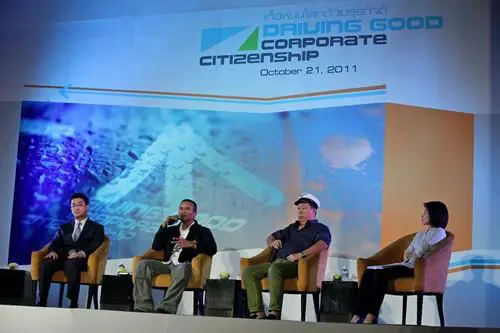


Good Corporate Citizenship and Corporate Social Responsibility (CSR) have gone beyond just marketing communication activities and become the core DNA of business organisations, experts said recently.
Speaking at the seminar on “Driving Good Corporate Citizenship” organised recently by Krungthep Turakij newspaper, Dr Krittinee Nuttavuthisi, assistant professor at Sasin Graduate Institute of Business Administration of Chulalongkorn University, Bangkok, said that many companies earlier recognised CSR campaigns as part of their social marketing activities.
“CSR is now becoming a core DNA in doing business as it is able to serve the increasing demand of consumers who want to have a better quality of life,” said Krittinee. “Many companies have applied a new business model, the so-called ‘Social Enterprise’, in implementing their CSR strategy. They need to fulfill the actual expectations of members of the social community who want to see a real sustainable benefit and the company’s involvement in such CSR activities.
Local CSR expert Saruenee Archawananthakun said that Good Corporate Citizenship is being consciously recognised by business enterprises as getting involved and contributing to the community where they operate.
She said that Good Corporate Citizenship is now going beyond just philanthropy or legal compliance activity, into a sustainable way of doing and developing business. CSR has been transformed into a new term – the so-called “Creating Share Value” (CSV) – described as coordination between business firms and community members in building good value to society and promoting sustainable balance in the economy, society, and environment.
Vice President of Toyota Motor (Thailand), Vudhigorn Suriyachantananont, said that the Japanese carmaker had set up its Thai operations in 1963 with the vision to take part in any activity that spread good value to society. The aim is to make a good quality community.
The company’s CSR activities have mostly been focusing on four areas – road safety, environment protection, technology transfer and community development. “We have been developing sustainable business activities throughout our supply chain, including 189 suppliers and 123 dealers. They altogether have achieved ISO 14001 environmental certification,” he said.
Vudhigorn said that Toyota Motor operated three major factories in Thailand. One of them is in Samut Prakan province and two in Chachoengsao. “Our latest factory at Ban Pho district in Chachoengsao has been in operation for four years ago with the aim of staying together with community members in a sustainable way. The factory’s major social campaigns include tree planting and transferring knowhow to community members,” said Vudhigorn.
Suthipong Thamawuit, founder of TV Burapa, said that he had set up TV Burapa to fulfill his personal desire and belief in doing anything that could benefit and bring good to society. This is beyond just being a TV programme producer.
“We believe that it is our responsibility to ourselves and other members in returning something back to society. This is because we have been taking a lot of business benefits and resources from the society,” he said.
Tan Passakornnatee, chief executive officer of Mai Tan, said that he does not know the real meaning of CSR. “What I have done regarding social contribution is what I myself have called ‘A sense of thoughtfulness’. Throughout the 30 years of my business life, I have owed it to nature, society and the environment as well as my own employees. It is a good time to return something back to them,” said Tan.
