
Five forces shaping leadership in 2020
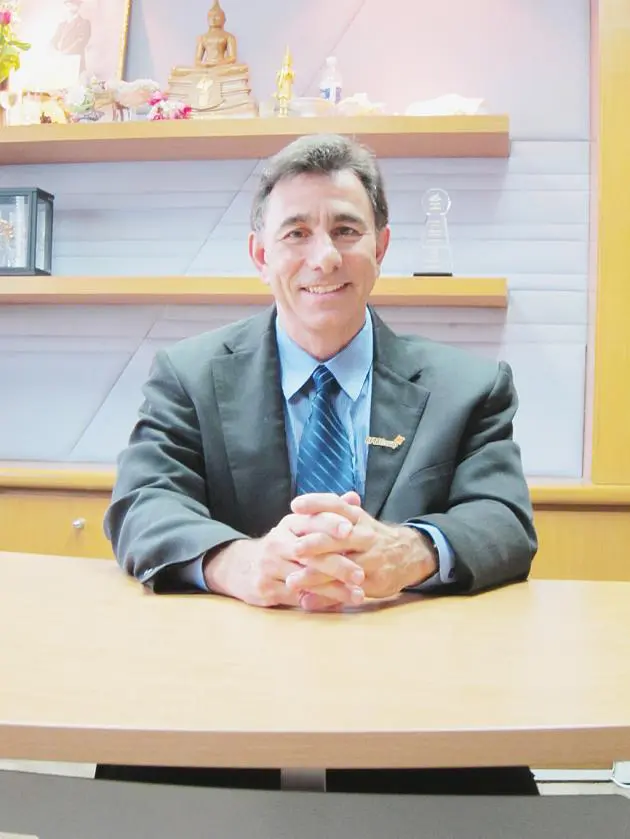


The new environment will require a collaborative approach
By 2020, the concept of leadership will undergo a significant change. The Confer-ence Board report “Developing Business Leaders for 2010” concluded that leadership is being reshaped by five critical forces:
-globalisation and how talent can be accessed anywhere in the world;
-information technology and the emergence of social technologies that democratise information and change the role of leadership;
-the need for rapid and flexible organisations;
-teams;
-changing demographics, in-cluding five generations in the workplace.
This new environment will have greater ambiguity and uncertainty, and many if not all aspects of leadership will require a more collaborative approach. Organisa-tions will need leaders who can interpret disparate information and who are willing to experiment with new – and probably risky – solutions; leaders who can innovate and synthesise, who can facilitate group discussions around complex issues for which predetermined solutions do not exist, and who can manage collaborative efforts with a broad spectrum of diverse people in order to address problems and find solutions.
Successful 2020 leaders will not likely be seen as “the all-knowing Lone Ranger type”, but people who instead can motivate and coordinate a team-based management approach that is increasingly remote and virtual. These leaders will be well connected to diverse thinkers and innovators, and highly aware of global trends and emerging issues so that solutions can be developed and tested as early as possible. Effective 2020 leadership will be one of the encouraging environments that unlock the entire organisation’s human asset potential.
Successful 2020 leaders must have global mindsets, be conversant in doing business internationally and able to conceive strategies on a global basis. Globalisation will intensify the requirement that senior leaders deal effectively with a complex set of constituencies external to the organisation.
The technology revolution will continue to change organisational life; the ways information and knowledge are accessed and disseminated; the ways in which people can communicate and share with one another. This has profound implications for what effective leadership will look like as well as how to use technology most effectively. Leaders will clearly have to be much more savvy with regard to technology in general. Given the pace of change and the speed of response time that leaders are now required to demonstrate, technological savvy has rapidly become an integral aspect of leadership effectiveness.
--The 2020 Leadership Model
Dr Karie Willyerd and Jeanne C Meister, the co-authors of the best-selling management book “The 2020 Workplace” have developed an interesting “2020 leadership model” that integrates these emerging requirements for leadership and management. The premise is that “effective leadership needs to live in the day-to-day environment of operational execution and therefore must be integrated with management”.
Meister and Willyerd describe five leadership areas that seem to be emerging as requirements for the leader of the future:
1 The process starts with selecting leaders who have demonstrated a collaborative mind-set and who work comfortably in a networked leadership;
2 They focus on leaders who see the development of people as one of their most important goals, including providing honest feedback, career guidance and learning opportunities;
3 The leader of the future will need to be digitally confident and able to speak the digital language of the newest generation of workers;
4 The 2020 leader is a global citizen, in the broadest sense. This means being not only a leader who can work well across cultures, but also one who realises the value of working with governments and non-governmental organisations in the intertwined dependencies of the future;
5 Anticipating the future and building the capability to address it.
For the leader of the future to project a genuine and believable approach, these capabilities must work together and be integrated into the business operations as a whole. The integration of skills and knowing when to use them is far more important than measuring and commenting on each area by itself. The integrated leadership and management practices must be informed by the organisation’s environment, in which employees reside and in which markets change constantly. Leaders do not live apart and distinct from employees, who are a part of the overall chain of an organisation, and leadership skills are more useful when developed holistically and in context, rather than in isolation.
In sum, 2020 leaders will need to have global mindsets as well as be master strategists, change managers, team/relationship/network builders, and talent developers. The most important derailers of future effective leadership include hesitancy to take necessary business risks; personal arrogance and insensitivity; a controlling leadership style; and reluctance to tackle difficult people issues.
John DiDominic is executive director of Client Solutions at the APMGroup. Write to him at [email protected]
