
Thai Yamaha looks to brighter year ahead
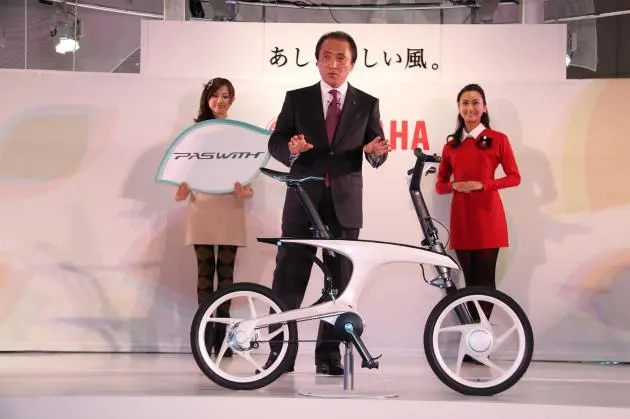


Although the flood crisis has affected Thai Yamaha Motor's production and sales in the current quarter, the company believes the situation will return to normal by the second quarter of next year.
The company had halted production in the middle of October, but restarted manufacturing on November 21.
Although its plant, located on Bang Na-Trat Road, has not been hit by flood waters, 40-50 of the company’s parts suppliers were affected and could not fulfil their supply commitments.
The impact of the flooding has also caused the company to postpone until early next year the plan to launch two new motorcycle models, which had been scheduled for the current quarter.
Moreover, Thai Yamaha Motor will now accelerate its production to offset the lost output during the recent manufacturing hiatus.
During the current Tokyo Motor Show, Praphan Phornthanavarsit, chief operating officer of the company, said the severe flooding had resulted in production this quarter falling by 60,000 units from the normal 130,000-150,000 units in the period.
As a result, the Thai unit’s sales for the year, previously estimated at 520,000 units, has been revised down to 460,000 units, with Bt240 million in lost value. Thai Yamaha Motor’s full-year forecast was for sales of Bt30 billion.
However, the company foresees a brighter sales future next year, following the market slump during the current crisis, Praphan said.
Moreover, it is expected that the government’s Bt300-minimum-wage policy, and the introduction of starting salaries of Bt15,000 for new graduates, will boost spending thanks to rising confidence over incomes, he said. The company’s main customers are workers, officials and farmers.
“The market grew 13.8 per cent during the first 10 months, but sales dropped because of the severe floods, so we hope [pent-up demand from] the crisis will create higher demand next year,” Praphan said.
The Thai motorcycle market had been expected to grow by 11 per cent to 2.05 million units this year, but the flooding has caused a downward revision to 1.7 million units.
“Without the floods, total market sales should have reached 2.1 million units,” said Praphan, adding that demand should reach 2 million units next year.
He said the motorcycle market in Thailand was now mature, with slight annual growth. As a result, the company needs to launch a rebranding strategy next year, details of which will be disclosed in the near future.
The executive said the flood crisis had slightly affected Thai Yamaha Motor in terms of sales and production, as it manages for more than 100 part suppliers and operates with 98-per-cent local content.
The company seeks to minimise its potential losses by operating a multi-sourcing strategy to prevent manufacturing problems in the event of any incidents. However, it has had to import some parts from Japan, Indonesia, Vietnam and China to solve supply shortages in some areas.
Despite these imports, there has not been any change in price strategy, he added.
Praphan stressed that the parent company in Japan had no plan to move manufacturing out of Thailand.
It would in any case be a difficult operation for any company to achieve and it would take time for a global brand to set up new facilities elsewhere, he said.
“Yamaha has been in Thailand for 40 years, and we don’t have any plan to move out. But the government should provide some tax measures to help affected manufacturers to retain targeted foreign investors,” he said.
The company’s Thai manufacturing ranks as Yamaha’s fourth-biggest operation, after Indonesia, Vietnam and Brazil. However, Thai output outpaces Brazilian production in some years.
Praphan also said that regional seamless trade under the forthcoming Asean Economic Community would change the manufacturing strategy of the Yamaha Group, which would produce models in different countries, depending on their relative strengths. This strategy will create more market opportunities for the group than focusing production of many models in just one country.
However, while Thai Yamaha Motor’s production costs are 5-10 per cent higher than those in other Asean markets, this is not reflected in its pricing policy, he added.
Besides motorcycles, the company makes and distributes completely-built up (CBU) units, completely knocked-down (CKD) units, outboard motors for boats, golf carts, and water pumps. CBU and CKD export value accounts for 25 per cent of overall sales.
The global economic downturn of the past two years has caused the company’s Thai market share for motorcycles to fall from 28 per cent to 23 per cent, Praphan said.
