
Elements in place to make PTT a top multinational, says new CEO
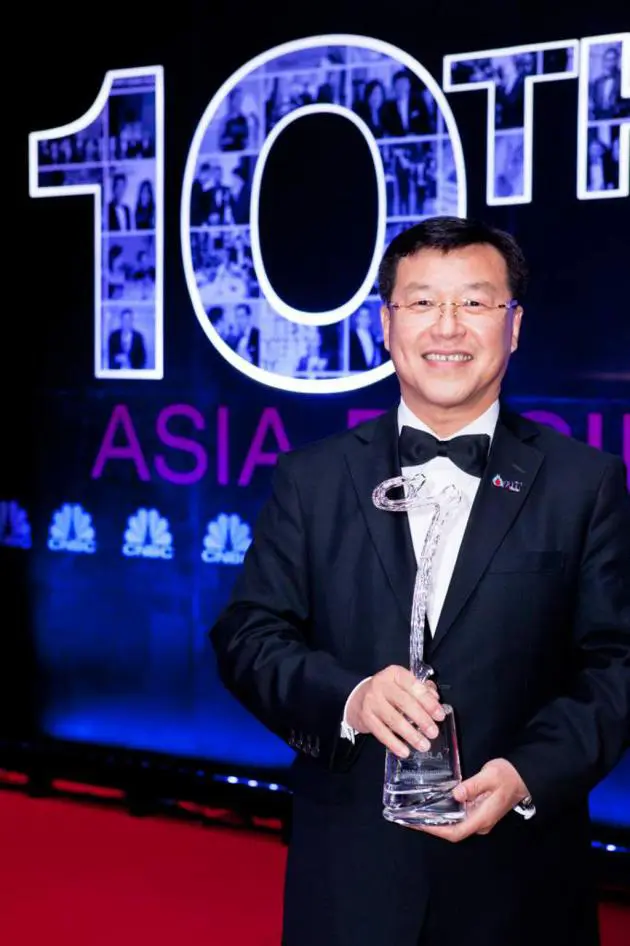


Compared with its subsidiary IRPC, PTT is a much less complicated organisation to manage, as nearly all key elements are in place. That was the impression given during an interview with Pailin Chuchottaworn, former president of IRPC and newly appointed pr
On the sidelines of the CNBC network’s 10th Asia Business Leader Award ceremony, where Pailin was recognised for his role at IRPC and his personal involvement in supporting and nurturing leadership within the petrochemicals company, he said: “PTT is a good company. I’m here to fill in the missing links.”
Pailin, who took over his new role in late September, plans to follow the path set by his predecessor, Prasert Bunsumpun. In July, Prasert said that to become an international business conglomerate, PTT would invest as much as US$100 billion (Bt3 trillion) by 2020, to drive revenue and earnings. Ranked behind PetroChina and Sinopec among Asian energy firms, PTT aims to become one of the top 100 premier multinational companies as ranked by Fortune by 2020, from 128th place this year. Of that total, Bt1 trillion would be invested between 2012 and 2016.
The ingredients for sustainable growth are all there under the company’s strategy of high performance, corporate governance and corporate social responsibility. According to his observation, a missing link is compliance, said Pailin, who served IRPC for 32 months and turned it around from a loss-making operation to a profitable one. Now he plans to make PTT more technologically advanced, to increase margins from depleting natural resources.
Thanks to his impressive track record at IRPC, he was asked by the PTT president selection committee if he could repeat that magic at the parent company.
“I told them, ‘Yes, if PTT faces a crisis.’ Yet it would be unfortunate for PTT to face a crisis. Let’s hope that it does not happen here.”
Experiences at IRPC and Bangkok Polyethylene taught him that there are opportunities in every crisis. At Bangkok Polyethylene, cost-cutting measures were introduced to tackle huge losses after the 1997 financial crisis, including layoffs in 2002 that landed him in the Labour Court several times.
He was hand-picked by Prasert to run IRPC after Bangkok Polyethylene became part of the PTT empire. Shortly after his appointment in 2009, he learned that IRPC had racked up a mountain of losses. He immediately called for a brainstorming session with other executives.
Then he hosted a session with more than 4,000 employees, where he announced 19 initiatives under the “Phoenix” campaign to rebuild IRPC. “Do or die” was the message delivered to the disgruntled employees. They could not dwell on past pain, as it would slow them down.
“History is a lesson, not a burden,” he said.
At a shareholders meeting, in an animation, he featured IRPC as a big ship that could not sail through a narrow river. For survival, it must reload stuff on to four smaller boats, illustrating a break-up of the empire into four businesses.
He was elated that no shareholders complained about the 2008 net loss of Bt18 billion and agreed to his strategy. To Pailin, the huge loss presented him a great opportunity to introduce big changes to IRPC.
“After crisis, there is a brief opportunity. We have to seize it, or if time passes, you can’t go back and make use of it ... In management, the key issue is to introduce significant change, and that requires dedication and skills.”
In the days when the human-resource strategy was weak, with eight labour unions, pay rises were allocated according to the unions’ agreements, not by the HR department. That was changed, along with top-down business management.
The information-technology system was made to include daily updates on production and |margins from each product.
Pailin said some leaders failed because of the misperception that appointments are rewards for their hard work in the past. After accepting the top jobs, they lie back. Meanwhile, some want to be leaders, but don’t know how to do their jobs.
Under his reign, PTT aims to be “the best in class”, with large size, a long value chain and strong internal back-ups. He is also ready to support a new generation of leaders, with the belief that with new knowledge they can improve the organisation in a different way. Old leaders’ duty is to pass on knowledge.
To Pailin, a leader’s success is determined by the condition of the organisation on the day he leaves it.
“Leaders must be patient, spontaneous, well-rounded and able to evaluate each situation.
“They must realise the true meaning of rights, duties and skills. If you can’t do that, you’d better leave the scene,” he |said.
“The organisation should be better off when you leave. If not, you just wasted the time of the organisation and subordinates,” he concluded.
