
As AEC launch looms, experts see opportunities, challenges


To prepare for the 2015 launch of the Asean Economic Community (AEC), businesses need to make careful plans to meet new challenges in an increasingly volatile economic environment and changing business landscape, experts said.
Heang Chhor, senior partner at McKinsey & Co, Singapore, said Asean is an “opportunity next door”.
“We see the fundamentals of Asean for long-term investment as being driven by a young population and growing middle class, leading to urbanisation,” he said.
Heang Chhor said another important factor is foreign investment in Asean. In 2015 and beyond, Asean will see greater regional and global integration. Business organisations have to prepare themselves to meet best practices globally, he said.
Heang Chhor said three forces and directions will challenge businesses when Asean opens up.
The first is alliances and partnerships for scale. Local companies in Asean will make mergers and acquisition, as well as alliances and partnerships, a key strategy for competing with international rivals. Scale, however, should be achieved in a rapid manner.
The second force is regional assets.
Heang Chhor said that companies will have to buy and share the best assets in different countries in Asean. Playing the assets game is important.
He said that Asean will be clustered into different areas of excellence, such as agriculture and tourism.
Heang Chhor said the third factor is private and public partnerships, such as in education and development of human resources.
Dr Sarasin Viraphol, executive vice president of Charoen Pokphand Group of Companies, said the government should have some level of positive intervention in the private sector.
“The AEC will create a lot of opportunities. The question is how to make use of those opportunities. On behalf of the private sector, we are relying on the ‘visible hand’ of the government to remove all major challenges and obstacles to be confronted by local firms,” said Sarasin. He said that there are major obstacles to be faced by local entrepreneurs in the wake of the AEC, such as mobilisation of capital, the shortage of skilled labour, over-regulation and too-strict controls by the government, and the tax burden.
Marn-Heong Wong, assistant professor at the Lee Kuan Yew School of Public Policy, National University of Singapore, said that Asean is attractive to foreign investors.
Asean’s share of world foreign direct investment (FDI) inflows dropped from 8.24 per cent in 1995 to 3.84 per cent in 2007, but increased to 6.36 per cent in 2010.
Wong said that a relatively small share of Asean FDI inflows is from companies in the region. There is room for local companies in Asean to upgrade in competitiveness and become regional and global players.
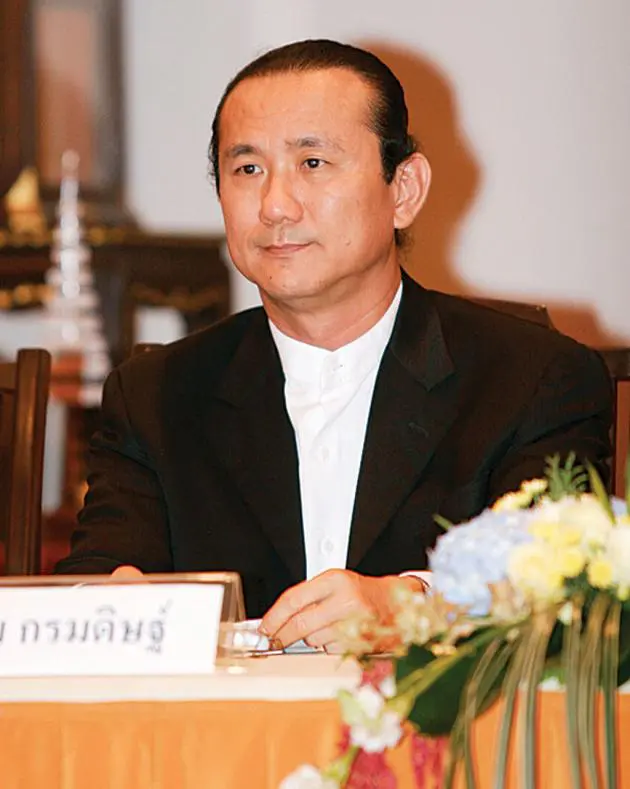
Vikrom Kromadit, chief executive of Amata Corp, said that under the AEC, Asean will become an interesting region for investments in the future due to its large population of more than 600 million. The Asean region also has a small GDP compared to other markets such as the US and European Union (EU). The GDP in Asean has strong growth potential compared to other markets.
“If local manufacturers in Asean produce products of the same quality as those manufactured in other parts of the world such as Japan and the UK, they will be successful without any problem,” said Vikrom.
He said Asean has become an attractive place for international investors thanks to its peaceful environment and political stability, allowing for GDP growth. Many companies have utilised the growth and development of Asean to expand their businesses into China and India.
“The only weak points of Asean are its underdeveloped infrastructure and red tape,” said Vikrom.
He said that Asean governments and businesspeople lack experience in trade and investment liberalisation, which is expected when the AEC is fully implemented in 2015.
“We [both public and private sectors] need to learn about the EU and make it our role model in related issues, such as in laws and regulations, and migration,” said Vikrom.
Nandor von der Luehe, chairman of the Joint Foreign Chambers of Commerce in Thailand’s regional headquarters, said that with the AEC, Asean will become a single market of 600 million people with an open-market approach. It will provide more prosperity for the population.
He said globalisation will create acceptance of higher competition, while monopolies and oligopolies will disappear. One of the key benefits for companies is economy of scale, while consumers will enjoy better services at better prices, and employment opportunities.
Luehe said that the AEC will create a chance to build a modern Thailand via reforms of key sectors and the opening up and liberalisation of the service sector.
