
Oil prices as threat to global economy
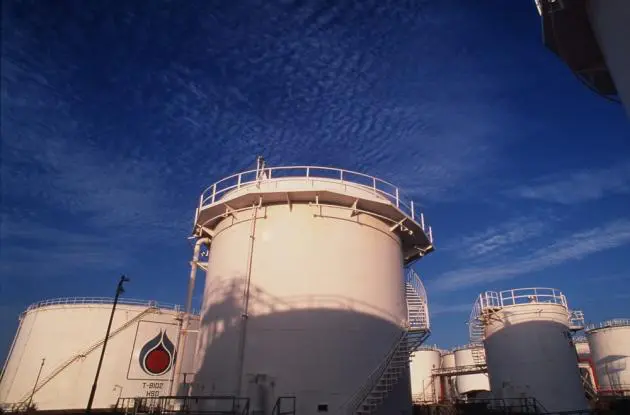


Thailand's inflation could spiral by 8 per cent in 2012, should oil prices spike to above US$200-$250 per barrel on a military confrontation in the Middle East and bring this year's average to $195, said Kasikorn Research Centre.
The situation is based on the worst-case scenario that the conflict in the Middle East is prolonged until the end of this year.
Tensions grow toward supply disruptions and a possible military confrontation in the Mideast, as Iran threatens to halt oil exports through the Straits of Hormuz in retaliation to sanctions by the EU and the US. If the situation worsens, the world may face yet another oil crisis reminiscent to those of the 70s and 80s.
The research centre expected this to cause global stagflation. Due to spiralling impact on Thailand's inflation, private consumption would be under pressure. Thai exports could contract up to 20 per cent on faltering demand, while the economy could contract 5.5 percent, against current projected growth of 4.5-6 per cent.
"Although a military confrontation between Iran and the West is believed unlikely – since many see it as a ‘zero-sum’ game – and the US has taken a clear stance of refraining from military aggression or subversive action, if the standoff over Iran’s nuclear ambitions continues to heighten geopolitical risks, it would add further strain to an already tight oil market. These developments are heightening anxiety toward a possible severe oil shock within the foreseeable future," it said.
Nomura Research warned in a latest report that Asian economies, a major net importer of oil as a whole, will be much more adversely affected than most other regions if oil prices keep rising.
The price of Brent crude was up nearly 15 percent last week from $108 per barrel at the end of last year, hovering at about $124 per barrel. While this pales in comparison to the 364 percent surge over the prior five years to the peak of $144 in July 2008, Nomura said the recent run-up is not insignificant and the current level is already relatively high.
Given that Asia excluding Japan's annual net imports of crude and refined petroleum increased from $234 billion in 2009 to $329 billion in 2010 and to a record $447 billion in 2011, Nomura estimated a US dollars per barrel rise in Brent crude could add $3.5 billion to Asia's monthly net oil import bill. Although Asia excluding Japan is not completely without oil reserves, but with its massive industrialisation and growing consumer affluence, it only produces what is enough to cover one-third of its needs.
The Japanese research house came up with three scenarios.
Under a good scenario, when Brent averages this year at around $110 per barrel, the Asia ex-Japan GDP growth will be 6.6 per cent. Under the bad scenario, where the oil price averages $125 in each of the four quarters of this year, Nomura forecast total GDP growth to slow to 6.4 percent, and slow further to 6.1 percent in the ugly scenario, where the oil price averages $135 for the year.
Among the individual economies, Nomura predicted that the growth is hit hardest by falling about one percentage point in India, South Korea, Thailand and the Philippines, while China, Malaysia and Singapore are least-affected if the ugly scenario takes place.
According to Nomura, Asia excluding Japan's consumer price index inflation will rise from 4.5 percent in the good scenario to 5.2 percent in the ugly scenario, led by big inflation surges of 1. 8 percentage point in the Philippines and Thailand.
Asia excluding Japan's 2012 total current account surplus will narrow from 1.4 percent of GDP in the good scenario to 0.6 percent in the ugly scenario, but with some big divergences across the region. In the ugly scenario, India's current account deficit will increase to 4 per cent of GDP, while Malaysia's current account surplus will swell to 11.5 percent of its GDP.
As for Asia excluding Japan's aggregate fiscal deficit, it will widen from 2.1 percent of GDP in the good scenario to 2.8 percent in the ugly scenario, led by increases of 0.9 percentage points in India, South Korea and the Philippines. Of these three, India would have the largest fiscal deficit at 5.9 percent of its GDP.
The monetary policy outlook will be very different in the good and ugly scenarios. Nomura said nearly all Asian central banks will cut rates further this year in the good scenario, by 25 basis points to 100 basis points from current levels. By contrast, in the ugly scenario Nomura would expect policy rates to be kept on hold for the rest of this year in India and South Korea; and hiked by 25 basis points in Malaysia, by 50 basis points in Thailand, 75 basis points in the Philippines and 100 basis points in Indonesia, respectively. Only China will be expected to cut rates by 25 basis points in the ugly scenario.
