
Asia will further enjoy capital inflows
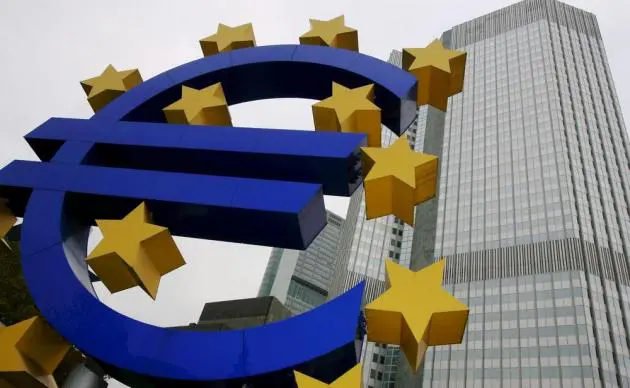


Developing Asian economies will still attract a large chunk of capital inflows in 2012 and 2013, though the net flows by value are expected to be of smaller amount from the previous year due to the eurozone crisis's global spill-over effects.
According to the International Monetary Fund (IMF)’s World Economic Outlook, net private financial flows -including private direct investment, portfolio flows, and others - are estimated to hit US$394.7 billion in 2012 and $460 billion in 2013. Of total, emerging Asian economies will draw 67.11 per cent and 52.41 per cent, respectively. This is against 58.12 per cent in 2011 when net private financial flows reached $521 billion.
Reserves of the economies are also expected to increase accordingly in the year.
Developing Asian economies are mainly China, India and five countries in Asean – Indonesia, Malaysia, the Philippines, Thailand and Vietnam.
"Geopolitical tension affecting the oil market is surely a risk. But, the main risk remains that of another acute crisis in Europe.
The building of the so-called firewalls, when it is completed, will represent major progress, but by themselves firewalls cannot solve the difficult fiscal, competitiveness, and growth issues that some of the European countries face.
Bad news on the macroeconomic front or the political front still carries the risk of triggering the type of dynamics that we saw last fall," said Olivier Blanchard, IMF Economic Counselor and Director for research department, said in a question and answer session.
The IMF is "doing everything possible so that this (a euro country decides to leave) does not happen". As all countries know the costs and benefits of staying on, "So, for the moment, there is no plan B. We basically are doing whatever we can to help countries succeed within the constraints of the euro."
In the report entitled "Growth Resumes, Dangers Remain", the IMF projected growth in the region at 6 per cent in 2012 before gradually recovering to 6.5 per cent in 2013. Asia’s growth is expected to sustain the world’s economic growth, which is revised up from 3.3 per cent to 3.5 per cent this year.
The Thai economy to show a strong rebound from the flood disaster. Gross domestic product is expected to expand by 5.5 per cent this year and by 7.5 per cent in 2013. Boosting Asia’s growth are countries in Developing Asia category. While China and India should show growth of 8.2 per cnet and 6.9 per cent, respectively in 2012; the 2013 figures are projected at 8.8 per cent and 7.3 per cent.
Trailing closely behind are the Asean-5 countries, with growth projections of 5.4 per cent and 6.2 per cent.
"In Thailand, a rebound following last year’s flooding is expected in the first half of 2012, supported by monetary easing and a large fiscal package in response to the floods," the IMF said.
In China, even with the drag from external demand, growth is projected to be above 8 percent in 2012 and 2013 because consumption and investment are expected to remain robust. In India, while part of the expected slowdown to 7 percent in 2012 is a cyclical response to higher interest rates and lower external demand, policy uncertainty and supply bottlenecks are playing a role and will need to be tackled in the near term to ensure that potential growth does not decline.
The IMF warned that the European spill-over effects are imminent, which would lead to greater volatility of capital flows and possible impacts on Asian banks. However, it noted that resilient domestic demand in China, limited financial spillovers, room for policy easing, and the capacity of Asian banks to step in as European banks deleverage suggest that the soft landing under way is likely to continue.
"Policy in the region needs to be set with an eye toward these risks," it said. For economies with relatively low levels of public debt like Asean-5 and China, the pace of fiscal consolidation could be slowed if downside risks materialize.
Many Asian economies could also advance their plans to boost social safety nets and increase investment in infrastructure if another round of fiscal stimulus is warranted—these policies have long-term positive effects on economic rebalancing and income inequality that are beneficial even in good times. However, fiscal consolidation remains a priority in India and Japan, to anchor confidence and rebuild room to meet future challenges.
The report also urged for the governments to stand ready to maintain supply of credit, if euro area bank deleveraging escalates.
The fragility of the external outlook also highlights the need for the region to rebalance growth. In many ASEAN economies and India, strengthening domestic demand will require improving the conditions for private investment, including by addressing infrastructure bottlenecks and enhancing governance and public service delivery.
