
Boom could bust in condo markets
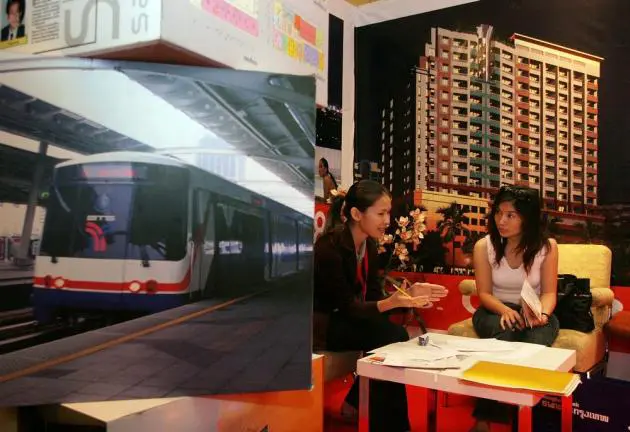


A property bubble is forming in Bangkok and other Thai cities, as well as in Vietnam and Myanmar, partly because of euphoria over the forthcoming Asean Economic Community, an economist has warned, while a senior banking executive played down such fears, s
Given the debt crisis in Europe and the collapse of the property sector in Spain, there are signs of a property bubble in Bangkok, especially in the market for high-rise condominiums along Sukhumvit Road, Sompop Manarungsan, president of the Panyapiwat Institute of Technology, said yesterday.
He pointed to the heavy advertising for condos in all media, particularly pamphlets and new media channels such as short message service (SMS, or text messaging).
The heavy advertising suggests that condominium developers are finding it hard to get buyers, he said, belying the conventional view that the market is not in a bubble.
“I live on Sukhumvit Road. Over the past 10 years I have witnessed many condos spring up. Those who have older condos are moving to new condos, leaving the old ones empty,” Sompop said.
He said he was not sure whether there are new buyers, and suggested there might only be small groups of people buying condos for speculative purposes, hoping to rent to foreigners or certain groups of Thais.
Japanese and other foreigners are currently enjoying low rents, Sompop said.
Land developers may be overly optimistic that large numbers of people will move to condos along mass-transit routes, he warned.
“We should be aware that a burst of the property bubble would drag down banks that have lent to land developers and home-buyers,” he said.
The bursting of the property bubble in Spain has created huge trouble for both banks and the overall economy, while the sub-prime-mortgage crisis in the United States sparked the global financial crisis in 2008, Sompop said.
He said authorities such as the Bank of Thailand had to put in place preventive measures before this small bubble grew out of control.
Land and property prices are booming now in key provinces such as Khon Kaen, Udon Thani and |other provinces as businesses and individuals believe that Thailand will benefit greatly from the Asean single market.
Land prices in Yangon, the commercial centre of Myanmar, are soaring at a faster pace than economic fundamentals, warned Sompop. People in Myanmar believe that political reform will bring economic prosperity, causing them to speculate on land, he said.
Land and property prices in Vietnam have been increasing for a long time, leading to rising inflation and higher business costs.
Trouble in other Asean countries such as Vietnam or Indonesia would adversely affect the Thai economy, he said.
He also warned of the threat of political conflict between the red and yellow shirts, which could result in an economic-policy vacuum at a time of high global economic volatility.
The expense of populist policies will also strain the government’s ability to make productive investments, he said.
Praphan Anupongongarch, executive vice president at Thanachart Bank, however, said his bank did not yet see clear signs of a condominium-market bubble.
“If demand is dropping because consumers are worried about the European crisis, there is little chance of a condominium bubble occurring,” Praphan said.
Some projects may not be attractive because of their poor locations, he said.
In a related development, the state-owned Secondary Mortgage Corporation (SMC) signed a memorandum of understanding to buy mortgages worth Bt1.85 billion from Kasikornbank.
The agreement aims to provide liquidity to banks and offer opportunities to home-buyers and investors in SMC bonds, its executives said.
