
Virabongsa wants BOT to deal with Bt420-bn loss


Play
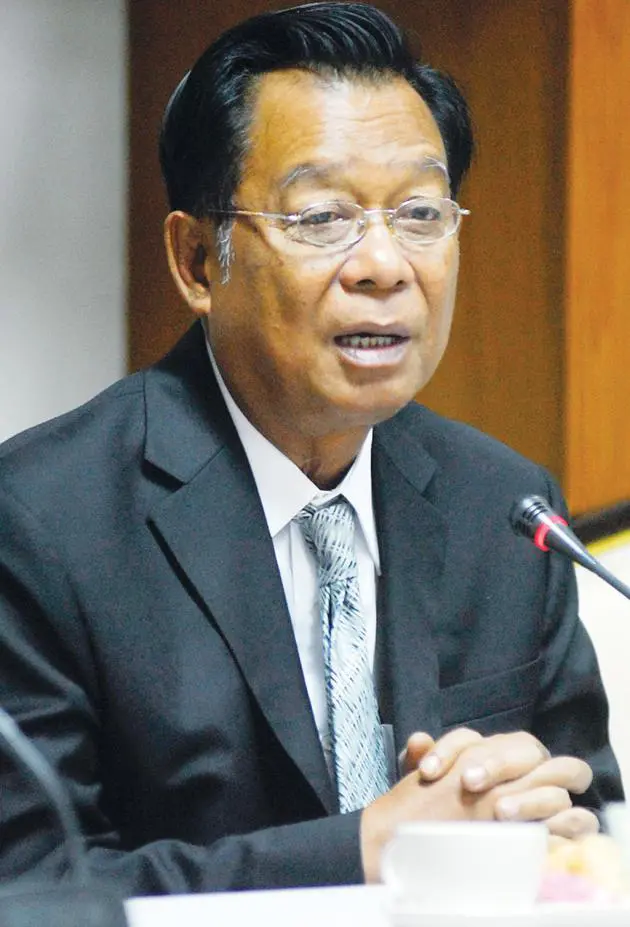
Newly-appointed Bank of Thailand chairman Virabongsa Ramangkura asked its board of governors to set up an ad hoc committee to deal with accounting losses that stood at Bt420 billion as of March, to guard against investor confidence in the central bank bei
At his first meeting yesterday, Virabongsa proposed that the committee comprise some members of the board, excluding himself and certain BOT executives. The committee would be assigned specifically to look into solutions to deal with the loss. As secretary of the BOT’s board of governors, Virabongsa was worried that persistent losses would rise to a level that raised concern among investors, said BOT’s assistant governor Chanchai Buratavorn.
“The chairman said he would not be a part of the committee... When its study was completed, it would be submitted to the board of governors,” he said.
Chanchai commented that Virabongsa had expressed his understanding over the causes of the loss, citing mainly negative carry (when interest expenses exceed interest receivables) and foreign exchange losses. At the end of March, the central bank showed an accounting loss of Bt420 billion, against Bt320 billion at the end of 2011. The BOT’s executives attributed the higher loss to baht appreciation in the quarter and expected the loss to soften in the second quarter on baht weakening.
The executives also explained that this is a regular phenomenon witnessed by central banks worldwide, and that the impacts were greater in some economies, following monetary easing policies in developing countries that resulted in massive liquidity being injected into the market.
“The chairman realised the causes of the loss,” said Chanchai. “Still, he believes that it must be dealt with. He also told the meeting that when there’s a problem and determination to deal with it, there must be a target and action plans. He also said it would take time to solve this. The problem would not be solved within his one-year term of office, but he just wanted to see a move to deal with it was kick-started.”
Chanchai said the meeting also touched on the Financial Institutions Development Fund’s debt obligations, with agreement reached that solutions were already there and it was now a matter of the repayment period along with economic conditions. The bigger the deposit base, the faster the debt would be repaid. The meeting did not discuss foreign exchange rates.
Due chiefly to its open market operations, the central bank has issued bonds to absorb excess liquidity. Through this stabilisation mechanism, it has incurred interest burden. For 2010, the bank incurred accounting losses of Bt431 billion. Factoring in capital inflows and current-account surpluses of past years, as of June 15, Thailand’s foreign exchange reserves stood at US$174 billion, against $111 billion at the end of 2008 and $87.6 billion at the end of 2007.
