
External risks to escalate: BOT


Play
After strong recovery from last year's flood in the first half, the Thai economy would face some headwinds in the second half as private consumption would slow on external volatilities, the Bank of Thailand's Monetary Policy Committee said.
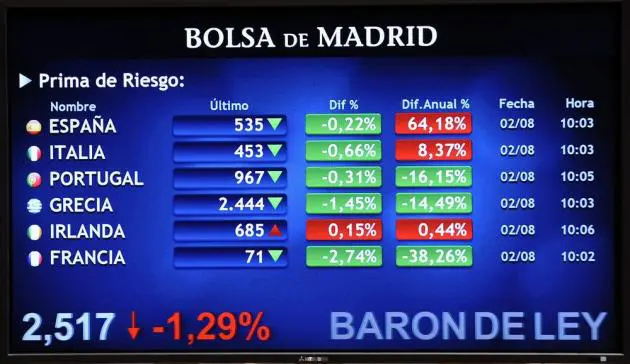
The MPC viewed risks to the global economy to escalate, given dampened recovery in the US and delayed resolution of structural concerns in the euro area.
"The global economy, given its weak outlook and heightened risks, continues to be the major source of downside risks to economic growth. While progresses made on the sovereign debt crisis help calm the marketplace temporarily, worries on global growth prospects seem to escalate along with additional signs of slowdown in industrialized and emerging market
economies. Some central banks have also eased their monetary policy further to contain downside risks to growth. This time, the MPC continues to revise down its growth projection for
Thailand’s trading partners. The euro economy is viewed to remain in recession in 2012, before starting to recover gradually next year. At the same time, economic momentum in the US and
Asia will subside throughout the projection period," the MPC said in the inflation report.
The Bank of Thailand today announced that Thailand's economy posted the 1.8 per cent growth rate in the first half of this year, in line with its forecast of 5.7 per cent for the whole year. The MPC at the July 25 meeting revised down the annualised forecast from 6 per cent. It also lowered the growth forecast for 2013 from 5.8 per cent to 5 per cent, given the continued slowdown from the previous year’s second half and the base effect due to post-flood surge in the previous year’s first half. Inflation forecasts were also revised downward, from 3.5 per cent for both 2012 and 2013 to 2.9 per cent and 3.4 per cent, respectively. The core inflation forecasts are cut from 2.5 per cent to 2.2 per cent in 2012 and from 2.1 per cent to 1.9 per cent.
"On the whole, the MPC judges downside risks and uncertainty from the global economy to increase this time. Thus, the fan chart for economic growth is skewed downward to a greater degree compared to the previous one, and is wider throughout the forecast period," it said in the report.
In the second quarter, as the manufacturing sector started to resume production after last year's floods, the gross domestic product expanded 3.5 per cent, according to the central bank.
The MPC noted that on the external front, export recovery remains weighed by global demand conditions. Merchandise exports will be weaker than previously assessed, as manufacturing exports suffer from sluggish global demand and agricultural exports are negatively affected by contraction in rice exports. However, exports of services should remain resilient thanks to the tourism sector. Meanwhile, imports are projected to decelerate in the second half of the year, in line with diminishing reconstruction needs and weaker prospects of merchandise exports.
Meanwhile, private demand has rebounded to pre-flood levels. Private investment has been growing favorably on the back of reconstruction investment in the first half of the year,
but is likely to subside as most reconstruction demand wanes off in the third quater. Nonetheless, investors’ positive sentiment and commitment to long-term plans will lend support to investment growth going forward. On the other hand, private consumption continues to benefit from pent-up demand especially for automobiles. Some deceleration is expected from the second half onward, but overall momentum should be supported by favorable income prospects, continued fiscal stimulus, and conducive monetary conditions.
"Inflation pressure is likely to soften relative to the previous assessment. While economic growth has picked up firmly and is close to potential in the second quarter, demand pressure is viewed to abate as economic momentum decelerates in the second half of the year," the MPC said.
The MPC foresees limited pressure from global oil prices, as slow growth globally would drag the prices. Meanwhile, domestic retail oil prices are likely to be steady this year, given government’s policy in administering the prices. At the same time, commodity prices are projected to recover gradually in line with oil prices, while fresh food prices are likely to fall in the near-term given abundant supply.
