
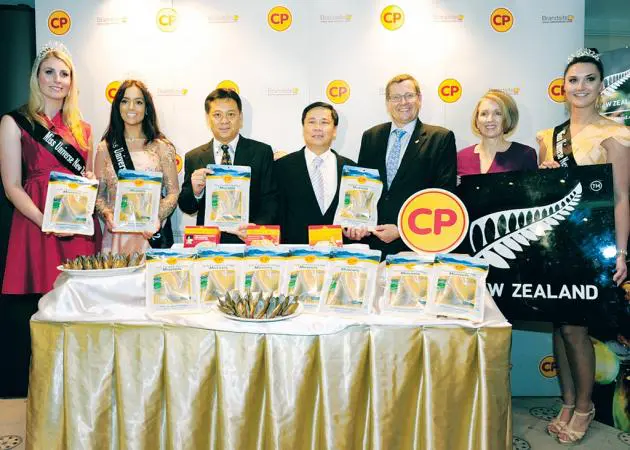
CPF launches pilot New Zealand mussel project


Play
Charoen Pokphand Foods has taken advantage of the zero-tariff provision of the Thailand-New Zealand Free-Trade Agreement to import fully cooked greenshell mussels, a well-known product of New Zealand, to test the market for it here. Other goods will be im
CP Foods is also looking to export mussel products to Singapore by December and potentially to other countries such as China, South Korea and Japan if they are found to be successful in Thailand.
The import of these products came about through cooperation between the New Zealand Embassy in Bangkok and CP Foods. At first, the company will import 10 tonnes of the product to test the market, offering it in a special package under the CP brand. It will be directly exported to Singapore from New Zealand under CP brand as well.
In exchange, New Zealand will import CP Foods’ ready-to-eat products including shrimp wonton, tom yum noodle and wonton shrimp and pad Thai kung (Thai-style fried noodle with shrimp) in December. The products will be sold at Foodstuffs supermarkets there.
Vittavat Tantivess, CPF executive vice president for the food business unit (branded products), said the imported products would be sold through the company’s 600 Fresh Mart shops nationwide. However, it is a pilot project, and only 10 tonnes of goods will be brought in to test market demand.
“We took more than six months to survey appropriate goods and visited farms in New Zealand. We found that mussels farmed in seawater without pollution would appeal to Thai consumers. In addition, the cooking process and packing are done under hygienic conditions to ensure food safety.”
Vittavat added that this product had been served in five-star hotels under New Zealand’s standard guarantee.
A number of other foods including salmon, abalone, beef, mutton and milk will be imported from New Zealand next year.
CPF also foresees opportunities to export directly from New Zealand to China, South Korea, Japan and Singapore, where people consume a lot of seafood. For instance, annual seafood consumption in mainland China averages 50 million tonnes, South Korea 240,000 tonnes, Japan 480,000 tonnes, Hong Kong 350,000 tonnes and Singapore 120,000 tonnes.
However, export to those markets has to wait for the results of the test run of the product in Thailand.
