
PepsiCo unveils Bt18.4bn plan for Thai investment


Play
PepsiCo, the US-based beverage giant, yesterday announced a huge investment of US$600 million (Bt18.4 billion) in the Thai market over the next three years in order to strengthen the company's leading position in the country and drive future growth.
The company will terminate its conventional system of returnable glass bottles, for which there is a declining market trend, and replace them with multi-range and multi-size non-returnable PET (polyethylene terephthalate) bottles and cans, which are seen as growth packaging categories.
The switch will immediately follow the upcoming expiry of the local bottling and distribution contract between PepsiCo and Serm Suk, which ends on November 1.
Serm Suk will launch its own carbonated-drink brand – “est” – which will hit retail shelves on November 2.
The $600-million investment capital includes the $170-million bottling plant in Amata City Industrial Estate in Rayong, bought from San Miguel in February.
Located on a 96-rai plot, the facility is one of PepsiCo’s largest global beverage plants, comprising eight high-speed production lines, each of which is able to produce between 600 and 800 PET bottles per minute, depending on the size.
The remainder of the investment budget will be allocated to other business pillars: building infrastructure for sales and distribution; activation of marketing and consumer engagement; and human-resources development.
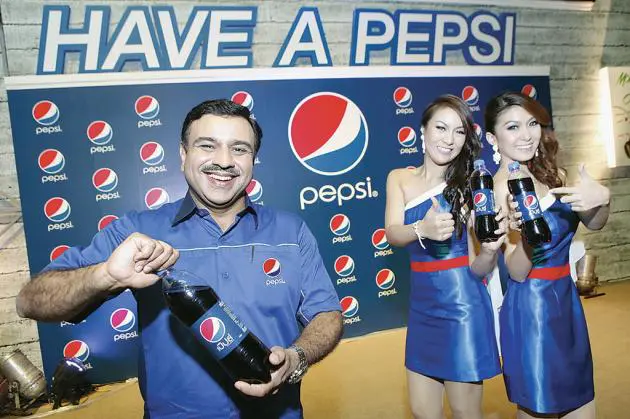
Jagrut Kotecha, general manager, beverages, for Pepsi-Cola (Thai) Trading, said the future investment reflected the company’s commitment to Thailand, which is recognised as an extremely important market for PepsiCo, and one of the biggest markets for its beverages in Southeast Asia.
He said the investment would ensure that Pepsi-Cola’s current leadership in the local cola-drink segment – the company claims a 50-per-cent share – keeps on growing, as well as reinforce its growth story in the long term.
“Thailand is a growth engine of PepsiCo’s Asia-Pacific business, and we’re committed to investing in the market to drive our future success,” said Kotecha. “Pepsi-Cola has been in Thailand for 60 years, and is now the leading cola in the country. This investment programme will help us ensure that our consumers and customers will have even more opportunities to enjoy the PepsiCo beverage brands they love, and experience the first-class service they have come to expect from PepsiCo.”
Pepsi-Cola, the flagship beverage brand of PepsiCo, will be available from the new plant in PET bottles from November 2, with full production of PET bottles and cans to be under way by June next year.
The GM said that for sales and distribution, the company would use both global and local experts in distributing Pepsi-Cola beverages through all strategic channels, covering both traditional and modern retailers as well as eatery outlets.
The company has appointed a global logistics firm – DHL – as its logistics and warehousing partner for Thailand. It also works with local distribution partners, which will handle production distribution and logistics in the five regions throughout the Kingdom and via the company’s 50 distribution points.
As part of the huge investment, PepsiCo will also undertake significant marketing investments in Thailand. This will include a strong focus on building on Pepsi-Cola’s strength in the market through new marketing and consumer-engagement campaigns related to music and sport platforms. The company’s recent survey found that 73 per cent of Thai teenagers love the Pepsi brand, he said.
The company will also place additional emphasis on training in the years ahead, to support its expanding workforce in the country. With the completion of the new Rayong plant, PepsiCo’s beverage business in Thailand now employs 3,000 direct and indirect employees.
The company has provided more than 9,000 hours of training to all direct and indirect employees during the past 10 months in preparing them for the full operation of the Rayong facility.
“PepsiCo has the perfect combination to ensure that we continue to build on our success,” said Kotecha. “Our readiness in production and distribution, our expertise in branding and marketing, and the excellent skills of our employees underscore our commitment to Thailand and to retaining our leading position in the Thai market.
“We will continue our investment in the Thai market to remain a top brand for Thai consumers, and we will continue leveraging our strengths in all aspects to grow our business in a successful and sustainable way.”
