
Payungsak insists he remains at FTI helm
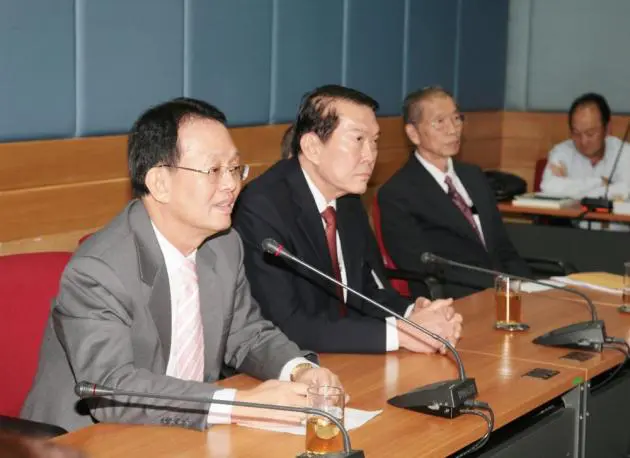


The internal conflict at the Federation of Thai Industries is far from over. Although the 184 executive members voted on Monday to oust the FTI's chairman, Payungsak Chartsutipol yesterday announced at a hastily arranged news conference that he was still
The Industry Ministry has now entered the fray in a bid to resolve the dispute among the FTI membership.
Speaking after a meeting with Payungsak at the Parliament building yesterday, Industry Minister Prasert Boonchaisuk said the ministry had been asked to examine the legal aspects of the move to remove the chairman.
He said a working committee would be formed to consider whether the FTI board meeting on Monday, which resulted in the vote to oust Payungsak, was in compliance with the body’s statute and regulations.
The panel will reach a conclusion on the matter by the end of the week, he added.
Payungsak sought a meeting yesterday with Prasert, Deputy Prime Minister Kittiratt Na-Ranong and Industry Ministry permanent secretary Vitoon Simachokdi.
At the ensuing press conference, he insisted that he still held the FTI chairmanship, would continue working in his post until his term ended |in 2014, and the existing FTI executive board retained management power.
He said those who disagreed with these views could make a legal challenge at the Central Administrative Court.
The 184 FTI members on Monday appointed Santi Vilassakdanont, a former chairman of the organisation, to take over from Payungsak. Santi is supposed to hold the title until March 2014, completing what is left of Payungsak’s second term in office.
Payungsak acknowledged that his work after the vote would be difficult, but said he would try his best to respond to the opinions and proposals of all members and would not favour any particular factions within the FTI.
“I will listen to opinions and proposals of all groups in order to bring benefits to the organisation as a whole. I will also create understanding with all members, so we will be able to review what are our problems and conflicts in the past,” he said.
He insisted that the FTI could work well with all governments and was prepared to put straightforward opinions to them.
RESHUFFLE DEFENDED
Payungsak said his decision last week to reshuffle the management line-up under the vice chairman and reduce the FTI secretary-general’s power was aimed at “adjusting their work appropriately”. FTI vice chairman Kitti Tangchitmaneesakda said it was within the chairman’s authority to postpone the FTI’s monthly board meeting. The gathering on Monday could not, therefore, be deemed the monthly meeting.
On Sunday, Payungsak sent a short message to members, telling them that the November 26 meeting would be postponed to “avoid confrontation and rifts” that could go beyond a “reparable” level.
It was reported that he also cancelled the booking for the meeting room, forcing those members present to sit and vote in front of the chamber.
The FTI statute does not state who could remove the federation’s chairman, but mentions only how the executive members could lose their executive status, Kitti added.
Under the statute, at least two-thirds of the members of the general FTI assembly can vote to do so, or the Industry Ministry can remove the executives by seeking Cabinet approval.
FTI secretary-general Sommart Kunset said the board’s monthly meeting on Monday complied with the federation’s regulations.
