
Credit spiral key in keeping policy rate
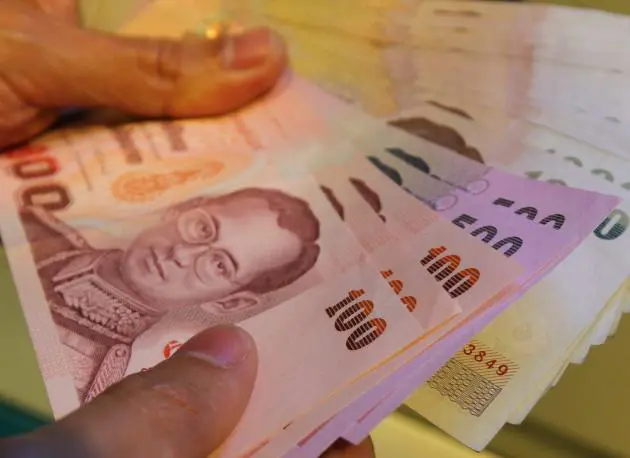


Extraordinary credit growth, particularly personal loans, was one of four reasons behind the decision of the Bank of Thailand's Monetary Policy Committee yesterday to maintain the benchmark interest rate at 2.75 per cent.
Paiboon Kittisrikangwan, secretary of the MPC, said bank loans had expanded by as much as 15 per cent so far this year, with the growth rate of personal loan even higher than that, while the default rate has been on the rise. He said several MPC members expressed concern that this could turn into a new risk to the economy.
The MPC is of the opinion that financial stability could be achieved through a combination of instruments, not just the policy rate. Macro-prudential measures could be executed.
“In a meeting between the Financial Sector Policy Committee and the MPC next month, credit growth will be a topic for discussion, aside from other risk factors like property prices and asset prices,” Paiboon said.
A report by the National Economic and Social Development Board showed that home loans rose 10.3 per cent year on year in the third quarter, up from 9.7 per cent in the second quarter and 9.9 per cent in the first. Auto loans increased by 33.6 per cent in the third quarter, compared with rises of 24.5 per cent in the second quarter and 20.2 per cent in the first.
Outstanding debts for personal consumption for other purposes were also reported to surge 30.3 per cent in the third quarter against 27 per cent in the second quarter and 25.9 per cent in the first quarter of the year.
Aside from credit growth, the MPC highlighted three other reasons for leaving the policy rate as is. These are – recovery of the global economy, higher-than-expected domestic demand, and limited impacts on the export sector.
The MPC unanimously voted to maintain the policy rate at 2.75 per cent.
The committee noted that inflationary pressure was in check. Inflation for the whole year is expected to end up at 3 per cent, indicating a real negative rate of 0.5 per cent and an accommodative monetary policy.
The MPC will remain vigilant on monitoring global and domestic economic developments and stand ready to take appropriate policy action as warranted, Paiboon said.
“The global economic outlook showed signs of stabilisation on the back of better-than-expected economic data, especially from the US and China,” he said. “There was sustained improvement in the US labour and housing markets, although the ‘fiscal cliff’ remained a key risk factor.
“China’s economy appeared to regain traction with recent strengthening in all key areas including exports, domestic consumption and investment.
“Meanwhile, the euro-zone economy contracted, but the economic and financial outlook of that region was projected to be more stable next year as resolution of the euro debt crisis became more concrete and the core economies continued to expand in tandem with improvement in the global economy.
“Against this backdrop, the outlook of Asian economies has gradually improved, with signs of recovery in exports and a recent pick-up in China’s economy, as well as buoyant domestic demand,” Paiboon said.
The Thai economy continued its positive growth momentum from the previous meeting. The impact of the global slowdown has so far remained limited to export-related sectors, while the greater-than-expected strength in domestic demand appeared to provide a sufficient cushion against the adverse impact of slower export.
Exports are projected to recover in the first half of next year on the back of anticipated improvement in the global economy. Private consumption and investment will continue to be the main growth drivers for the economy, supported by strong private-sector confidence and accommodative monetary conditions with high credit growth.
Inflationary pressure stabilised at a moderate level close to the previous meeting.
