
Move fast to cash in on US interest in region: Thai ambassador
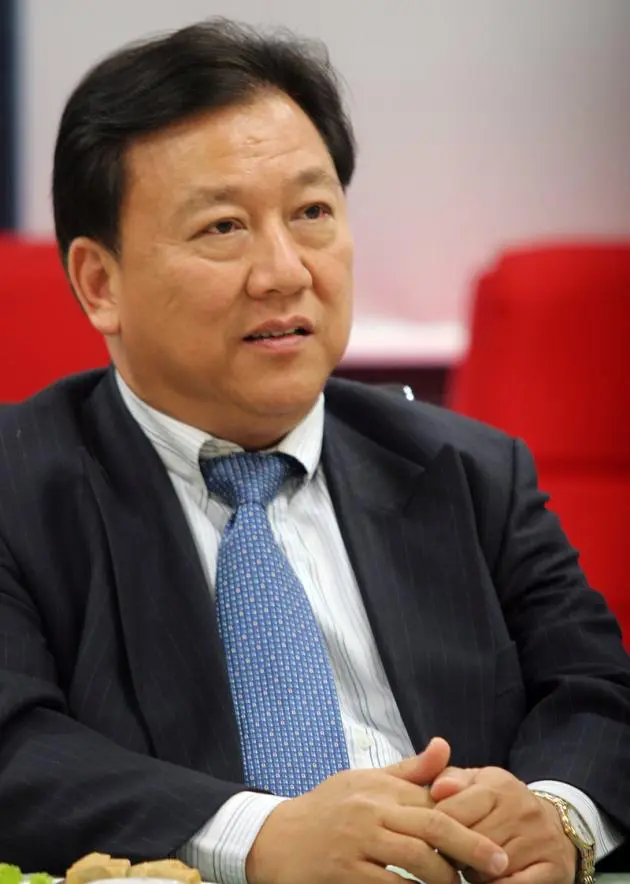


Despite any negativity associated with US President Barack Obama's recent visit to Thailand, the Kingdom's ambassador to Washington plays this down, stressing the need for Thailand to move fast to cash in on the United States' renewed focus on East Asi
“The US aims mainly to promote trade and investment with the region at this time when the European Union is declining and China’s influence is rising, and Thailand is in a good position that attracts American investors. Promoting trade and investment can be in the mutual interest of both countries,” Chaiyong Satjipanon said during an interview with Nation Group.
Obama’s invitation for Thailand to join the negotiations for a Trans-Pacific Partnership (TPP), which already entail 12 countries in Asia and the Pacific including the US, has raised fears that this would put Thailand’s economy at risk. There are also concerns that closer ties with the US would cause a rift in Sino-Thai relations.
But Chaiyong said these worries were overreactions. Joining the TPP negotiations would be time-consuming, as Thailand would need parliamentary approval as well as a public hearing. The Kingdom also would need endorsement from individual countries already involved in the talks.
“Both the US and China are happy with us. With China, we’re bonded by people and location. The US, though far away from us, considers us as an old ally. Promoting trade and investment is in the mutual interest,” he said.
Starting in the middle of next month, the Commerce Ministry will lead a delegation to the US to discuss bilateral issues under the Trade and Investment Framework Agreement. The Foreign Affairs Ministry will play an assisting role.
According to the ambassador, with China’s growing assertiveness in East Asia and America’s “unrealistic” engagement in economically stagnant EU through the North Atlantic Treaty Organisation, the US feels the necessity to strengthen its relations with East Asia, particularly Asean, to promote trade and investment as well as “American values” such as democracy and human rights.
OLD ALLY
While China has established a free-trade agreement with Asean, the EU has opened talks on similar pacts with a number of Asean members including Thailand. In this scenario, Thailand stands to benefit as a key member of Asean.
“Based on the current growth pace, China’s GDP could double within eight years. The US can’t afford to be left behind. In this region, it has an FTA only with Singapore,” Chaiyong said.
Regionally, while Thailand is an old ally, Singapore is viewed by Washington as a strategic ally and Myanmar’s role is still in the future, as the reopening process will take time. Another approach is designed for Indonesia, a source of resources as well as being the biggest market among Asean countries. Refocusing on East Asia has been hailed as an initiative of Kurt Campbell, the influential US assistant secretary of state for East Asia. He was the one who influenced the US policy towards Myanmar, which led to lifting of sanctions.
In the ambassador’s view, in his second term as president, Obama is likely to focus more on promoting trade and investment, to ensure food and energy security.
A university in Maryland recently came up with research to identify potential areas in Thailand for American investors and vice versa. A few Thai companies already invest in the US, including Thai Union Frozen Products. Land & Houses recently started to buy up properties there.
While the United States is a major buyer of Thai shrimp, Walmart, the world’s largest retailer, now imports furniture from Thailand for its outlets. Meanwhile, the US is confident that high-technology products will boost its exports. On the energy front, the US has recently found success with the fracking technique to extract shale gas, and it is believed by some that this new energy source will force down global gas prices. At present, the gas is available only to FTA partners, mostly its South American neighbours.
“It is a big question on how to place an old ally like Thailand in a position to benefit from this,” Chaiyong said. “Things in the US move so fast. We have to catch up. Our officers [at the embassy] also have to work fast.”
He said Obama’s visit signalled US confidence and strong support for Thailand’s democratic system. In addition, the visit raised the profile of Asean. He added that a number of American politicians were keen on Asia and they very much welcomed meetings with Asian people.
He also foresees another visit by the US president, noting Obama’s remark that “next time, I’ll come with Michelle”, referring to his wife.
