
Local university technology cuts home power bills by half


Play
King Mongkut's Institute of Technology Ladkrabang has developed energy saving technology to control and reduce electricity bills by nearly half in commercial and residential buildings. The research demonstrates three innovations that will reduce electri
Assistant Professor Dr Surin Khamfoi, lecturer in electrical engineering at King Mongkut’s Institute of Technology Ladkrabang, said the smart grid system is one innovation to use the smart electricity network combined with information technology to control the production system and distribute electricity for Thailand’s Provincial Electricity Authority.
“This system will distribute the electricity to match user demand under the concept of a demand side management centre. This will save electricity loss from the production and distribution system,” he said.
Meanwhile, this system will also reduce the greenhouse effect of CO2 expelled from the production system, he said.
He added that the research would also develop a smart micro-grid for use with the alternative energy system.
Meanwhile, the institute also developed a prototype for energy saving through the Institute and Energy Ministry’s zero energy building which used a solar cell system to power the building. The building also included raw materials that reduce heat from outside to inside with foam insulation in the roof and sheet metal sheet. This insulation reduced heat from outside the building.
Such construction technology would reduce the electricity bill by nearly a half in a normal building, he said.
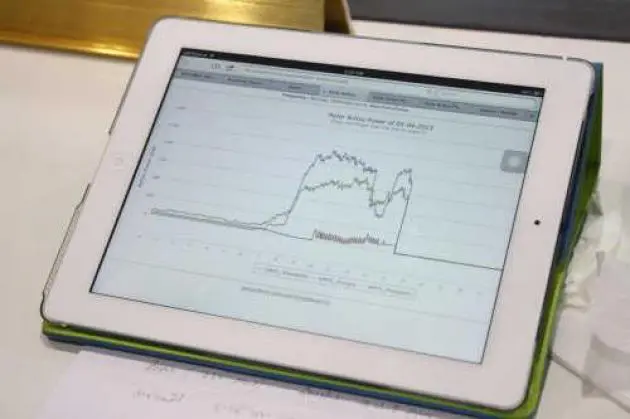
Assistant Professor Dr Visit Hirankitti, president of computer engineering at King Mongkut’s Institute of Technology Ladkrabang, who developed the smart metre, said the system should help both residents and manufacturing plants to manage their electricity through the mobile application. This would help users monitor their electricity each month and reduce their power use.
The system will also link in nationwide, showing the demand for electricity use every 15 minutes and help households understand their power consumption and reduce their energy power bills on average from five to ten per cent a month.
“A smart grid, solar cells, and smart metres, are the way to support an energy saving policy for the long term,” he said.
