
Innovation to fuel growth in Asia: Bayer


Play
Regional hub opened in Shanghai
Bayer MaterialScience, a leading provider of polymeric materials for high-tech solutions, is focusing on innovation in various sectors such as automotive, construction, information technology, footwear and wooden furniture in Southeast Asia, including Thailand, to cash in on Asia’s growing economy and increasing demand.
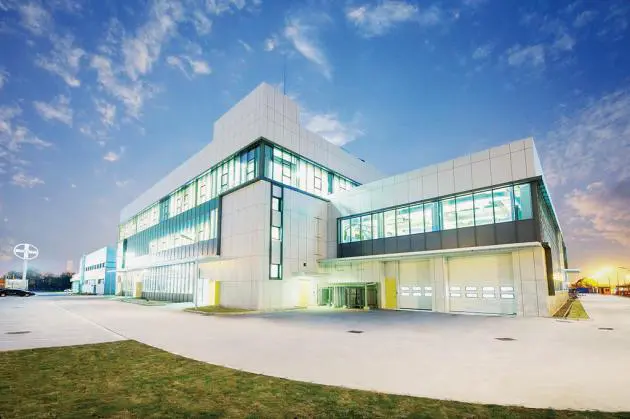
Last month the company inaugurated its Asia-Pacific regional innovation hub at its Polymer Research and Development Centre in Shanghai.
Patrick Thomas, chief executive officer of Bayer MaterialScience, said the company was determined to keep growing in the Asia-Pacific region. But further growth would only be achievable through innovation.
“In order to be relevant and result in growth, our innovation has to be closely aligned with the needs of the markets in Asia-Pacific,” Thomas said.
The company therefore expects the regional hub in Shanghai to become a significant contributor to its global innovation network.
“Our vision for the hub is to become indispensable in terms of competencies, projects and products, with a global innovation footprint for Bayer and external partners by 2020,” he stressed.
The hub will be supported by a strong network of production sites in East Asia, with major production sites in Shanghai, Map Ta Phut in Thailand, and Niihama in southern Japan.
Jane Sum, head of commercial operations for Southeast Asia, Australia and New Zealand at Bayer Thai, said Southeast Asia was considered the third-fastest-growing market after China and India.
“Once Asean becomes a single market in 2015, its macro-economy and the consumption power in the region will become more significant for international investors,” Sum said.
The key factor supporting growth in this region is increasing incomes of the middle class, particularly in Indonesia, Vietnam, Thailand and Myanmar.
Sum, who is also responsible for Bayer’s coatings, adhesives and specialised-business unit, said the use of plastic coatings in the automotive industry was on the rise, driven by continuing investment in this segment in line with increase demand for cars, particularly in Indonesia, Vietnam and Thailand.
She said high purchasing power among the middle class also boosted demand for consumer products and furniture, while the major countries in this region with strong economies were investing in new projects and construction.
Given such development, the company will benefit in businesses related to the production of footwear, wooden furniture, and packaging as well as construction components.
Polycarbonates are another key segment for Bayer MaterialScience.
Jasmine Jiang, Asean representative for commercial operation in Asia-Pacific for Bayer Thai’s polycarbonates business unit, said the growing domestic economy in line with heavy investment from overseas was the main factor driving demand in the IT, office automation, construction and automotive industries.
Jiang said the company provided its clients with technical support in material development for their new products, for example creating polycarbonate glazing for passenger cars, instead of using a real glass.
