
No to stock-support fund


Play
Inflows to return when index falls to certain level: officials
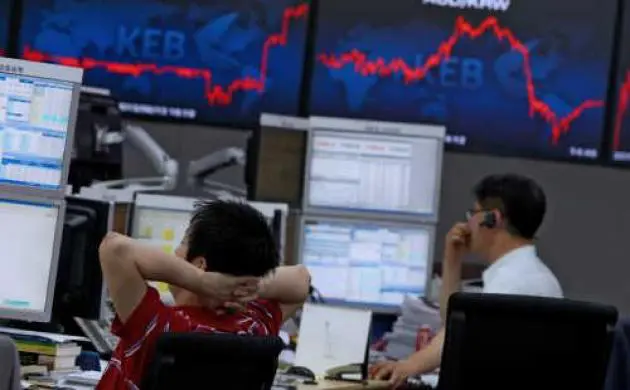
Thailand does not need a stock-support fund, said financial and stock-market authorities, despite a heavy sell-off by foreign investors that drove the SET Index down by 10.3 per cent this month and the baht to a nine-month low.
Referring to a rumour of the establishment of such fund, Finance Ministry permanent secretary Areepong Bhoocha-oom, Stock Exchange of Thailand president Charamporn Jotikasthira and Tisco Securities chief executive Paiboon Nalinthrangkurn strongly voiced their opinions that capital outflows would be temporary.
Areepong said that as long as the country’s economic fundamentals stayed strong, foreign capital would flow back to the stock market when the index has fallen to some extent.
“Thailand’s medium-term economic outlook remains strong, compared with that of other countries. Capital inflows will resume,” he said.
Charamporn noted that the SET Index had plunged mainly on external factors and unlike in 2008, when the US-led financial crisis sparked a similar sell-off, the outflows now are much lower than Bt140 billion then.
Paiboon agreed that the situation was different from 2008, the last time such a support fund was established. Then, daily turnover of the Thai bourse was below Bt6 billion, against more than Bt50 billion now. He also noted that the Thai market is not the only one to suffer massive outflows. Moreover, the fund would distort the market mechanism, which could lead to negative repercussions.
“There is no necessity for such fund. We have to take into account the situation in other countries. Some are suffering more. We should not distort the market mechanism and should brace for a market correction. The picture will be clearer in the next few months,” he said.
Since the end of May, the composite SET Index, which ended yesterday at 1,400.50 points, has lost more than 160 points or 10 per cent. This month alone, foreign net-sells reached Bt44.92 billion, widening the year-to-date net-sells to Bt66.01 billion.
Most analysts expect the situation to become clearer in the next few months, after the US Federal Reserve makes a definitive announcement on the direction of its quantitative-easing programme. Speculation on its early termination has led to sell-offs in global stock markets since May 21. The expected end of QE convinced market participants that the global financial market would no longer be driven by excess liquidity.
According to the Thai Bond Market Association, foreign investors were also net sellers of Thai bonds. This week alone, the net-sells reached US$179 million (Bt5.37 billion).
Huge capital outflows from both the stock and bond markets reversed the dollar/baht movement. From huge increases in the first four months, the baht has weakened sharply against the greenback. At 8.10am yesterday, the baht was at 31.20, the lowest since last September. Since the end of May, the currency has weakened nearly 3 per cent.
US Fed chairman Ben Bernanke said on Wednesday that $85 billion a month of debt purchases might be trimmed this year and ended altogether in 2014 as long as the US economy performs in line with estimates. Weaker-than-expected data from China, which bought 12 per cent of Thai exports in the first four months of this year, worsened the situation.
“The Fed’s stimulus outlook dominates the market and is weighing on regional currencies and assets,” Tohru Nishihama, an economist covering emerging markets at Dai-ichi Life Research Institute in Tokyo, told Bloomberg. “Data indicating a China slowdown [are] adding to the negative sentiment.”
Across Asia, stock markets yesterday extended a sell-off. Markets in emerging economies were also badly hit as traders who had ploughed in cash looking for better returns retreated to the safety of the United States. While Thailand lost 0.12 per cent yesterday, Manila, which had struck record highs on several occasions this year, fell 2.28 per cent, to 6,182.17, while in late trade Jakarta was down 1.77 per cent.
In an interview with Agence France-Presse, Michael Hewson, senior market analyst at CMC Markets UK, called the markets’ reaction “a classic case of perverse logic”, given that Bernanke was clearly signalling stronger US growth.
In a research note, Asia Plus Securities said that the US recovery and China’s liquidity woes could accelerate foreign selling in Asian bourses.
Weekly US initial jobless claims, ending June 15, increased from the previous week by 18,000 to 354,000 claims, compared with the 340,000 that were predicted.
This made the four-week average 348,250 claims, compared with the forecast of 345,750. May second-hand house sales rose by 4.2 per cent month on month to 5.18 million units, the highest in three and a half years.
China, meanwhile, is facing massive illiquidity due to capital outflow.
After 22-per-cent loan growth this year, compared with 20 per cent last year, China has restructured local financial institutions to control the risk involved with loan issuance after commercial bank sectors have expanded lending rapidly for many years.
Aside from pressing banks’ short-term lending, this has had a chain effect on small and medium-sized enterprises dependent on short-term loans, and on private-sector operators such as steel and cement businesses that have expanded their investment in advance.
The financial problems might slow China’s growth even below the International Monetary Fund’s prediction of 7.75 per cent.
