
BAY eyes bigger Japanese client base
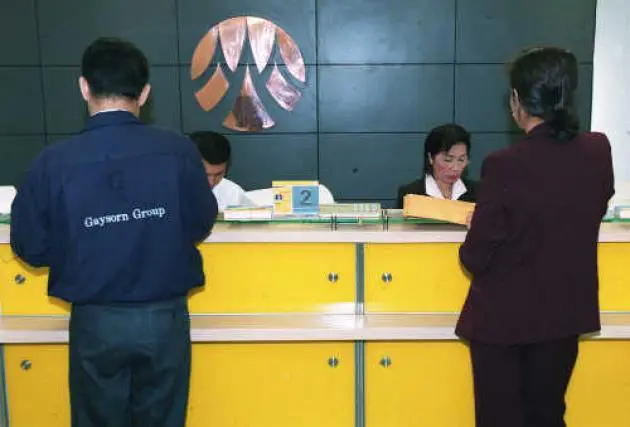


Bank of Ayudhya, the country's fifth-largest commercial bank, hopes an early benefit once Bank of Tokyo-Mitsubishi UFJ (BTMU) becomes its new major shareholder is that it will be able to tap into the strong employee base of Japanese companies in Thailand
A source at BAY said the bank sees a number of advantages from the deal, especially in terms of gaining customers from both Japanese firms in Thailand and the employees of those companies, which will boost the bank’s pay-roll accounts.
The pay-roll account is a basic product that could help broaden the cross-selling of products in retail banking, especially auto loans and unsecured loans.
“After the tender offer is complete, we will look forward to a synergy in retail banking with the new shareholder, with a larger number of Japanese manufacturers in Thailand initially being the focus of BAY in offering pay-roll accounts and debit cards, which are the two basic products for retail clients,” the source said.
The source said most Japanese businesses established in Thailand were large, which would give BAY an opportunity to extend its lending to such companies, as well as the deposits received from them.
The bank’s Japanese customers currently account for less than 1 per cent of its corporate business, he added.
BAY chairman Veraphan Teepsuwan yesterday said in a statement that the upcoming Asean Economic Community, the continued flow of Japanese investment into Thailand and its connection with the global financial community all meant the future of Krungsri appeared to be very promising.
“It will be a fitting challenge to MUFG [Mitsubishi UFJ Financial Group] and its subsidiary BTMU to demonstrate and prove to the world its quality leadership by utilising this new paradigm to benefit all stakeholders and Thai society,” he said.
Veraphan also said Ratanarak Group would not reduce its shareholding of 25 per cent in BAY after endorsement from the shareholder meeting.
“Together, Krungsri and the Ratanarak Group warmly embrace the opportunity to be strategically led by one of the world’s major money centres and the world’s largest financial services group, which significantly is also a major shareholder of the world-renowned investment bank, Morgan Stanley,” he said in the statement.
Following the deal, BAY’s capital adequacy ratio will be diluted from the present 15.06 per cent to 10.25 per cent.
BTMU has asked for the permission from the Bank of Thailand to hold stakes of more than 49 per cent in the Thai bank, said Krirk Vanikkul, deputy governor of the central bank.
BTMU will become the fifth foreign banks that has stake proportion more than 49 per cent in Thai banks follow Standard Chartered Bank (Thai), United Overseas Bank (Thai), CIMB Thai Bank and ICBC Bank.
CAPITAL INCREASE ‘LIKELY’
The ratio will still be higher than the Bank of Thailand requirement of 8.5 per cent, but BAY is expected to increase its capital to ensure it is sufficient to deal with lending and unexpected risk, said Sunanta Vasapinyokul, an analyst at Finansia Syrus Securities.
Asia Plus Securities analyst Usanee Liurut said BAY would grow inorganically by acquiring the customer base from BTMU’s branch in Bangkok, which is mostly engaged in corporate lending.
The BTMU branch has a loan portfolio of Bt200 billion and an asset size of about Bt500 billion.
After the tender offer, the branch will combine with BAY, and the loan portfolio of the Thai bank will rise by 26 per cent and its asset size will increase by 54 per cent to Bt1.7 trillion.
BTMU will help reinforce corporate banking at BAY, whose corporate portfolio is much smaller than its retail business, said Usanee.
BAY’s corporate loans account for 25 per cent of outstanding lending of Bt830 billion, while loans to small and medium-sized enterprises make up 26 per cent. Retail loans have by far the biggest share, at 49 per cent.
She said brokerage houses held similar views about the bank’s expansion of its corporate lending as a result of the deal, because BMTU has a foothold in the sector.
However, even though BTMU’s local corporate portfolio will be taken over by BAY, the new major shareholder must keep retail banking as the major portfolio at the Thai institution and should not remove the existing management team because of its familiarity in retail banking, said the analyst.
“If BTMU maintains the management team and the retail banking strategy, the [desired] synergy will happen,” she added.
Securities houses want to see a clear strategy from the Japanese bank in supporting and creating more synergy at BAY, she said.
She advised investors should hold the stock to the tender offer to gain profit.
KGI Securities said in its research that, with BTMU as the new major partner, there could be an unfavourable change in BAY’s management team and business direction, which could dilute the value of the bank in the eyes of investors.
KGI suggested general shareholders of BAY should hold the stock to the tender.
BAY share price closed at Bt36.50 yesterday, down 1.35 per cent.
