
Excise revenue boost
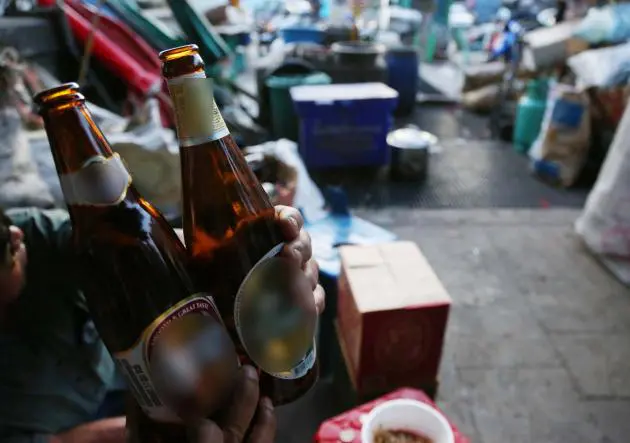


CHANGES TO the excise duty for alcohol will result in revenue from alcoholic beverages rising by 10 to 15 per cent, which is expected to generate an additional Bt10 billion for the Excise Department, director-general Somchai Poolsawasdi said yesterday.
The new excise structure and collection system for alcohol came into effect yesterday.
The forecast revenue increase is based on the previous target of Bt130 billion for overall excise-duty collection.
However, sales of liquor, wine and beer are anticipated to decline by about 5 per cent as a result of the tax hike.
He said retail prices for alcoholic beverages should be maintained for the moment, as traders still have older stocks. Some of them might decide not to increase their prices as part of their marketing strategy, as any price surge could affect sales, he added.
“The key reason we decided to adjust the excise rates is that we want them to be fair to all alcoholic-drink businesses. In the past, we found that importers of alcohol products had informed their prices as being below the actual prices, and such behaviour was not fair to local entrepreneurs, who had to pay excise tax calculated based on their ex-factory prices.
“Under the new method, excise duty will be calculated by using retail or wholesale prices at the last step in the supply chain,” said Somchai.
He added that under the previous method, excise collection was based on value or volume, whichever was higher. However, under the new principle, collection will be a mixed method, based on both value and volume.
For volume, the calculation will be based on volume per litre or per 100-per-cent alcohol content, whichever is higher. In order to control consumption, any products with a higher alcohol content than the international standard will be charged at a higher tax rate. For example, beer with an alcohol content higher than 7 per cent will be charged Bt3 per degree for the surplus tax rate.
Normal practice
Chatchai Wiratyosin, marketing director for Singha Corp, said it was normal practice that there would some holding back of products by retailers and wholesalers, as they would want to speculate and make a profit from the new excise structure.
This is because there is no clarity about the calculation method for the new excise duty, as well as the setting of new retail prices, he said.
However, for Singha, the company will speed up its beer production to meet demand during the coming high season, he added.
“We are quite ready to follow the law, which should be fair to everybody. They [excise duties] should be adjusted to be equivalent to all alcohol products, whether whisky, wine or beer, to allow the products in any segment to be based on fair competition,” he said.
Palis Bhirombhakdi, managing director of Boonrawd Trading, the distribution and marketing arm for Singha beer, said the company would inform its dealers how much beer was in its stock and how much would be distributed to all dealers.
“We will not hold a larger stock to cash in on the new excise duty, due to our limitations on the volume of glass bottles and warehouse space. We have also limited capacity for exporting our products,” he said.
He added that when the government increased excise duty in the past, the market would shrink for about five years before recovering. However, the current market situation for alcohol beverages will also depend on other factors, especially the purchasing power of consumers and the political and economic state of the country.
Somchai Pornrattanacharoen, president of the Thai Retailing and Wholesaling Association, said the increase in excise duty on alcohol beverages would lead to product-holding by traders, as they would not want to sell their products during a period of uncertainty over retail prices.
Manufacturers are reluctant to release their products from the factory at this time, and that causes many traders to have insufficient products to sell, he said, adding that producers should establish their prices clearly and quickly as there is currently a loophole in the pricing of alcoholic drinks.
