
Education, R&D key to SK's corporate success: envoy


Play
Endless innovation, quality goods at lower prices among driving factors
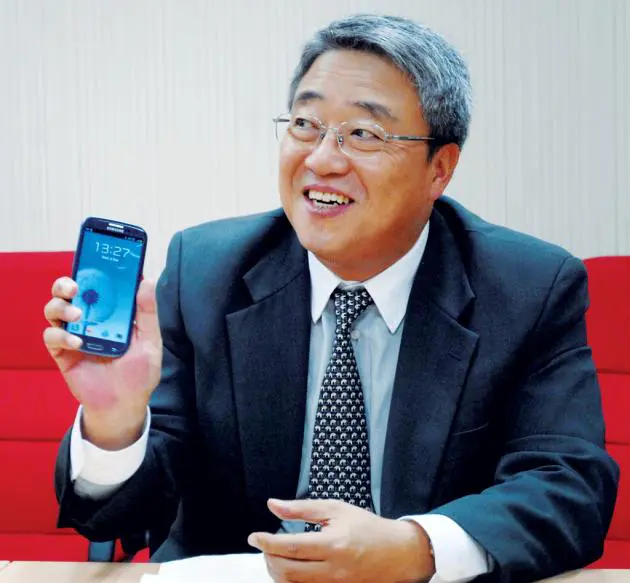
South Korean Ambassador to Thailand Jeon Jae-man attributed corporate Korea’s success in the global marketplace to his country’s generous spending on research and development as well as its people’s commitment to education.
“Korean goods are of good quality but they have lower prices [than competitors’]. This helps us gain market share. The secrets of Korea’s success lie in the fact that we focus on endless innovation, which is facilitated by our high spending on R&D.
“Our R&D budget averages 4 per cent of our GDP [gross domestic product], which is the second-highest in the world, second only to Israel.
“We used to have a very hard-working labour force, but recently there have been some labour disputes, so I am not sure about this strength now.
“However, I want to highlight another important factor for Korea’s success in the world market, which is education. In terms of the number of secondary-school students entering university, Korea also has the world’s second-highest ratio, at 80 per cent, which is second only to Canada.
South Korea’s success is exemplified by the rise of Samsung and other brands in smart phones, tablet computers and other consumer electronics as well as in automobiles and other high-technology products.
On bilateral relations with Thailand, the ambassador said: “Last year, 1.36 million Koreans visited Thailand, while over 300,000 Thais visited Korea. Besides tourism, last year’s bilateral trade value was US$13.6 billion,” or Bt440 billion.
“In the [first] half of this year, the bilateral trade value increased by 7.9 per cent, which is a big rise amid the global economic recession. For Korea, Thailand’s the 15th-biggest trading partner.
“The economic relationship is set to be closer in coming years as leaders of both countries have pledged to double the amount of bilateral trade over the next five years from the current $13.6 billion per year.
“This year, both countries also started a joint feasibility study on a proposed Comprehensive Economic Partnership Agreement. I hope negotiations can start next year. It’s similar to a free-trade agreement, but CEPA will be much more comprehensive.
“This is due to the fact that Korea already has an FTA with the 10-country Asean grouping, which includes Thailand. CEPA will cover trade, investment and services as well as labour exchanges between the two countries. Now, there are about 20,000 Thai workers in Korea for construction and manufacturing jobs under a bilateral cooperation agreement. This may be similar to the existing Comprehensive Economic Partnership Agreement between Thailand and Japan.
“In terms of Korean investment in Thailand, Korean firms invest less in Thailand than in Vietnam and Indonesia largely because the Thai market has been dominated by Japanese firms.
“Vietnam is a newer market, which just opened up about 20 years ago [so there is less dominance and competition from Japanese firms], so Korea’s investment in Vietnam is six times more than that in Thailand.
“In Thailand, Korean firms’ competitive advantages lie in high-technology manufacturing such as electronics and some financial, banking, insurance or home-shopping services. In automobiles, Japanese firms are predominant, so some Korean automakers are reluctant to come here.
“However, some niche models such as Hyundai H1 are quite popular in Thailand due to their high technology.
“The entertainment sector is another strength, while Samsung and LG already have factories in Thailand. Samsung now has a 60-per-cent share of the Thai market for smart phones, up from only 20 per cent three years ago. The Samsung smart-phone factory is in Vietnam.
“On the security situation in the Korean Peninsula, I think it’s now OK, but last year and the first half of this year saw people in Thailand worried by some tensions after North Korea launched its long-range missiles and made its nuclear tests.
“This was followed by the international sanctions imposed by the UN Security Council. North Korea also raised the level of verbal threats.”
