
Fuji Xerox turns to what's best for customers, the community


Play
Firm made complete change in 1969 to develop growth in sustainable manner
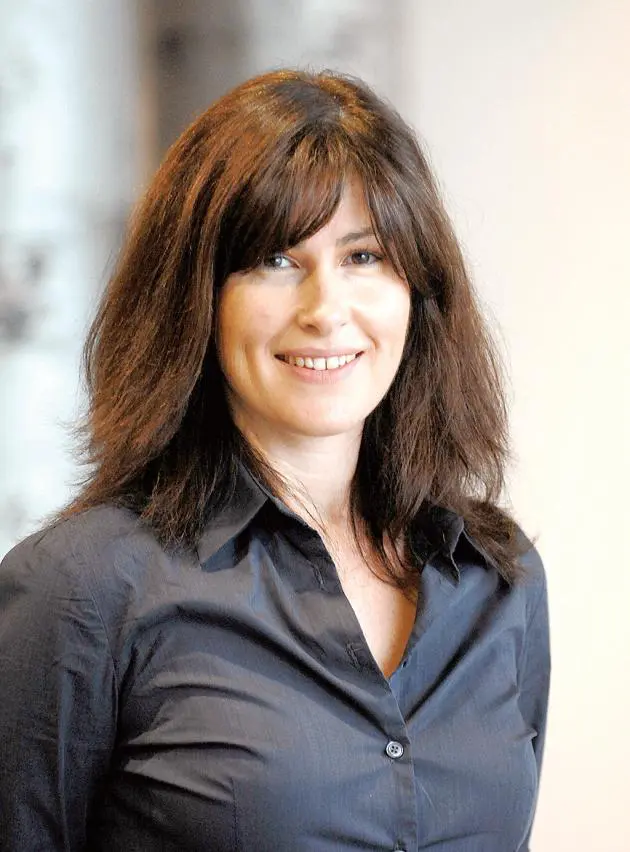
To achieve corporate sustainability often means a firm making a 360-degree turn with its partners to develop their growth in a sustainable fashion – the way Fuji Xerox has operated since 1969, the company’s head of sustainability, Asia Pacific and Australia Amanda Keogh said in an interview with The Nation.
She said the threat of global climate change drove many corporations to have concerns about the environment and find ways to sustainable business and environmental awareness. Fuji Xerox was one of these firms.
“When our goal is to become a sustainable firm, we are not concerned about only our business – but we do a 360-degree turn in our business operations to focus on sustainability and manufacturing, customers, staff, suppliers and community,” she said.
For manufacturing, the company has tried to develop its plant to achieve zero waste and reduce CO2 from the production process.
Customer satisfaction is its top priority in all business activities – and the company tries its best to identify and understand the comments, expectations, and requirements of its customers.
The company also has a training programme for its staff and employees who are key to developing product to match its customers’ demands.
As suppliers, they are committed to include corporate social responsibility (CSR) activities. The company has a CSR goal for suppliers and engages in face-to-face communications with them.
The community is also involved in its CSR programme, part of its sustainable activity, by focusing on education which will open opportunities for people learning about innovation and technology.
“All of this sustainable programme we adopt globally, including in Thailand,” she said.
The company’s sustainability report shows that in the 2012 fiscal year, CO2 emissions across the life cycle of its products totalled 1,249 Kt-CO2, a reduction of 10 per cent from the previous fiscal year (down 19.7 per cent from fiscal year 2005). The decrease was primarily a result of improvements in the company’s logistics.
Meanwhile, in fiscal year 2013, the company plans to review its strategy for meeting the 2020 targets on a function-by-function basis in order to intensify its long-term efforts, while continuing to bolster current initiatives for CO2 emissions reduction at each function.
In fiscal year 2012, the company achieved a recycling rate of 99.5 per cent or higher for end-of-life products – the standard for “zero landfill” – at all its business sites within Japan and overseas. Although the ratio dipped 0.2 points from the previous fiscal year in China, this was the result of changes in the recycling facilities and processes used for certain components and did not indicate an ongoing trend.
In Thailand, the company has a manufacturing plant in Chon Buri province. It also operates a sustainable programme in this plant –including a policy to manage waste under a zero waste programme.
Currently, Thailand’s manufacturing has recorded a recycle process achieving 99.9 per cent, according to the sustainable report for 2013.
“We have tried to recycle waste from the production plant that will reduce waste from manufacturing and also reduce CO2 from the production plant,” Keogh said.
The company also has CSR activity within the Thailand community as it strives to be a useful part of Thai society.
In the year 2011, when Thailand faced serious flooding, the company collaborated with Thai NGOs working voluntarily along the river basin, home to more than 50 families, as well as a temple and an elementary school.
In fiscal year 2013, the company campaigned in June for a Low CO2 School Network at 11 schools in Samut Prakan, and will continue at 30 schools in Bangkok beginning in October.
Company activities included ‘outreach’ which delivers energy conservation knowledge to schools through games and debriefing, a smart energy camp, and smart energy competition. Most activities provide environment knowledge for children.
“We are part of a society and community when we do business with concern for the environment and provide knowledge that will create sustainable growth for both our business and society,” she said.
