
Krungsri, partner target CLMV


Play
Krungsri Group (Bank of Ayudhya and its business units) will play a role in providing consumer finance in Thailand and CLMV (Cambodia, Laos, Myanmar and Vietnam) markets while supporting Thai corporates wishing to invest in Asean through the network of Mi
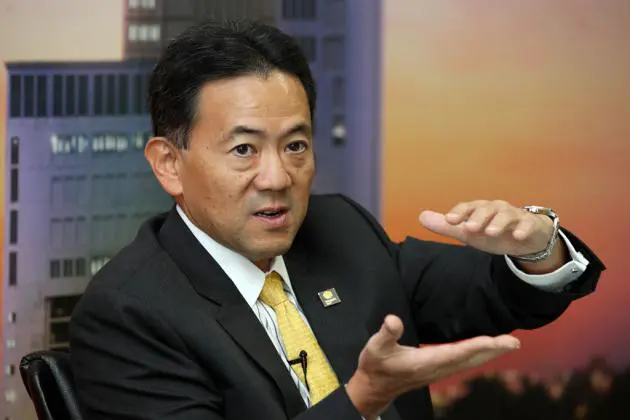
Krungsri became a member of BTMU when the latter acquired a 72-per-cent stake in Thailand’s fifth-largest bank by assets. In the view of Krungsri chief executive officer Noriaki Goto, BTMU can use the model of consumer finance of Krungsri in Thailand to deal with consumers in neighbouring countries, focusing on CLMV.
Krungsri is the market leader in credit cards and personal loans and ranks second in auto loans, so its brand and its expertise in consumer finance should find good acceptance from individual customers in neighbouring countries.
In lending to corporates and small and medium-sized enterprises, Krungsri ranks fifth, but Goto said it could support Thai corporates, as well as Japanese and multinationals operating in Thailand, that are looking at expanding within Asean by collaborating with MUFG and BTMU.
For example, he said, BTMU has had a foothold in Myanmar for a long time and has applied for a banking licence with that country’s central bank. So, even though Krungsri does not have a network there, it can support Thai SMEs and corporates through the BTMU network. And in Thailand itself, Goto said his goal was to make Krungsri one of the top three banks for corporates and SMEs, for both Japanese and Thai clients.
The first business matching organised by Krungsri and BTMU in Bangkok last week was an initial effort to capture Thai and Japanese SMEs, he said.
In the Thai market, apart from BTMU, the Bangkok branches of Mizuho Bank and Sumitomo Mitsui Bank are active with Japanese companies.
Most Japanese investment in Thailand is in manufacturing. Besides the big names in the auto sector, there are a lot of Japanese SMEs with operation bases upcountry. When it only had a branch in Bangkok, BTMU could not get much of that business, so Krungsri’s nationwide network can accommodate those customers.
Krungsri will completely integrate with BTMU by the end of this year. After that, it has a mid-term plan, starting from 2015-2017, focusing on maintaining its market leadership in consumer finance. Second, it will draw more Japanese companies into the BTMU customer base, and third, Krungsri will build deep relationships with Thai employees of Japanese companies.
BTMU covers 4,000 Japanese companies in Thailand, of which 2,600 are large corporates. These companies employ 43,000 Japanese people, 80 per cent at the executive level.
The 750,000 Thais they employ are the focus of Krungsri, which offers financial solutions bundled with other products.
MUFG and BTMU look at Thailand as a long-term investment, with Krungsri reinforcing their retail banking in Asean as Union Bank did for MUFG in the United States. Krungsri earlier put its loan-growth estimate for this year at 7-9 per cent, but Goto hopes that as the economy rebounds next year, its business growth should be more robust.
But in the current situation, amid rising household debt, he said the bank would continue to be cautious, enforcing debt payments by existing customers while tightening credit for new ones.
