
Inheritance tax assured, says Finance


Play
The Finance Ministry yesterday confirmed that this government would launch a tax on inheritances but is still pondering a real-estate tax, raising the value-added tax next year and keeping the corporate income tax at 20 per cent.
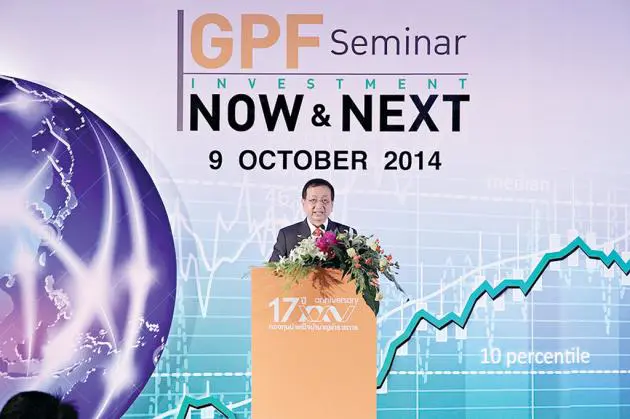
“Regarding the inheritance tax, if you asked if the government would really do it, my answer is yes, definitely. The draft is already 90 per cent done,” Rungson Sriworasat, permanent secretary of the ministry, said at a seminar on “Investment Now and Next” arranged by the Government Pension Fund.
The inheritance tax would probably be a flat 10-per-cent rate with the first Bt50 million exempted.
Criticism that the wealthy will transfer their assets to other countries to avoid paying the inheritance tax is not something to be worried about, he said.
“Some people said the rich had already transferred their assets abroad. Let me say this, please watch out, because they might not get them back. Authorities in other countries would simply ask where they got the assets from, since they have rules and regulations to abide with,” he said.
The household tax is insufficient since it can only generate about Bt10 billion to Bt20 billion per year in revenue. The rate is dictated by the auction price and not the real market price, which means that the rate can be negotiated.
Land price assessment
“The Finance Ministry has instructed the Treasury Department to hurry up with its assessment of land prices in order to introduce the real-estate tax. If our land prices increase to near the market price, it will increase our tax collections from the household tax and the local maintenance tax. But the rate will be capped at 4 per cent,” Rungson said.
Local governments will collect those taxes and the rate will depend on the asset values, where higher value will be taxed more. The Treasury Department is assessing about 7 million plots from the total of 30 million plots that will be taxed.
The ministry is also considering engaging a company with expertise to help the department. The cost of outsourcing some of the work would be worth it considering the revenue that is expected to be received, which is double the household and local maintenance taxes.
As for personal income tax, the ministry has restructured the tax brackets and now people who have less income will pay less tax. People making less than Bt100,000 per year would be exempted from paying any personal income tax at all.
The authorities are also looking at the possibility of keeping the corporate income tax at 20 per cent permanently.
“Would the uncertainty surrounding the corporate income tax affect investor confidence? That will have to remain to be seen, but from what we have observed we have found out that our rate is lower than in many other countries in the region, and only Singapore has a lower rate than us,” he said.
Also under study are tax and non-tax incentives for operators and investors willing to do business and invest in five of the special trade zones that are expected to be set up this year at the Mae Sot, Mukdahan, Aranyaprathet, Khlong Yai and Sadao border crossings.
They might include a tax waiver for five to 10 years or a reduced tax rate along with other supportive measures such as a waiver of registration and factory permit fees or soft loans with special interest rates for people who want to invest in the zones.
