
Consumption normalising: BOT chief


Play
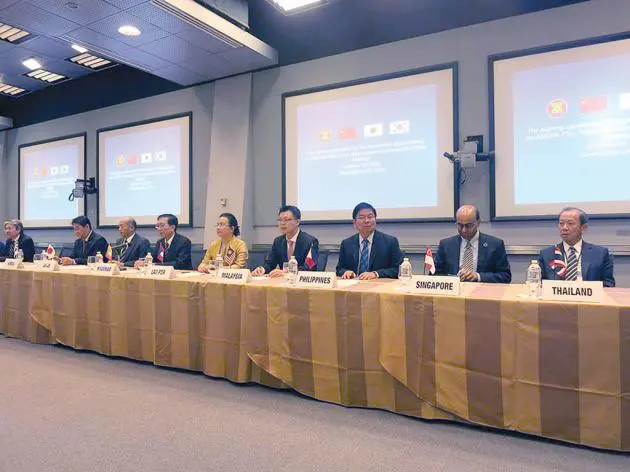
Prasarn refers to investment schemes at Washington forum
Bank of Thailand governor has said domestic consumption and pent-up demand are returning to normal trends as a result of a stabilised political environment.
Prasarn Trairatvorakul also said that in terms of venture sentiment, the private sector should be encouraged by the government’s investment plans, which should help the economy return to normal growth potential next year.
Speaking to reporters at the Annual World Bank and International Monetary Fund meetings in Washington this weekend, he said the government’s reform of state enterprises and the energy-price structure, and its support of the agriculture sector without interfering with market prices, should enhance the country’s competitiveness.
There is no wariness regarding business sentiment next year because the military’s ruling National Council for Peace and Order (NCPO) is likely to implement the third phase of its political road map as it had earlier announced, he said.
Prediction close to reality
The BOT’s latest prediction for next year’s growth in gross domestic product is 4.8 per cent, which is close to the country’s real economic-growth potential of more than 5 per cent.
The third phase of the NCPO’s road map involves the promise of a general election next year.
In terms of foreign direct investment, Prasarn said the number of requests for investment permits from the private sector through the Board of Investment had noticeably increased and the majority of them were important projects such as eco-cars, processed food, and renewable industries.
He said he expected no inflation pressure next year despite changes in the structure of the country’s energy prices, but the central bank would keep a watchful eye on the pending increase of the United States’ benchmark interest rate.
And if the rate increased along with economic growth, this should encourage more international trade, which should compensate for the expected slowdown of the Chinese economy, because the amount and value of exports from Thailand to the US were almost equivalent to its exports to China.
Meanwhile, Finance Minister Sommai Phasee, who led Thai representatives at the meetings in Washington, has spoken to ratings agencies Fitch, Moody’s and Standard & Poor’s about the government’s stimulus package.
He also briefed them on the country’s long-term plans such as infrastructure projects and the reform of the tax structure and state enterprises, and claimed that the rating agencies responded positively.
