
Opportunities abound as investors eye Myanmar border areas


Play
Greater opportunities await Thai businesses and investors wishing to trade and invest in Myanmar, in particular in border provinces and nearby areas, as the two Asean countries draw closer and special economic zones (SEZs) are established.
A Thai Chamber of Commerce mission to Mae Sot district last week found that Tak province’s economy would continue to grow significantly as it was already a base for trading with Myanmar, as well as a gateway for Thai interests to start investment in cross-border areas – and in some of the neighbouring country’s cities.
Niyom Waiyawatchapanich, chairman of the TCC s Neighbouring Countries Trade Promotion Committee, described Myanmar’s economic outlook as “very promising”.
Thai traders and investors should start exploring more opportunities in the country, and trading and investing along border provinces would be a great start for them, due to the low risk involved and the fact that there would be more development in these areas in the coming years.
Mae Sot district is one of the target areas for Thailand in terms of SEZ development. The government is building the second Thai-Myanmar Friendship Bridge in the district, and expanding the highway to four lanes connecting straight to Myawaddy, which is a gateway to reaching other emerging growth cities in Myanmar, such as Kawkareik, Taungyi and Mawlamyine, as well as Yangon.
Niyom said after the infrastructure-development projects are completed in the next two years, the logistics costs for shipments to Myanmar would be half of what they are today. The shipment cost for goods is now Bt2 per kilogram, but after the highway is developed, it will be just Bt1 a kilo.
The new highway and bridge crossing will also save time for shipments. The delivery time for goods from Mae Sot to Kawkareik is currently about three hours, but after the highway is ready, this will be reduced to just 50 minutes.
To facilitate more trade and investment growth on both sides, Niyom called for the two governments to set up similar customs rules and regulations, as well as expand the period that the border checkpoint is open for business and traffic each day.
Thin Thin Myat, chairman of the Myawaddy Border Trade Chamber of Commerce, said she had high expectations that trade would grow between Thailand and Myanmar under the growing relationship between the countries.
She said there was strong demand in Myanmar for many Thai items, particularly consumer goods, foods and beverages, while Myanmar could also support Thai industrial growth by supplying many raw materials, such as agricultural products.
Somsak Kaveerat, chairman of the Tak Chamber of Commerce, pointed out that trade at the Mae Sot checkpoint had soared by about 30 per cent this year, largely due to higher demand for Thai goods.
Trade value at the checkpoint is projected to reach Bt60 billion this year, he said.
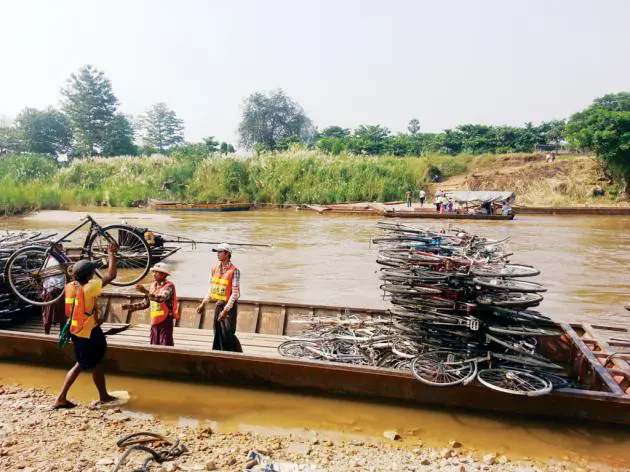
Thanawat Weerasomkiat, general manager of Tha Klao Bicycle Warehouse in Tak, said there was high demand in Myanmar for second-hand imports.
Mae Sot is now a transit port for shipping second-hand bicycles to Myanmar, with sales continuing to grow, he said. Tha Klao ships 60-70 containers of bicycles per month across the border, with each container holding about 700 bikes.
Moreover, the market for used bicycles is not only high in neighbouring countries, as the Thai market is also experiencing strong demand, he added.
About 40 per cent of the company’s Bt100-million second-hand bicycles business is in the domestic market.
Wason Kanchitsirikul, managing director of Highway Group – an authorised dealer for Siam Cement Group – said sales of construction materials had increased significantly during the past year to serve Myanmar’s emerging growth.
Normally, the company shipped about 9,000-10,000 tonnes of cement to Myanmar per month, but recent monthly shipments have risen to 17,000-24,000 tonnes.
He said that since many construction and infrastructure-development projects were taking place in Myanmar, there was now strong demand for construction-material imports.
However, he said, Thai businesses should pay particular attention to the exchange rate when trading with Myanmar.
To ensure stable incomes, he suggested that they trade in baht.
