
SCG targets sustainable growth that benefits all


Play
Cutting CO2, waste emissions; has major programme to recycle waste heat at its plants; engaging suppliers, partners and customers in pursuit of goals
Siam Cement (SCG) targets cutting its carbon-dioxide emissions by 10 per cent by 2020 as part of efforts to reduce the effects of climate change, president and CEO Kan Trakulhoon said recently.
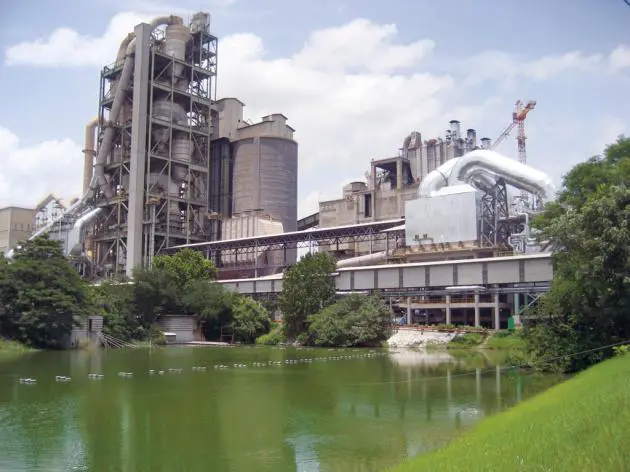
The group has been striving to do business in an environmentally friendly way by setting aside an average investment budget of some Bt4 billion a year since 2009 – or about Bt17 billion through to the end of this year – in order to establish a waste-heat system at all of its cement plants nationwide, and at its overseas plants in Asean.
The programme forms part of its efforts to reduce the amount of waste heat and other material entering the environment, he said.
The conglomerate has managed its waste under a “zero waste” policy at all its cement and other manufacturing plants since 2007, a programme which he said had proved successful.
The group’s goal for doing business over the long term is to fully engage in green manufacturing and produce green products that meet evolving customer demand, Kan added.
“When we say we are a green business for sustainable growth, that does not only mean developing our manufacturing plants or our supply chain, as we also have to develop and educate our customers to use green products that are friendly to the environment. This means we have to research and develop green products for the market and educate our customers [in the benefits of using them],” said Roongrote Rangsiyopash, chairman of the SCG Sustainable Development Committee.
The group’s current policy is to produce green products accounting for at least 30 per cent of its total sales, which means it has to put innovative and green products on the market every year, he said.
To support this goal, the group plans to double its research and development budget from an average of 0.5 per cent of sales per year to 1 per cent within the next three to five years.
The R&D budget will be spent on developing innovative products and researching and developing ways to make its plants energy-saving and zero-waste facilities, he said.
Moreover, SCG not only provides education about sustainable growth to its workers, but also to its suppliers, which now total more than 8,000 around the Kingdom, said Roongrote.
He added that the group had been concerned about the environment and sustainable growth since the economic crisis of 1997, which changed its business strategy from one of growth solely in terms of revenue and profit to one of doing business with a view to sustainable growth, while also taking fully into account the interests of society, which has to grow together with the group’s business growth.
“We cannot grow alone, but we have to grow together with our partners, customers and society. This will support our business growth in the long term, and it is our philosophy when doing business both domestically and when expanding our investment overseas,” said the committee chairman.
Following its pursuit of such a business strategy, SCG was listed in the Dow Jones Sustainability Indices (DJSI), which is a securities index established by Dow Jones to assess and benchmark sustainability performance of the world’s leading companies by taking into consideration the economic, social and environmental dimension.
SCG was listed in the DJSI in 2004, and just four years later was awarded gold-class status for the construction-materials industry.
Global leadership
The group has recently been assessed and classified by the DJSI as the global industry leader in the construction-materials sector for a fourth consecutive year.
Kan said this recognition from the DJSI “clearly reflects our excellence in the economic, social and environmental dimension, leading to best practices for every involved party.
“SCG has also established a sustainable-development model that can be applied from within our corporation to all related parties involved in our supply chain. That includes the surroundings, the environment, the community and society. We believe in conducting a sustainable business based on our four core values, and that the most valuable property is our personnel,” he said.
As the industry leader, SCG is committed to being the model of sustainability for other businesses, and it all begins with self-improvement, said the company chief.
The first step in SCG’s success is its internal management, by striving to do its best in saving energy and raw materials – and seeking environmentally friendlier alternative energies.
Then there is the development of “green building”, in order to increase the quality of life of employees via a good working environment.
Also, and very important for the company, is its relentless R&D that results in more environmentally friendly products and a greener supply chain – from sourcing to manufacturing and end-user experience – he said.
The company strives to do better from the very start with a greener procurement scheme and “greening the supply chain” principles. It also cares for its business partners, encouraging them to ensure safety in all areas, he added.
SCG also helps its logistics partners to train their staff, through the Skills Development School.
It also shares with society through a myriad of activities, from training and inspiring to participating projects that involve its personnel in every community they are in.
The titles of SCG’s projects demonstrate its coverage of a wide range of social needs: Sharing Opportunities, the Drawing the Future Programme, the SCG Conserving Water for Tomorrow Project, the Innovative Technology for the Restoration of Saline Land Project, the Cement Partnership Initiative – as well as children’s development programmes.
“SCG hopes to inspire other companies in the more practical schemes of business sustainability, so that someday they will achieve a good balance of economic, social and environment growth, which should enable all of us to compete in a really sustainable way in Asean,” said the company president.
