
Putting children's rights at the centre of the business


Play
Sansiri generates great interest at UN for its child-friendly spaces, successful campaigning for nutrition legislation
Sansiri’s introduction of child-friendly spaces at its construction sites, and the company’s successful campaign for legislation of the Iodine Act in Thailand a number of years ago, met with great interest when presented at a recent United Nations forum in New York.
Sansiri president Srettha Thavisin said during a group interview after attending a special UN General Assembly meeting on the 25th anniversary of the Convention of the Rights of the Child, that the company had begun to support Unicef (the UN Children’s Fund) four years ago, and now donated US$1 million (Bt32.8 million) a year to the organisation.
Meanwhile, the company also supports Unicef activities for children both in Thailand and globally, he said.
The property developer’s push for the Iodine Act, which obliges producers to include the element in foods to improve their nutritional value, was top of its agenda several years ago as a measure to help improve children’s health in the Kingdom, he explained. The law was passed in 2010.
Moreover, the company, which has always been concerned about children’s rights, has formally banned the use of child labour on its construction sites since 2009.
“When a contractor firm signs a contract to build one of our residential projects, it contains a rule that they cannot use child labour on our construction sites. If we see child labour on our site, we can cancel the contract immediately,” said Srettha.
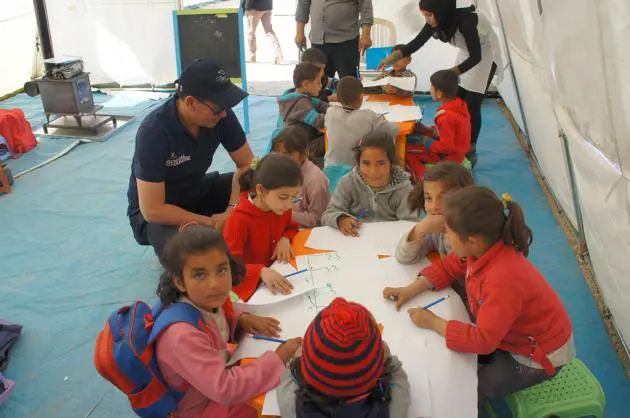
In addition, the company has to date also set up child-friendly spaces for the children of labourers at 14 of its 126 residential-project sites around the country.
This enables them to learn and play when their parents are working on-site, as each child-friendly space has a teacher and volunteers, who are Sansiri staff, to take care of the youngsters.
There are normally 20 to 30 children benefiting from these facilities per site.
The business’s policy of protecting children’s rights, and the presentation of its work in this area to Unicef members in New York, generated great interest among members of the organisation who attended the anniversary event, said the company president.
“They were interested in this issue because of most of them were from developed countries that do not have children’s rights problems, and they wondered why a company from a developing country was interested in doing something about it,” he added.
According to Unicef statistics, the number of child workers in Thailand uncovered as a result of labour inspections amounted 14,912 in its most recent research.
The number of child workers according to the country’s Labour Security Bureau, meanwhile, is 20,465, while the number according to the National Statistics Office stands at 185,633.
Broader action needed
“We think it is an urgent matter for all parties to restrict their business partners from using child labour in all sectors. For us, we are trying to do so by having the rule that our contractors cannot use child labour on-site, and we also have a child space for kids who have to stay with their families who are labourers on our construction sites.
“If our contractor partners believe in our policy, they can copy it at other sites where they work. This is all part of a push for all parties to be concerned about and act against the use of child labour on construction sites, and to also have space set aside for children, which also reduces the chance of them having accidents on construction sites,” he explained.
“Given our initial success in promoting the idea of protecting children’s rights via the business sector, the company has proposed to the Stock Exchange of Thailand that it should encourage all listed companies to take measures against the use of child labour, and to also provide a space for mothers and children at their offices or manufacturing plants. This will create a better quality of life for all their staff members.
“In my view, if our staff members have a good quality of life, they will also be better able to do their job. This is better for both the company and our staff’s lives,” said Srettha.
