
Bhutan strives for balance as tourism drives its economy


Play
As it ushers in "Visit Bhutan Year" in the hope of boosting tourism, the tiny mountainous country in South Asia faces the challenge of finding a balance between getting its economy back on track and preserving its unique culture and environment.
No doubt, tourism has been a major source of income for this isolated landlocked Buddhist kingdom known for its unique and unspoiled landscape and culture. And as Bhutan looks forward to getting out of the economic doldrums that resulted from years of uncontrolled growth, tourism is likely to play an important role.
While describing tourism as one of the “jewels” of the Bhutanese economy, Economic Affairs Minister Norbu Wangchuk admitted that striking the right balance between welcoming more tourists and ensuring that its culture, its traditional ways of life and the environment can be preserved has always been a concern.
Since opening up the country to tourism in 1974, Bhutan has adopted a “high value, low impact” tourism policy, which the minister described as a controlled and cautious approach to ensure that the country derives the most benefits from tourism without sacrificing its culture and environment.
“We are mindful about [handling] tourism policy very cautiously so that we are not overwhelmed with massive numbers of tourists that would result in losing the very essence of tourism, which is culture, our Bhutanese values and our environment,” he told The Nation in an interview recently.
The minister emphasised that Bhutan followed an environment-friendly, socially and culturally sensitive tourism policy.
“We believe that benefits from tourism must trickle down to people at the grass-root levels. So the emphasis is on engaging the community stakeholders in our tourism sector so that benefits from tourism are enjoyed by people in rural areas,” he said.
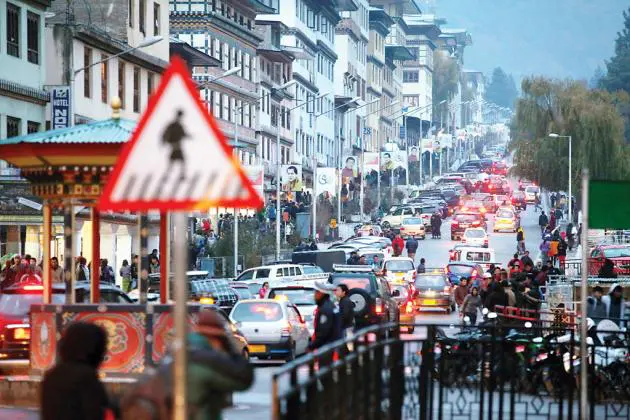
Visit Bhutan Year will highlight a series of tourism events across the country to commemorate the 60th birthday of His Majesty Jigme Singye Wangchuck, the country’s fourth king, who abdicated in 2006 in favour of his son. It is designed both to promote domestic tourism and to attract international and regional tourists. But at the same time, visitors will also see brand-new shopping areas, young Bhutanese in Western-style dress, and heavy traffic during certain hours – things that were not around a few years back.
Tariff to stay
Bhutanese tourism officials, however, have suggested that its policy of imposing a daily minimum tariff of US$250 (Bt8,200) a day for tourists will remain unchanged, while its visa-issuing process will not be any easier. Tourists will still be required to enter Bhutan through travel agencies, and individual arrivals are discouraged.
Norbu Wangchuk said these measures were necessary to ensure that “only those who really want to visit Bhutan will make it”.
But there is good news for Thais wanting to visit the country. Last year, Bhutan and Thailand signed a friendship programme designed to encourage Thais to visit the Himalayan country. The minister said it resulted in an unprecedented surge in the number of Thais going to Bhutan – reaching almost 9,000 in a span of three months in the middle of last year. Thai travel agencies are known to be gearing up for another record year for Bhutan.
“The visits by Thai people have had a significant impact on Bhutanese tourism and greatly benefit our country,” he said, adding that the agreement with Thailand should serve as a model for cooperation in this field with other countries.
Thais who have visited Bhutan said they were particularly impressed by its natural beauty and its culture, though travelling between destinations was often time-consuming because of lack of modern infrastructure.
Norbu Wangchuk said Bhutan and Thailand enjoyed an “extremely good relationship” because of the deep affection and respect between their Royal Families and because of their common tradition of spirituality that led them to sign a trade and economic agreement last year.
Another reason the number of foreign tourists allowed into Bhutan is still under strict control is that hotel and service facilities are still inadequate, especially in favourite tourist spots, including Thimphu, Paro and Punakha.
However, according to Thinley Palden Dorji, chairman of the Hotel Association of Bhutan, there are investments flowing into the hotel and service sector in Bhutan.
“We are seeing a substantial number of investments, especially for luxury and five-star hotels and resorts. There are a lot of discussions, a lot of excitement and bullishness in this sector,” he said.
Thinley Dorji believes that tourism will be a key driver of the Bhutanese economy, while Norbu Wangchuk sees the sector as a major attraction for Thai investors.
