
Help boost consumption, private sector urges


Play
With the outlook for 2015 uncertain, private sector groups want the govt to help lift purchasing power
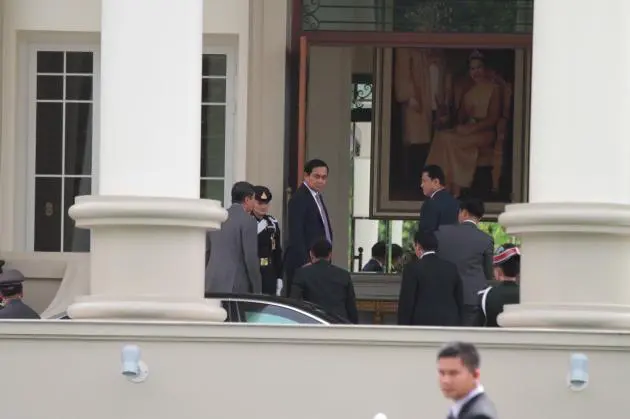
Prime Minister Prayut Chan-o-cha yesterday vowed that his government would do its best to ensure a strong economic performance this year, and told the business sector not to worry about the political situation.
During a four-hour meeting with business representatives, the PM asked the private sector to help restore confidence, deputy government spokesman Maj Gen Sansern Kaewkamnerd said.
“Political issues are also important but they should not worry much. Members of the private sector should not think only about the impeachment and other political problems,” Prayut said.
The premier invited representatives of commerce, banking, tourism, small business and energy for a meeting to update him on their concerns and needs. At the meeting, many suggestions were made on how to stimulate the economy and sustain growth in the long term.
The business sector is unsure about the economic outlook this year due to many uncertainties and challenges, notably the global slowdown. Leaders urged the government yesterday to be strong in implementing programmes that will boost the economy and private consumption.
After the meeting, FTI chairman Supant Mongkolsuthree told the press the private sector was “very satisfied” with their discussion with Prayut.
Supant said he had proposed several measures – for the government to increase support for small and medium enterprises (SMEs) by accelerating small state projects; providing support for ecommerce; and financing by increasing loan guarantees from the Thai Credit Guarantee Corp for small businesses from the current 18 per cent to 40 per cent while educating SMEs about the right way to pay taxes and encouraging unregistered small firms to register and thus increase support coverage.
“The prime minister told around 25 representatives from the private sector to be patient with the way the economy is going right now and asked the private sector to understand, as the country’s economic situation has declined in line with and world’s economy. And we are happy that the prime minister paid close attention to our all of our proposals,” he said.
Thai Bankers' Association (TBA) chairman Boontuck Wungcharoen said he recommended the PM should push for the Business Guarantee Act that the TBA has waited 17 years for, and other electronic laws, since it could boost the effectiveness of the banking sector, allow greater financial access for small firms, while helping to driving the economy. And he believed that the law – Business Guarantee Act – could be introduced by this government.
“The prime minister has shown that he is committed to driving the country to be competitive and that is a good sign,” he said.
Isara Vongkusolkit, chairman of the Board of Trade and the Thai Chamber of Commerce, said private enterprises do not envisage large growth this year because of uncertainty about a global recovery and the threat of the US raising its policy interest rate.
He said the private sector would like the government to help stimulate growth by speeding up budget disbursement and budgets “in the pipeline” to promote more investment this year.
Isara said that as the economy will not grow strongly this year, the government should delay plans to increase the valueadded tax (VAT) – for some years – to ensure strong consumer purchasing power.
He said that with the lower oil price and low consumer spending at present, some manufacturers were considering lowering retail prices for goods in the near future. However, producers may need some time to adjust costs and prices because of the lower cost of fuel.
“The government does not need to force enterprises to reduce prices. They will move to lower costs if they foresee weak purchasing power, while the costs of production have also decreased,” Isara stressed.
While no representative from the tourism sector had met with the prime minister yesterday, Ittirit Kinglake, president of the Tourism Council of Thailand (TCT), said the private sector wanted the government to create a friendly environment this year so tourists “return” to the Kingdom.
He said the country “lost” millions of potential visitors last year due to political unrest, as well as economic slowdowns in Japan, Russia, and Europe.
“The private sector believes that if the government lifts martial law as requested, it would greatly help rebuild confidence among tourists around the world,” he said. Moreover, a crisis management and communication team should be established as part of crisis management.
Surapong Techaruvichit, president of the Thai Hotels Association (THA), said the association wanted the government to help with three major issues. First, is to seek “quality” tourists rather than a huge number of visitors – big spenders such as business travellers, those coming for medical check-ups and healthcare or coming for niche markets.
The second issue was to strong enforcement of laws. The government should continue cracking down on people who trespass on state land and public areas. The last issue was to develop tourism products and services that are sustainable.
Meanwhile, Supaluck Umpujh, a senior executive of the Mall Group, said tourists were more confident of the country’s situation now, as seen by the high numbers of arrivals recently, as they were not worried about protests and there was more stability on the political front. She believed martial law was not a concern for visitors as they felt safer than at the start of last year. She revealed that Siam Paragon had enjoyed 25 per cent growth last year compared to 2013.
